








.png)











.png)




















Join 1M+ Readers Who Never Miss a Headline.
Stay informed wherever you are — join our growing community of readers and followers across social platforms.
Choosing a Search Firm
Compensation Intelligence
Board & Governance
Succession Strategy
AI Leadership Trends
Talent & Workforce Trends
AI Leadership Appointments
Compensation Changes
Big Tech Succession
CHRO & CPO Appointments
CEO Transitions
Board Members and Governance Committees
Operating Partners at private equity and venture capital firms
CHROs and Chief People Officers
HR leaders responsible for executive hiring
CEOs and Founders
May 6, 2026

The number that defines Meta's Reality Labs in 2026 is not the quarterly loss. It is the cumulative one. Since late 2020, Reality Labs has accumulated over $80 billion in total operating losses. That sum, spent on a vision that Mark Zuckerberg once believed would define the next era of human interaction, now sits alongside a restructured leadership team, thousands of layoffs, and a strategic pivot so complete that the company is, in practical terms, dismantling what it built.
In Meta's first-quarter 2026 earnings report, Reality Labs recorded an operating loss of $4.03 billion while bringing in $402 million in sales. The revenue figure is notable not for its size but for the ratio it implies: for every dollar Reality Labs generated, the company spent roughly ten. The Q1 2026 loss is marginally better than the $4.21 billion loss recorded in Q1 2025, and management has guided that Reality Labs operating losses for the full year will remain similar to 2025's roughly $19 billion. The losses are not shrinking in any meaningful sense. They are being held at a level the company has decided it can absorb while it redirects capital elsewhere.
Meanwhile, the rest of Meta's business reported its strongest quarter in years. Q1 2026 revenue rose 33% year over year to $56.31 billion, net income increased 61% to $26.77 billion, and diluted earnings per share grew 62% to $10.44. Meta's family of daily active people reached 3.56 billion in March 2026, up 4% year over year. The advertising engine that has always funded Meta's ambitions is performing at a level that makes the Reality Labs losses sustainable, at least in accounting terms. The leadership question is whether sustaining them is the right decision, and what the $80 billion already spent reveals about how large strategic bets are made and accounted for at the top of a major technology company.
Meta lost $19.1 billion on its virtual reality business in 2025, slightly more than the $17.7 billion lost in 2024. Those losses stood against $2.2 billion in full-year sales for 2025. The trajectory is one of growing losses on nearly flat revenue, year after year, since the division was established as the company's primary strategic bet.
To contextualise the scale: $80 billion in accumulated losses exceeds the annual revenue of most Fortune 500 companies. It is more than the GDP of many mid-sized economies. It is capital that was allocated, invested, and consumed without generating a return commensurate with its cost, or anything approaching the market position Zuckerberg described when he renamed the company in 2021.
The decision to rename Facebook as Meta in 2021 was a declaration that the metaverse was not a product line but the company's defining identity. AI was never absent from Meta's strategy, but under that vision it was not central. When ChatGPT arrived in late 2022 and accelerated the AI race, Meta was unprepared. The company reset quickly, embracing open-source models and accelerating development, but it entered the AI competition in catch-up mode rather than at the front.
That timing cost money, and it shaped a leadership dynamic that is now visible in every major decision the company has made in 2026.
In January 2026, Meta laid off roughly 1,500 employees from Reality Labs, approximately 10% of the division's workforce, as it pivoted away from metaverse investments and toward AI-powered wearables. Three VR game studios were shuttered as part of the restructuring, though Horizon Worlds remains operational in a diminished capacity.
In April 2026, Meta announced a further round affecting roughly 10% of its total workforce, approximately 8,000 employees, while simultaneously stating it would no longer fill 6,000 open roles. The January Reality Labs cuts, followed by a March round targeting hundreds of employees in Facebook, global operations, and sales, preceded the April announcement. The pattern across 2026 is not a single restructuring event. It is a sequence of reductions, each framed differently but all pointing in the same strategic direction.
Meta's chief people officer Janelle Gale wrote in an internal memo that the layoffs are part of a continued effort to run the company more efficiently and to offset other investments being made. The investments she is referring to are in AI infrastructure. The dynamic being managed is explicit: reduce headcount in legacy and underperforming divisions to fund AI build-out without allowing total expenses to outpace revenue growth.
Including the 11,000 employees laid off in 2022, Meta has now dismissed approximately 25,000 people across several rounds since the metaverse era began. The shift in tone across those rounds is visible. When the 2022 layoffs were announced, Zuckerberg was conciliatory, describing it as one of the hardest decisions he had made in 18 years of running the company. By 2025 and 2026, the framing had changed: workforce reduction was positioned as a management discipline, a structural necessity of operating efficiently in an AI-first environment rather than a painful exception.
The question that analysts, board members, and senior executives across the industry are watching is not whether Zuckerberg is willing to admit the metaverse bet did not produce the returns projected. He has effectively done that through his actions, if not in explicit language. The more significant leadership question is what the $80 billion episode reveals about how he governs strategy, accountability, and resource allocation at scale.
The layoffs could be read as demonstrating Zuckerberg's willingness to course-correct on an initiative he originated, even when the cost of admission is measured in tens of billions. A lot of founders would not have done the same, according to organisational culture researcher Jessica Kriegel. He made a massive bet, staffed up for it, was unapologetic about it, and then when the results did not match expectations, he reset quickly rather than unwinding it slowly.
The speed of that reset is a double-edged signal for anyone inside or outside Meta assessing leadership credibility. On one side, it demonstrates the decisiveness that distinguishes effective leaders at scale from those who let failing strategies consume capital indefinitely because reversing them would require public accountability. On the other side, because Zuckerberg went all in on the metaverse by changing the company's name and pouring billions into Reality Labs, employees may think twice about buying into the CEO's grand ideas the next time. The metaverse cost more than money. It cost internal credibility for the next large bet.
That credibility question matters now because the next large bet is already committed. Meta has revised its 2026 capital expenditure guidance upward to between $125 billion and $145 billion, from a prior range of $115 to $135 billion, citing higher component pricing and additional data center costs to support future capacity. The increase is tied directly to Meta Superintelligence Labs, the entity Zuckerberg has positioned as the vehicle for what he calls personal superintelligence.
Zuckerberg's leadership style in 2026 has been described as increasingly hands-on technically, with reports indicating he spends a significant portion of time directly involved in AI model architecture. His management model has also shifted structurally, with Meta moving toward a 1:50 manager-to-engineer ratio, using internal AI agents to handle the administrative and coordination tasks that once required layers of middle management.
The leadership structure Zuckerberg has assembled for the AI era is different from the one that built the metaverse, and the differences are deliberate.
Meta has structured new stock option programs for a select group of senior executives: technology chief Andrew Bosworth, Chief Product Officer Christopher Cox, Chief Financial Officer Susan Li, Chief Operating Officer Javier Olivan, and Chief Legal Officer Curtis Mahoney. The grants signal that the company is locking in leadership for a long AI build-out cycle.
The aggressive strike prices on the options signal that Meta sees AI as a massive opportunity, and that the market for talent in AI has intensified to the point where the company needed to raise its compensation architecture. The board granted the awards to a group it believes is critical to Meta's AI ambitions. The compensation structure is designed to align senior leadership retention with a long-term outcome, not a near-term product cycle.
A key addition has been the appointment of Alexandr Wang, formerly CEO of Scale AI, as Meta's Chief AI Officer, tasked with leading Superintelligence Labs. Meta invested $14.3 billion in Scale AI alongside the hiring, a signal that the company views the relationship as structural rather than transactional.
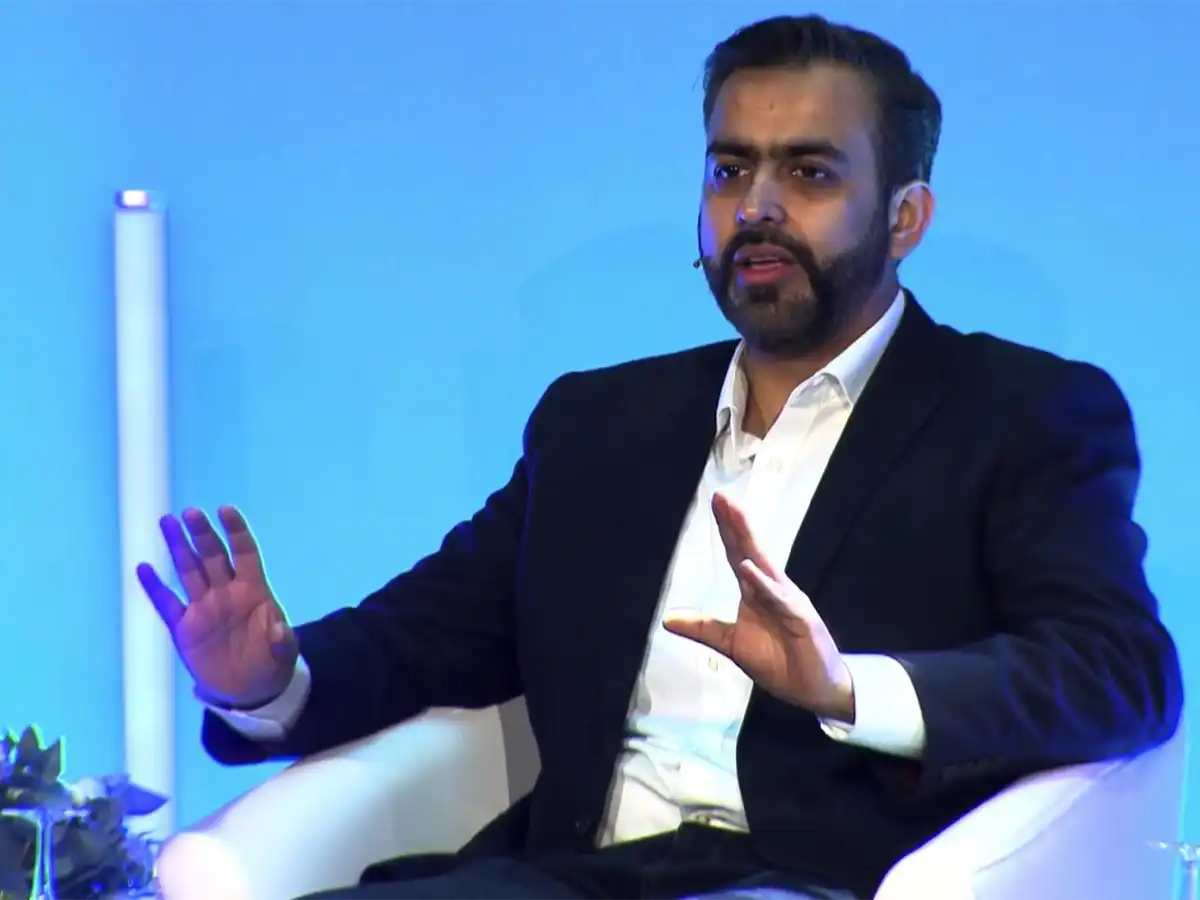
The internal reshuffling within Reality Labs also reflects the strategic redirection. Vishal Shah, who spent four years leading the company's metaverse efforts, has been moved to lead AI products, a transition that visually connects the organisation's former primary identity with its current one. The people who built the metaverse are either leaving or being redirected. The people running AI are being elevated and compensated accordingly.
The financial scale of Meta's AI investment is relevant to the leadership analysis because of what it demands organisationally. Meta's 2026 capital expenditure of $125 to $145 billion is nearly double the $72 billion spent in 2025. The majority of expense growth is being driven by infrastructure costs including third-party cloud spending, higher depreciation, and infrastructure operating expenses. The second-largest contributor is employee compensation, driven by investments in technical AI talent.
A company committing capital at that rate is not testing a hypothesis. It is executing a conviction, and doing so in an environment where the return on that conviction is not yet quantified. Zuckerberg has stated that Meta is on track to deliver personal superintelligence to billions of people and that the company had a milestone quarter with the release of its first model from Meta Superintelligence Labs. Investors will now be looking for clearer strategy toward monetisation.
The monetisation question is the one Reality Labs was never able to answer credibly. Horizon Worlds never drew more than a couple hundred thousand monthly active users, against the hundreds of millions using competing platforms. The Quest headset business generated volume but not margin. The strategic vision was compelling; the product-market fit was not.
Meta's Q1 2026 results, including $56.31 billion in revenue and $26.77 billion in net income, demonstrate that the core advertising business has the financial capacity to fund the AI build-out while sustaining profitability. The operating income commitment, that 2026 will exceed 2025's $83 billion despite the spending step-up, is the management team's primary assurance to investors that the AI investment is being made from a position of strength rather than necessity.
The leadership test that the next several quarters will pose is one that the metaverse era did not resolve: whether Zuckerberg can translate a technically ambitious vision into a product and business model that generates returns at the scale of the investment required to build it. The financial runway is larger now. The strategic stakes are higher. And the internal credibility, after $80 billion in accumulated losses, has less room to absorb another misread of where the technology is going.














Stay informed wherever you are — join our growing community of readers and followers across social platforms.
Choosing a Search Firm
Compensation Intelligence
Board & Governance
Succession Strategy
AI Leadership Trends
Talent & Workforce Trends
AI Leadership Appointments
Compensation Changes
Big Tech Succession
CHRO & CPO Appointments
CEO Transitions
Board Members and Governance Committees
Operating Partners at private equity and venture capital firms
CHROs and Chief People Officers
HR leaders responsible for executive hiring
CEOs and Founders

.svg)
.svg)