







.png)









.png)




















Join 1M+ Readers Who Never Miss a Headline.
Stay informed wherever you are — join our growing community of readers and followers across social platforms.
Choosing a Search Firm
Compensation Intelligence
Board & Governance
Succession Strategy
AI Leadership Trends
Talent & Workforce Trends
AI Leadership Appointments
Compensation Changes
Big Tech Succession
CHRO & CPO Appointments
CEO Transitions
Board Members and Governance Committees
Operating Partners at private equity and venture capital firms
CHROs and Chief People Officers
HR leaders responsible for executive hiring
CEOs and Founders
May 8, 2026

Within the space of a single week in late April, two of the world's largest technology companies disclosed actions that, taken together, describe a workplace being rebuilt from the inside out. Meta announced it would cut 8,000 employees by May 20. Microsoft offered voluntary buyouts to roughly 8,750 U.S. workers. Both companies framed those decisions as necessary offsets against record capital expenditure on AI infrastructure. And at Meta, a quieter disclosure arrived alongside the layoff announcement: the company had begun installing tracking software on U.S. employees' work computers to capture their mouse movements, keystrokes, and screen activity to train its AI models.
The three moves are not unrelated. They are components of the same strategic logic, and the week they all surfaced simultaneously made that logic unusually visible.
Meta told employees on April 23 that it would cut approximately 8,000 jobs, roughly 10% of its global workforce, beginning on May 20. The company is also cancelling 6,000 open positions it had planned to fill, bringing the effective headcount reduction to 14,000 positions. Additional cuts are planned for the second half of the year, though their timing and scope have not been finalised.
Meta's chief people officer Janelle Gale confirmed the layoffs early because details had already leaked. "I know this is unwelcome news and confirming this puts everyone in an uneasy state, but we feel this is the best path forward, given the circumstances," she wrote in the memo. The circumstances she referenced were not financial distress. Meta's 2025 revenue reached $201 billion, up 22% year over year. Fourth quarter net income was $22.8 billion, beating analyst expectations. The company is not cutting to survive. It is cutting to redirect.
Meta's capital expenditure guidance for 2026 sits at $115 to $135 billion, a 73% increase over the $72.2 billion it spent in 2025, nearly all directed at AI infrastructure. The company is building Prometheus, a one-gigawatt AI supercluster in Ohio, and Hyperion, a 2,250-acre facility in Louisiana capable of five gigawatts. The people being laid off and the infrastructure being built serve different visions of what work looks like. The layoffs fund the infrastructure. The infrastructure is designed to reduce the need for the kind of workers being laid off.
Microsoft's move was different in mechanism but identical in direction. The voluntary buyout program is being offered to workers whose years of service plus age totals 70 or more, excluding some senior roles and those on sales incentive plans, according to the memo from Chief People Officer Amy Coleman. Coleman wrote that she had never seen the company move with this level of urgency and pace.
Microsoft is racing to construct data centers around the world and announced new AI investments in Japan and Australia in the same week as the buyout program. The company is expected to invest $145 billion in capital expenditure this fiscal year as part of a combined wave of AI infrastructure spending across major tech companies in 2026. The buyout, like Meta's layoff, is a resource reallocation exercise. The form is different; the logic is the same.
As of the week of the announcements, more than 92,000 tech workers had been laid off in 2026, bringing the cumulative total to close to 900,000 since 2020, across 95 companies.
Three days before the layoff announcement, Meta disclosed something that received less immediate attention but carries equal significance for anyone trying to understand where the company's strategy is heading.
Meta is installing new tracking software on U.S.-based employees' computers to capture mouse movements, clicks, and keystrokes for use in training its AI models. The tool, called Model Capability Initiative, will run on work-related apps and websites and will also take occasional snapshots of the content on employees' screens. It was disclosed in a memo posted by a staff AI research scientist in a channel for the company's Meta Superintelligence Labs team.
The purpose, according to the memo, is to improve the company's AI models in areas where they struggle to replicate how humans interact with computers: choosing from dropdown menus, using keyboard shortcuts, navigating between applications. Meta CTO Andrew Bosworth confirmed in a separate memo that the company would step up internal data collection as part of its Agent Transformation Accelerator initiative. "The vision we are building towards is one where our agents primarily do the work and our role is to direct, review and help them improve," Bosworth wrote.
A Meta spokesperson stated that the data gathered through the program will not be used for performance assessments or any other purpose besides model training, and that safeguards are in place to protect sensitive content. The tool runs on a designated list of work apps and websites, and managers do not have access to it.
European employees are exempt because GDPR would not permit it. In Germany, courts have held that employers can deploy keystroke logging only in exceptional circumstances. Italy explicitly prohibits electronic monitoring for productivity tracking. On the U.S. side, federally there is no limit on worker surveillance; state-level laws require at most that workers be broadly informed when monitoring is deployed.
The legal geography of the program is itself instructive. What Meta is doing to its U.S. employees, it cannot do to its European ones. The data being harvested from American workers will train AI agents that will operate globally.
The tracking program arrived alongside a policy that had been building since late 2025. Meta has made AI usage a formal part of every employee's performance review starting in 2026, becoming the first major technology company to codify AI adoption into evaluation criteria. Performance reviews include an assessment of how employees use AI to deliver results and whether they build tools that drive tangible productivity improvements. The change applies to all roles, from engineers to marketers.
In the memo introducing the policy, Gale told employees: "As we move toward an AI-native future, we want to recognize people who are helping us get there faster." Employees who score highly on AI usage will be rewarded. Engineering managers will evaluate workers partly on their ability to use AI to accelerate development cycles and improve code quality.
Meta has taken additional steps to institutionalise AI adoption internally. It overhauled its hiring process to allow job applicants to use AI during coding interviews. It launched an internal game called Level Up to incentivise AI experimentation, rewarding employees with badges as they reach milestones. It rolled out an AI Performance Assistant to help employees write their own performance reviews, with staff already using the company's internal AI tool Metamate to draft review content.
The performance review change, the tracking software, and the layoffs form a sequence. Employees are being told to use AI in their work. Their computer activity is being captured to train the AI systems that will eventually perform that work autonomously. And the company is simultaneously reducing the number of people employed to do the work that AI is being trained to replace.
Meta and Microsoft are not acting in isolation. Alphabet, Microsoft, Meta, and Amazon are expected to spend close to $700 billion combined in 2026 on capital expenditures, the majority of it directed at AI infrastructure. The same companies driving that investment are also accounting for a large share of the year's job cuts.
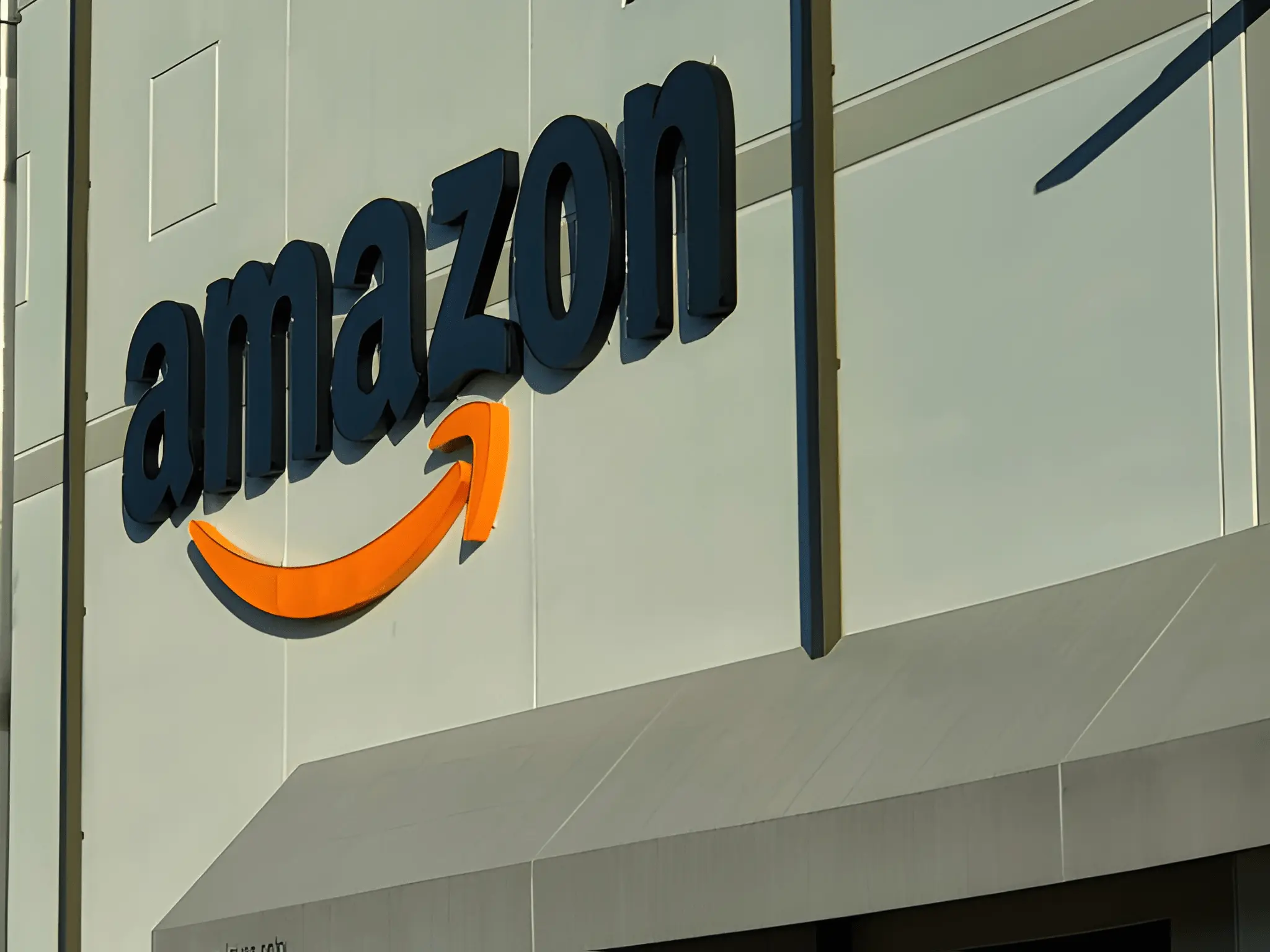
Amazon has cut at least 30,000 jobs since October, representing roughly 10% of its corporate and technical workforce. Oracle eliminated up to 30,000 roles, approximately 18% of its workforce, to fund $156 billion in AI infrastructure spending. Salesforce laid off 4,000 customer support roles last year, with CEO Marc Benioff stating directly that he needed fewer people.
The pattern is consistent in a way that rules out coincidence. Companies are reporting strong revenues, projecting record capital expenditure on AI infrastructure, reducing headcount in non-AI functions, and framing the two moves as directly connected. 55% of U.S. hiring managers surveyed expect layoffs this year, with 44% citing AI as a primary driver.
The people being hired and the people being fired are not the same population. Meta is simultaneously poaching elite AI talent with packages worth up to $1.5 billion for a single engineer while cutting 8,000 employees in sales, operations, and non-AI engineering functions. Two labour markets are operating in parallel inside the same companies: one contracting for generalised roles, one expanding for AI-specific ones. The transition between them is what the current wave of cuts represents.
The week's events raise a set of questions that boards, CHROs, and senior leadership teams cannot defer to the next planning cycle.
The first is about transparency. Meta's tracking program is legal in the U.S. but prohibited in Europe under GDPR. The asymmetry suggests that what is permissible is being treated as equivalent to what is appropriate. Employees whose work activity is being harvested as AI training data are being asked to contribute to a process that may eventually reduce the need for their roles, without a clear accounting of that relationship. Whether that is disclosed with the specificity it deserves is a governance question.
The second is about the performance review logic. Gartner research shows that only one in five AI investments delivers measurable return on investment, raising questions about whether mandate-driven adoption through performance reviews produces genuine capability or surface compliance. Grading employees on AI use before the tools have been validated at scale creates an incentive to demonstrate adoption rather than achieve outcomes.
The third is about the employment compact. On Meta's fourth-quarter earnings call, Zuckerberg told investors that 2026 is going to be the year AI starts to dramatically change the way work gets done, and that work which once required large groups can now be handled by a single highly skilled employee. That is a statement about the future of employment at Meta. The employees receiving layoff notices in May and the employees whose keystrokes are being recorded to train the agents that may eventually replace them are receiving different parts of the same message.
The week's events do not represent a breakdown of trust between large technology companies and their workforces. They represent the public surfacing of a trade that has been under construction for several years. Capital is being redirected from people to infrastructure. The infrastructure is being trained on the people. And the people remaining are being evaluated on how well they accelerate the process.
That trade is being made transparently enough that its logic is legible. Whether it is being made in a way that the workforce can accept, sustain, and eventually benefit from is a question that the numbers do not answer.












Stay informed wherever you are — join our growing community of readers and followers across social platforms.
Choosing a Search Firm
Compensation Intelligence
Board & Governance
Succession Strategy
AI Leadership Trends
Talent & Workforce Trends
AI Leadership Appointments
Compensation Changes
Big Tech Succession
CHRO & CPO Appointments
CEO Transitions
Board Members and Governance Committees
Operating Partners at private equity and venture capital firms
CHROs and Chief People Officers
HR leaders responsible for executive hiring
CEOs and Founders

.svg)
.svg)