


.png)
.png)






Join 1M+ Readers Who Never Miss a Headline.
Stay informed wherever you are — join our growing community of readers and followers across social platforms.
Choosing a Search Firm
Compensation Intelligence
Board & Governance
Succession Strategy
AI Leadership Trends
Talent & Workforce Trends
AI Leadership Appointments
Compensation Changes
Big Tech Succession
CHRO & CPO Appointments
CEO Transitions
Board Members and Governance Committees
Operating Partners at private equity and venture capital firms
CHROs and Chief People Officers
HR leaders responsible for executive hiring
CEOs and Founders
May 3, 2026
Tesla is ending production of the two vehicles that built its brand, converting the factory space they occupied into a robot assembly line, and asking investors to believe that a humanoid robot still in pre-production can become its highest-volume product within two years. The transition is deliberate, aggressive, and happening in the middle of a leadership exodus that has stripped the company of institutional knowledge across nearly every critical function.
The picture that emerges from Tesla's Q1 2026 earnings call, its SEC filings, and the string of senior departures announced in recent months is of a company moving fast in a new direction while the people who built the previous one keep walking out the door.
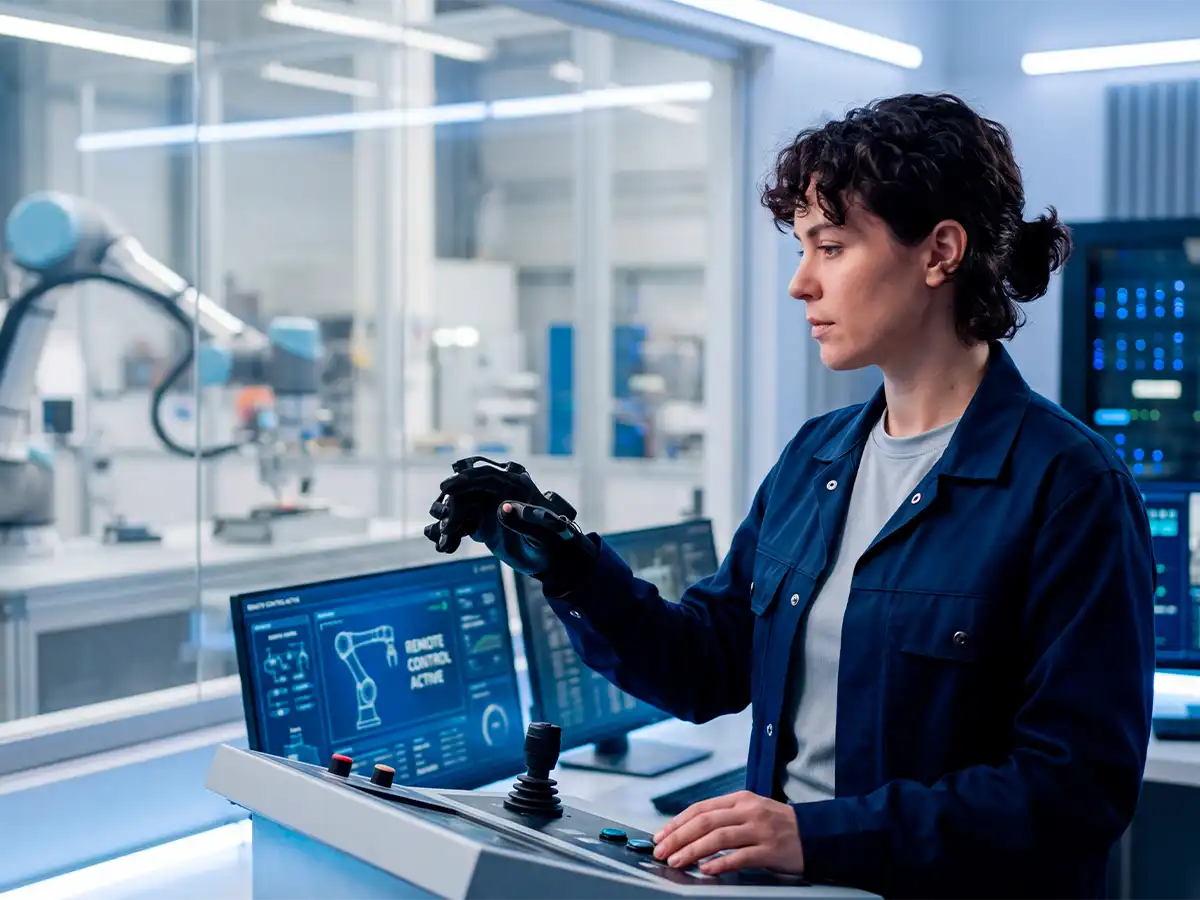
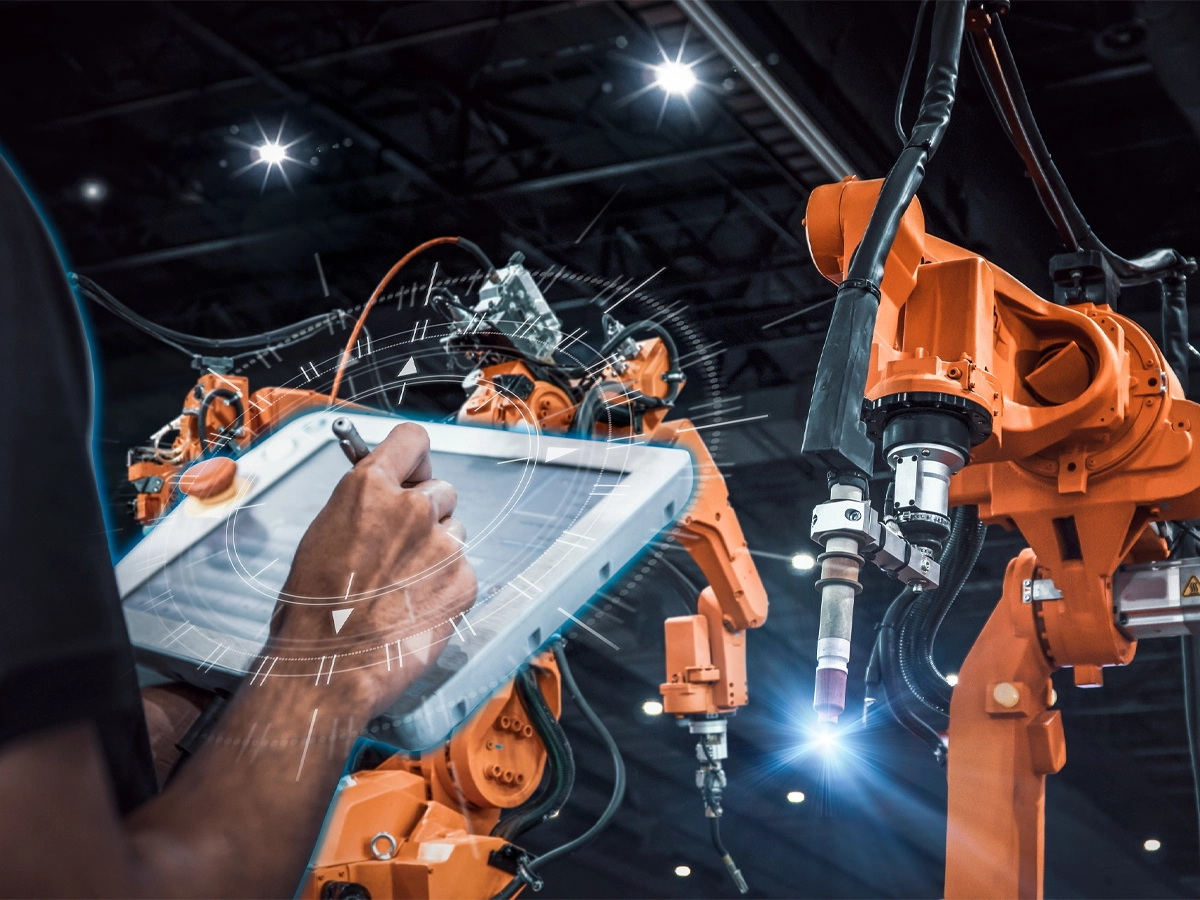
During Tesla's Q1 2026 earnings call, CEO Elon Musk confirmed that Optimus robot production will begin at its Fremont facility in late July or August 2026, approximately four months after the last Model S and X vehicles rolled off the line in early May.
The third-generation Optimus features 37 joints, nine more than the prior version, with a dexterous hand system designed for operational precision. It reaches walking speeds of up to 1.2 meters per second and is designed to walk stably on inclines, with recovery capability built into its balance systems.
The Optimus V3 design is expected to be revealed mid-year, though Musk held back engineering details on the call, citing the risk of competitor copying. The AI5 chip, which has completed the tape-out stage, will be used in Optimus units and in Tesla's data centers rather than in its vehicles, where the current AI4 chip is considered sufficient for unsupervised Full Self-Driving.
Tesla's own SEC filings describe the first large-scale Optimus factory as being built on the converted Model S and X lines in Fremont, designed for annual capacity of 1 million robots. A second-generation production line is being prepared at Gigafactory Texas, with a long-term designed annual capacity of 10 million robots.
Musk framed the four-month conversion from car production to robot production as unprecedented: taking a line from full stop to dismantlement to reinstallation to operation in that timeframe would be, in his words, an insanely fast speed that no other company on Earth has done before. He acknowledged that investors asking about the ramp do not fully understand what happens with a production line, and that Optimus is a brand-new product with over 10,000 unique components, none of which have been through mass production before.
Tesla CEO Elon Musk announced the end of Model S and Model X production on the company's Q4 2025 earnings call, saying it was time to bring the programs to an end with an honorable discharge. The Model S had been in production since 2012. The Model X followed three years later.
The two models accounted for roughly 3% of Tesla's global production of 1.65 million vehicles in 2025, with combined annual deliveries that had fallen to around 30,000 units, a fraction of the 100,000-unit capacity the production line was built to support.
As of early April 2026, Tesla had approximately 295 new Model S units and 301 new Model X units remaining in global inventory, nearly all of them in the United States. No automotive replacements for either vehicle have been announced. VP Lars Moravy confirmed Tesla is moving toward transportation as a service rather than vehicle sales, framing the discontinuation as part of a strategic direction rather than a product gap to be filled.
The decision carries a specific signal for the broader auto market. Tesla had the engineering capacity to build next-generation replacements for both vehicles, which would have competed directly with the Mercedes EQS and Porsche Taycan. It chose not to. The factory space is going to robots instead.
As production of the Model S and Model X comes to an end, Tesla is looking toward a future built around autonomous driving, robotaxis, humanoid Optimus robots, AI compute clusters, solar energy, and stationary energy storage systems, the latter of which is in high demand for AI data centers.
Tesla said in its Q1 2026 disclosures that preparations for the first large-scale Optimus robot factory will begin in the second quarter, and that a second-generation line at Gigafactory Texas is being designed for long-term annual production capacity of 10 million robots.
CFO Vaibhav Taneja confirmed on the Q1 2026 earnings call that capital expenditure will exceed $25 billion this year, up from a prior projection of $20 billion, with the increase driven by AI, robotics, and data center infrastructure.
Services and other revenue, which includes FSD subscriptions, insurance, and related software income, grew 42% year over year in Q1 to $3.7 billion, the fastest-growing segment of the business. That figure is one of the cleaner indicators of where Tesla's financial model is heading. The company is building toward a recurring software and services base that does not depend on vehicle volume in the same way its auto revenue does.
Q1 2026 total revenue rose 16% year over year to $22.39 billion, with non-GAAP earnings per share of $0.41, up 52% year over year. Gross margin expanded to 21.1% from 16.3% in Q1 2025. The financials are improving. The strategic question is whether the Optimus bet can be executed at the scale being projected.
Running beneath the strategic ambition is a personnel situation that analysts and industry observers have described as material risk. Since mid-2024, Tesla has lost senior leaders across nearly every function of the business in rapid succession.
The list spans powertrain, software, sales, manufacturing, program management, crash safety, battery development, supercharging, and finance. Tesla has cycled through four global sales leaders in under two years. The company no longer retains a single original program manager across any of its production vehicles, including the Model 3, Model Y, Cybertruck, or Cybercab.
The most recent departures cluster around the company's most critical 2026 programs. Thomas Dmytryk, who had spent 11 years building Tesla's over-the-air update infrastructure and the software backbone of its Robotaxi ride-hailing service, announced his departure in March. His team's work underpins a global connected fleet approaching 10 million vehicles.
Sendil Palani, the company's VP of Finance, confirmed his departure on March 10 after 17 years at Tesla, joining in January 2009 when the company had roughly 300 employees and enough cash to survive about four weeks. He is one of the last pre-IPO-era leaders to hold a senior role.
The Cybercab program alone has lost its vehicle program manager Victor Nechita, infrastructure director Thomas Dmytryk, and assembly leader Mark Lupkey, all since February, stripping the program of every original manager who shepherded it into production at precisely the moment Tesla is targeting volume output.
The roster of departures since mid-2024 spans every major function. Executives with tenures of 11 to 17 years across unrelated divisions do not leave in rapid succession unless the underlying conditions have shifted in ways they find untenable. Most departing executives have been publicly supportive of Tesla's direction in their farewell statements. The substance of why they are leaving has not been disclosed.
The Optimus announcement is occurring alongside Tesla's attempt to launch a second major new product: the Cybercab autonomous robotaxi. The Cybercab is a two-seat vehicle with no steering wheel and no pedals, designed to operate exclusively without a human driver. Volume production began this month at Giga Texas after a single prototype came off the line in February.
Safety data from Tesla's supervised robotaxi fleet in Austin shows the vehicles averaging a crash every 57,000 miles, roughly four times more frequently than the human driver benchmark of one incident per 229,000 miles. Musk did not dispute the software shortcomings on the earnings call, pointing to edge cases in which the cars freeze or enter repetitive loops. He offered a timeline of approximately Q4 2026 for unsupervised Full Self-Driving to reach customers, and said material Cybercab revenue is unlikely before at least 2027.
Tesla is simultaneously ramping Cybercab, Optimus Gen 3, Tesla Semi, and Megapack 3, converting its most storied production facility, and navigating the loss of the leadership teams that built the foundations each of those programs depends on.
The strategic logic connecting these moves is coherent. Tesla has manufacturing expertise, proprietary AI chips, a real-world data advantage from its vehicle fleet, and a software infrastructure that already connects millions of devices. Applying those assets to humanoid robots is not an arbitrary pivot. The market being targeted, general-purpose robotics for industrial and eventually consumer use, is large and early-stage, with no dominant player yet established.
As of March 2026, Optimus robots are not yet performing useful productive work autonomously. Production targets have slipped repeatedly. The gap between public demonstrations and reliable general-purpose autonomy at scale remains substantial.
The plan to spend over $20 billion on AI and robotics, combined with declining auto volumes in 2025 and regulatory questions around the Cybercab, concentrates execution risk at a moment when the company's leadership depth across the most critical functions is thinner than it has been in years.
The financial results support the strategic repositioning, at least in the near term. The personnel situation does not make the execution easier. Whether Tesla can build a million humanoid robots a year by the end of 2026 will be answered not by earnings presentations or Musk's public statements, but by what actually comes off the Fremont production line starting in late July.



Stay informed wherever you are — join our growing community of readers and followers across social platforms.
Choosing a Search Firm
Compensation Intelligence
Board & Governance
Succession Strategy
AI Leadership Trends
Talent & Workforce Trends
AI Leadership Appointments
Compensation Changes
Big Tech Succession
CHRO & CPO Appointments
CEO Transitions
Board Members and Governance Committees
Operating Partners at private equity and venture capital firms
CHROs and Chief People Officers
HR leaders responsible for executive hiring
CEOs and Founders

.svg)
.svg)