




.png)








.png)

















Join 1M+ Readers Who Never Miss a Headline.
Stay informed wherever you are — join our growing community of readers and followers across social platforms.
Choosing a Search Firm
Compensation Intelligence
Board & Governance
Succession Strategy
AI Leadership Trends
Talent & Workforce Trends
AI Leadership Appointments
Compensation Changes
Big Tech Succession
CHRO & CPO Appointments
CEO Transitions
Board Members and Governance Committees
Operating Partners at private equity and venture capital firms
CHROs and Chief People Officers
HR leaders responsible for executive hiring
CEOs and Founders
May 10, 2026

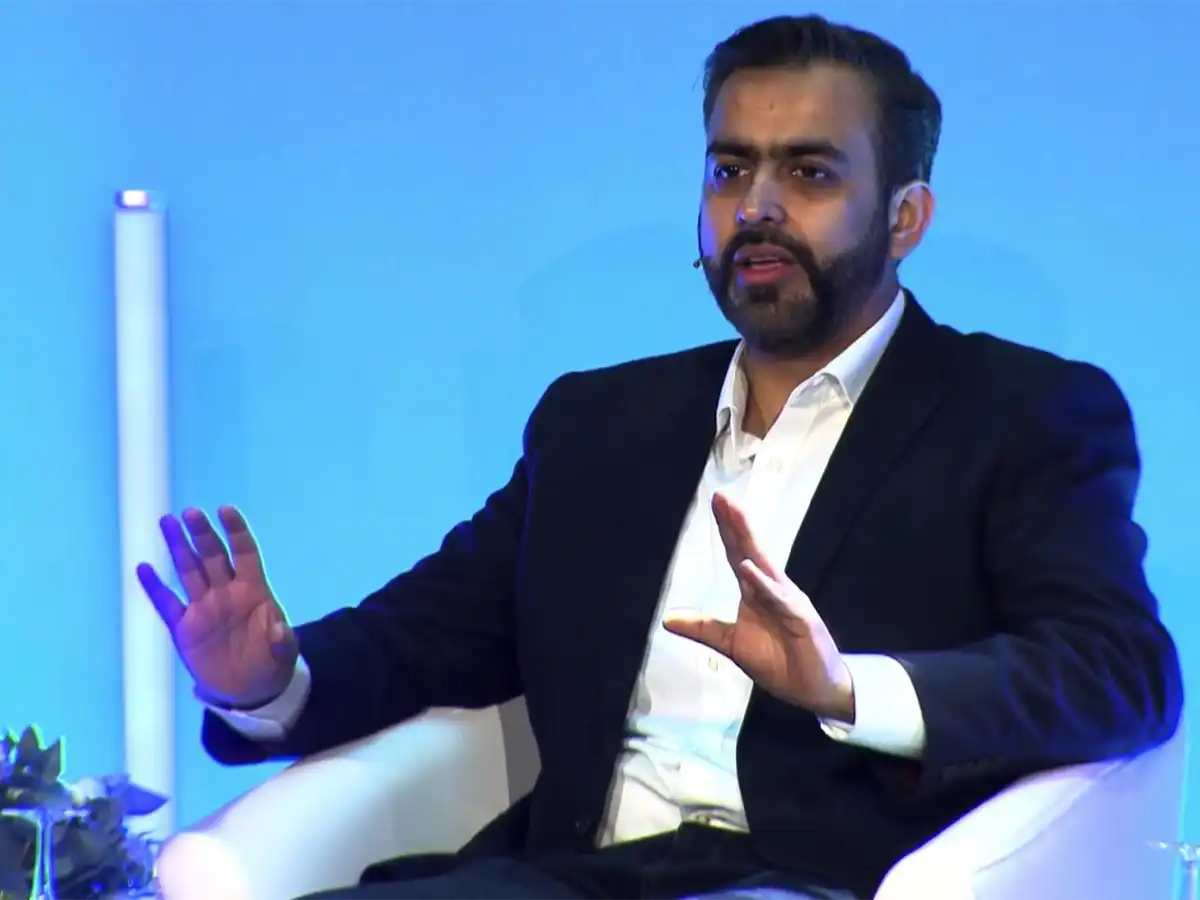
Enrique Lores stepped into the PayPal CEO role in March with a clear-eyed account of what he found. On Tuesday's first-quarter earnings call, his first as chief executive, Lores told analysts the company needs to recommit to its fundamentals, and in the same breath defined what that means: becoming a technology company again.
That framing carries weight. PayPal's market capitalisation has fallen from $363 billion at its 2021 peak to roughly $38 billion today, a decline of 87%. Revenue grew just 4% in 2025. Active accounts are essentially flat. The company has cycled through two CEOs in under three years. Against that backdrop, Lores is making a specific bet: that AI, applied systematically across PayPal's operations, is the mechanism for a structural turnaround.
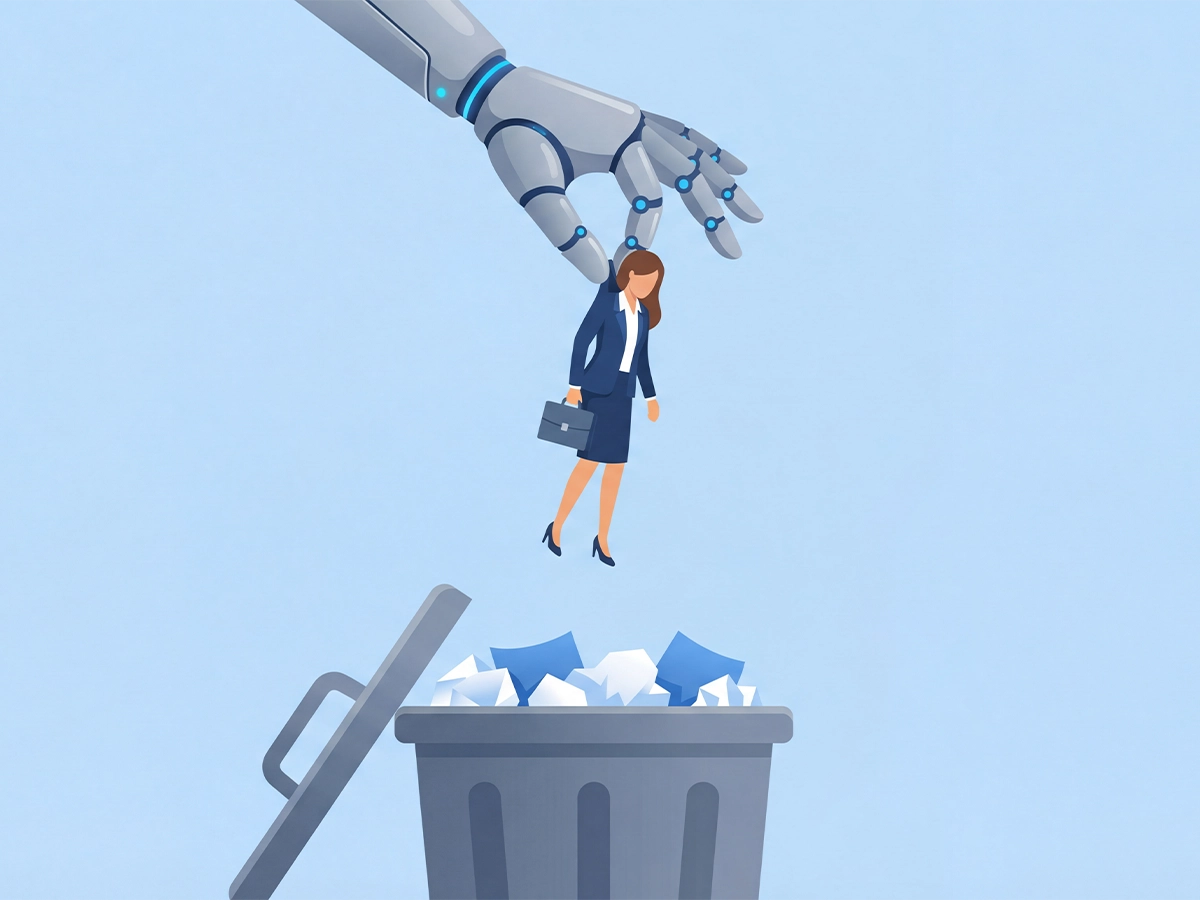
Q1 2026 revenue came in at $8.35 billion, up 7% year over year, beating analyst expectations of $8.05 billion. Adjusted earnings per share of $1.34 exceeded the consensus estimate of $1.27. Payment volume processed reached $463.95 billion, up 11%. The numbers gave Lores a solid foundation from which to deliver a more uncomfortable message: the company is cutting 20% of its workforce and rebuilding its entire operating model around AI.
Lores has been direct about what he found when he arrived. PayPal has run AI pilots. It has seen what is possible. It has not converted those pilots into redesigned processes at scale. In the current environment, that gap is the strategic problem.
The admission is significant. AI-assisted coding has become one of the clearest areas where AI has excelled, with companies like Spotify declaring in February that its top developers have written no code since December, using AI tools exclusively instead. PayPal, one of the world's largest digital payments platforms with 439 million active accounts, is only now committing to that level of adoption.
The response Lores has put in place is structural rather than incremental. He has created a new AI transformation and simplification team reporting directly to him, tasked with going function by function and process by process to redesign how PayPal operates before deploying AI on top of those redesigned workflows. The distinction he draws, between adopting AI as a technology and using AI to redesign core processes, reflects a sophistication about where AI transformations succeed and where they stall that is often absent from corporate AI announcements.
The AI transformation group is led by Anshu Bhardwaj, a former Walmart technology executive, a hire that brings direct experience of AI-enabled operational transformation at one of the largest enterprises in the world. Placing the function as a direct report to the CEO signals that Lores intends this to be a priority that lives at the top of the organisation rather than inside a technology or operations silo.
PayPal plans to cut approximately 20% of its global workforce over the next two to three years. With roughly 23,800 employees at year-end 2025, the reduction equates to more than 4,500 positions. The target is at least $1.5 billion in savings across that period, with AI-enabled process changes contributing a meaningful share of that figure alongside the workforce reduction.
The two elements are explicitly connected in how Lores has framed the strategy. Removing organisational layers creates a flatter structure. AI takes over the coordination, administrative, and routine decision-making functions those layers previously handled. The human workforce that remains concentrates on higher-judgment work. That is the operating model Lores is building toward.
The move places PayPal alongside a broad wave of fintech workforce reductions tied to AI transformation. Coinbase cut 14% of its workforce on the same day as the PayPal announcement, with CEO Brian Armstrong framing the change as a response to a structural shift in how engineering teams build. Block announced 4,000 cuts in March, explicitly citing AI development as the reason for reassessing what it means to build and run a company.
The areas Lores identified as near-term priorities for AI adoption go beyond engineering. Customer service, support operations, and risk management are all in scope. Risk management is particularly relevant for a payments company: fraud detection, transaction monitoring, and credit risk assessment are functions where AI systems have demonstrated strong performance, and where reducing manual intervention at scale has a direct and measurable impact on operating costs.
Understanding the urgency behind Lores' strategy requires understanding the competitive position PayPal is defending.
PayPal's current market capitalisation sits at approximately $43 billion, roughly a quarter of Stripe's private valuation. Stripe, Adyen, Shopify, Global Payments' Worldpay, and Block's Square are all competing directly with PayPal's merchant-facing Braintree product. On the consumer side, Venmo faces pressure from Apple Pay, Google Pay, and Cash App, all of which benefit from deeper integration with hardware and software ecosystems that PayPal does not control.
According to McKinsey's 2026 research on enterprise AI adoption, companies that successfully implement AI in core workflows report revenue increases of 3% to 15% and 10% to 20% improvements in operational efficiency. For PayPal, which has been growing revenue in the low single digits while its infrastructure costs remain high, those margins matter at the P&L level in a way they do not for faster-growing competitors with more headroom.
The developer productivity argument is also directly relevant to competitive speed. Research from GitHub and Forrester shows that AI coding tools reduce development cycle times by 25% to 55% in enterprise environments. A company modernising a legacy technology platform, which is explicitly what PayPal is doing under Lores, benefits from that acceleration in proportion to the amount of legacy code it needs to rewrite. Catching up to cloud-native competitors on platform architecture is a multi-year project. AI-assisted development shortens it.
Alongside the workforce and AI announcements, Lores restructured PayPal's business into three distinct segments: checkout solutions and PayPal, consumer financial services including Venmo, and payment services and crypto. The separation of Venmo into its own unit is the most watched element of that reorganisation.
The shift is being read by analysts as giving Lores room to either accelerate Venmo's monetisation as a standalone business or position the unit for a sale. Potential buyers are reportedly already exploring the asset. When asked directly on the earnings call whether separating Venmo signalled openness to selling it, Lores answered that his number one priority is to maximise shareholder value. In the context of a company whose stock has lost 87% of its value since 2021, that answer is a clear signal that no strategic option is off the table.
The reorganisation also reflects a sharper view of where PayPal's distinct competitive advantages lie. Checkout and branded payments is a business with 439 million consumer accounts and deep merchant integrations built over two decades. That asset base is real and difficult for competitors to replicate quickly. Payment services and crypto is a bet on infrastructure-level positioning as digital assets move further into mainstream commerce. Consumer financial services, including Venmo, is the most contested and most uncertain segment of the three.
Separating those businesses structurally allows each to be measured, managed, and capitalised against its own competitive dynamics rather than being averaged together inside a single reporting unit.
For Q2 2026, PayPal projected a high-single-digit decline in non-GAAP EPS of roughly 9% compared to the year-ago period, and reiterated full-year 2026 guidance calling for a low-single-digit decline to slightly positive non-GAAP EPS. The company characterised the operating environment as complex and dynamic.
The weak Q2 guidance, delivered alongside the Q1 beat, sent the stock down approximately 10% after the call. That reaction reflects a market that is unconvinced the turnaround will show up in near-term numbers. The $1.5 billion savings target spans two to three years. The AI transformation is, by Lores' own admission, still being defined. The full strategic plan, he told analysts, will take a few months to completely define.
That honesty is itself a leadership choice. Previous management teams at PayPal presented plans with more confidence and delivered less. Lores is framing his tenure from the outset as a rebuilding effort with a multi-year horizon, and setting expectations accordingly. Whether investors accept that framing, or whether the stock continues to price in skepticism about the company's ability to execute, will be determined by what the operating metrics look like over the next two to three quarters as the AI transformation and simplification team begins to show measurable results.
According to Gartner, companies that connect AI deployments to specific process redesign before scaling achieve 2.3 times faster AI adoption and significantly higher return on investment compared to those that deploy AI on top of existing processes without redesigning them first. Lores has structured his program precisely around that distinction. The question is whether he has the time to prove it before the market loses patience.










Stay informed wherever you are — join our growing community of readers and followers across social platforms.
Choosing a Search Firm
Compensation Intelligence
Board & Governance
Succession Strategy
AI Leadership Trends
Talent & Workforce Trends
AI Leadership Appointments
Compensation Changes
Big Tech Succession
CHRO & CPO Appointments
CEO Transitions
Board Members and Governance Committees
Operating Partners at private equity and venture capital firms
CHROs and Chief People Officers
HR leaders responsible for executive hiring
CEOs and Founders

.svg)
.svg)