





.png)







.png)

















Join 1M+ Readers Who Never Miss a Headline.
Stay informed wherever you are — join our growing community of readers and followers across social platforms.
Choosing a Search Firm
Compensation Intelligence
Board & Governance
Succession Strategy
AI Leadership Trends
Talent & Workforce Trends
AI Leadership Appointments
Compensation Changes
Big Tech Succession
CHRO & CPO Appointments
CEO Transitions
Board Members and Governance Committees
Operating Partners at private equity and venture capital firms
CHROs and Chief People Officers
HR leaders responsible for executive hiring
CEOs and Founders
May 2, 2026
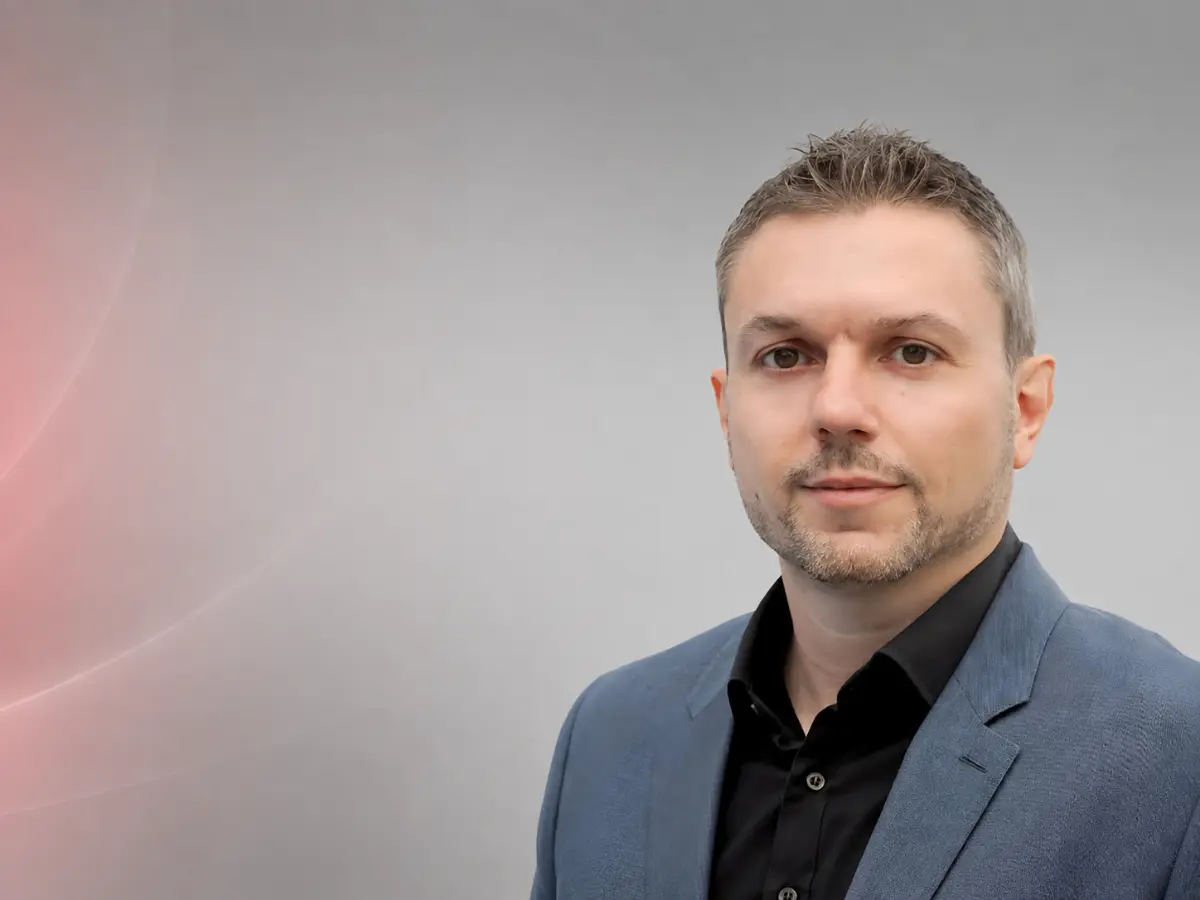
David Silver, the British AI researcher who built AlphaGo and AlphaZero at Google DeepMind, announced Monday a $1.1 billion seed round for his months-old startup Ineffable Intelligence, the largest seed financing ever completed by a European company.
The round was led by Sequoia Capital and Lightspeed Venture Partners and values the London-based company at $5.1 billion post-money. Additional investors include Nvidia, DST Global, Index, Google, and the UK's Sovereign AI Fund. The company emerged from stealth with the announcement on Monday.
Silver is one of the most decorated technical AI researchers of his generation, with a career built almost entirely around a single idea: that machines learning through trial and error, rather than from human-generated data, represent the most credible path to genuine intelligence.
Silver worked full-time at DeepMind from 2013 to 2026, leading its reinforcement learning research. He studied at Christ's College Cambridge, graduated in 1997, and returned to academia in 2004 at the University of Alberta to complete a PhD in reinforcement learning under Richard Sutton, widely regarded as the field's founding figure.
His most prominent achievement at DeepMind was leading the AlphaGo project, which produced the first AI program to defeat a top professional player at Go, long considered the most complex classic board game for AI. He then led AlphaZero, which learned to play Go, Chess, and Shogi entirely through self-play, starting from nothing but the rules of each game and no human data, before surpassing every other program in all three.
Silver received the 2019 ACM Prize in Computing for breakthrough advances in computer game-playing and was elected a Fellow of the Royal Society in 2021 for his contributions to deep reinforcement learning. He also holds a professorship at University College London and retains that role alongside leading Ineffable Intelligence.
The company is not developing a large language model. That distinction is central to Silver's thesis and to the investor case.
Most leading AI systems today, including GPT, Claude, Gemini, and their successors, are trained primarily on text scraped from the internet. They learn by predicting patterns in human-generated content. Silver's position is that this approach has a structural ceiling because it is bounded by the knowledge humans have already produced and encoded in language.
In a paper co-authored with computer scientist Richard Sutton titled "Era of Experience," Silver and Sutton argued that a new generation of AI agents will acquire superhuman abilities by learning primarily from experience rather than from human data, and that experience will ultimately far outpace human-generated content as the dominant medium of improvement.
The intended output is what Silver describes as an endlessly learning superintelligence that self-discovers the foundations of all knowledge, using internal simulations, called world models, that allow AI agents to predict the consequences of their actions before taking them.
In the company's own statement, Silver said the goal is to make first contact with superintelligence by creating a system that discovers all knowledge from its own experience, from basic motor skills to intellectual breakthroughs.
The approach draws directly on the AlphaZero precedent. AlphaZero operated in the closed, perfect-information environments of board games. The challenge for Ineffable Intelligence is applying the same principles to the open-ended complexity of the real world, which requires massive compute resources to build and run the world models needed to train general-purpose reinforcement learning agents, comparable to the infrastructure costs of training the largest language models. That requirement helps explain the scale of the seed round.
The previous European seed record was held by Mistral, the French AI startup co-founded by former DeepMind researcher Arthur Mensch in 2023, which raised 105 million euros at launch. Ineffable Intelligence's $1.1 billion round dwarfs that figure many times over.
Ashish Patel, managing director at Houlihan Lokey Capital Solutions Group, described the round as further evidence that the UK and wider European ecosystem can produce globally significant companies, with well-informed investors seeking the most capable individuals developing the most advanced technologies.
The UK government framed the investment in strategic terms. Science and Technology Secretary Liz Kendall said in a statement that the investment supports a company at the frontier of AI and underlines the government's determination to ensure the UK is an AI maker rather than an AI taker.
Sequoia partners Alfred Lin and Sonya Huang flew to London personally to secure the deal, an unusual step that reflects the competition among major venture firms to back senior technical talent departing large AI labs. The company has no product, no revenue, and no public deployment timeline.
Silver's move is part of a wider shift in how frontier AI research is being organised. For most of the past decade, the most significant AI work happened inside large corporate labs, Google DeepMind, OpenAI, Anthropic, Meta AI, with researchers benefiting from the compute, data, and engineering resources only those environments could provide.
That structure is changing. Ilya Sutskever, former chief scientist at OpenAI, founded Safe Superintelligence in 2024 and has raised $3 billion to date at a valuation that reached $32 billion by April 2025, with no product released. Jerry Tworek, who helped develop OpenAI's reasoning models, also left to found Core Automation.
A startup called Recursive Superintelligence, founded by former Google DeepMind engineer Tim Rocktäschel, was reported by the Financial Times last week to be raising up to $1 billion. AMI Labs raised $1 billion in March, shortly after its founder Yann LeCun stepped down as Meta's AI chief. Former staff from OpenAI, DeepMind, Anthropic, and xAI have collectively raised hundreds of millions in recent months for companies including Periodic Labs and Humans&.
The pattern reflects a specific dynamic: as corporate AI labs have grown larger and more bureaucratic, the researchers responsible for the foundational breakthroughs are choosing to pursue their own visions independently, and investors are writing billion-dollar commitments based on scientific track record alone, before any product exists.
The reinforcement learning approach Silver is pursuing is not new to him, but applying it at the scale Ineffable Intelligence is targeting is a different proposition from anything previously attempted.
Silver left DeepMind viewing large language models as fundamentally limited because they are built on human knowledge, and sees reinforcement learning, where AI learns through trial and error rather than from human-generated content, as the more credible path to systems that genuinely surpass human capability.
Google alone plans to spend $185 billion on AI infrastructure in 2026, nearly all of it directed toward the LLM paradigm. Silver's thesis strikes at the foundation of that investment, arguing that scaling transformers on more data and more compute will not, on its own, produce superintelligence.
Whether the thesis proves correct is a question the field will likely spend years debating. What is no longer debatable is whether investors take it seriously. The $1.1 billion committed to a company with no product and no revenue is the clearest possible answer to that question.










Stay informed wherever you are — join our growing community of readers and followers across social platforms.
Choosing a Search Firm
Compensation Intelligence
Board & Governance
Succession Strategy
AI Leadership Trends
Talent & Workforce Trends
AI Leadership Appointments
Compensation Changes
Big Tech Succession
CHRO & CPO Appointments
CEO Transitions
Board Members and Governance Committees
Operating Partners at private equity and venture capital firms
CHROs and Chief People Officers
HR leaders responsible for executive hiring
CEOs and Founders

.svg)
.svg)