








.png)









.png)


















Join 1M+ Readers Who Never Miss a Headline.
Stay informed wherever you are — join our growing community of readers and followers across social platforms.
Choosing a Search Firm
Compensation Intelligence
Board & Governance
Succession Strategy
AI Leadership Trends
Talent & Workforce Trends
AI Leadership Appointments
Compensation Changes
Big Tech Succession
CHRO & CPO Appointments
CEO Transitions
Board Members and Governance Committees
Operating Partners at private equity and venture capital firms
CHROs and Chief People Officers
HR leaders responsible for executive hiring
CEOs and Founders
May 7, 2026
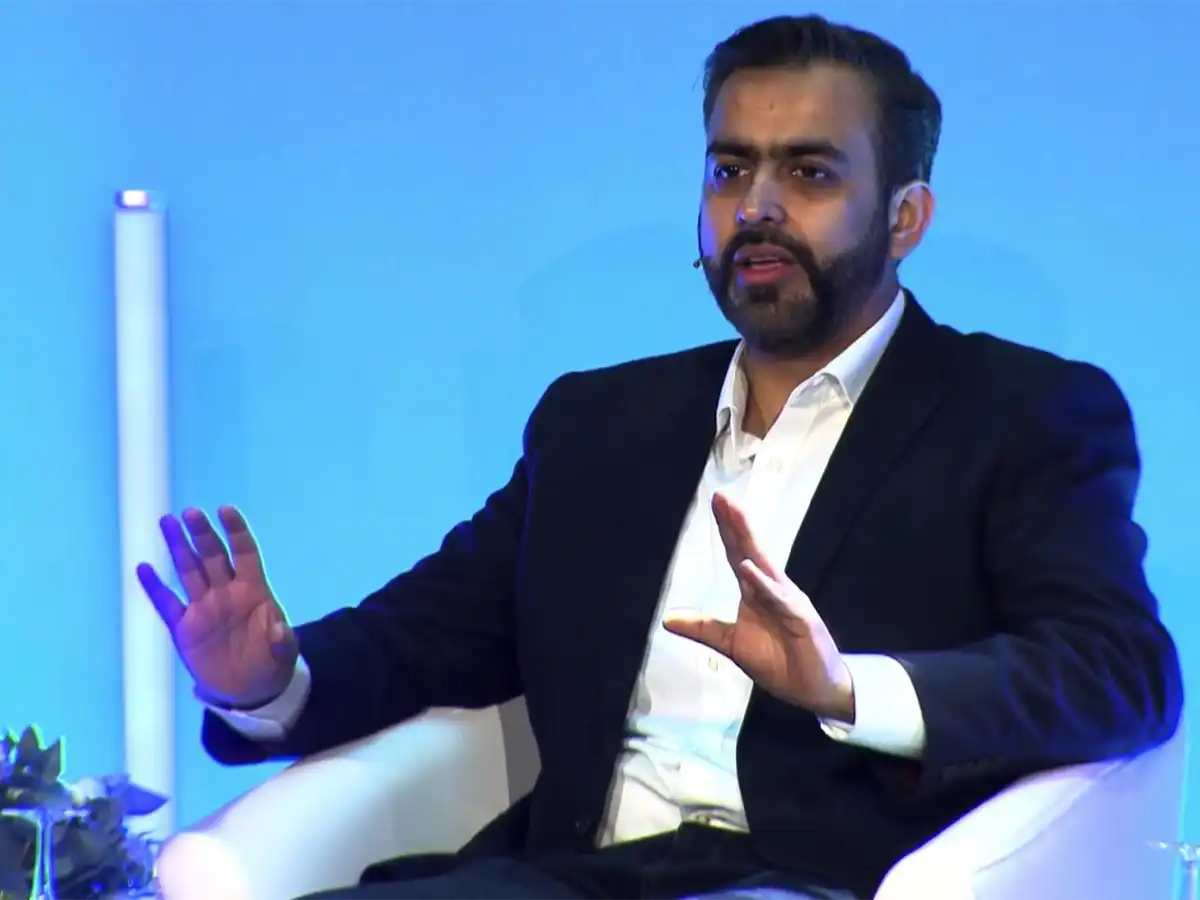
LinkedIn disclosed on Wednesday that its agentic AI hiring products are on track to generate $450 million in annual revenue, the first time the Microsoft-owned professional network has published a standalone figure for a specific AI product line. The number arrived on the same day Microsoft reported LinkedIn's overall revenue grew 12% year over year in the first quarter of 2026, and it carries particular significance given that it was cited publicly by Dan Shapero, who took over as LinkedIn's CEO just one week earlier.
The sales disclosure for a core AI product is new for LinkedIn, which has 1.3 billion members and makes much of its revenue from selling tools to sales and recruiting professionals. While Microsoft reports LinkedIn's overall sales growth as part of its productivity and business process operating unit, it does not disclose absolute dollar figures for the network. The $450 million projection is, by that measure, a rare act of financial transparency from a business that has historically operated behind Microsoft's consolidated reporting.
LinkedIn has launched two primary agentic AI products for recruiters: one designed for large enterprises and one for small businesses. The systems work by taking instructions from a human recruiter to understand what profile the recruiter is seeking, then sifting through LinkedIn's member database to identify the strongest candidates for human follow-up.
LinkedIn's head of engineering for talent solutions, Prashanthi Padmanabhan, described the infrastructure behind the product in a recent interview, explaining that the company's engineering stack evolved to support an agentic era where AI does not simply summarise text but executes multi-step workflows. The Hiring Assistant is built on the LangGraph agent orchestration framework, allowing AI agents to perform the labour-intensive work of scanning the platform's member database to identify candidates for hiring teams.
The tools include AI assistance for writing job descriptions, identifying qualified candidates, interpreting job requirements, drafting outreach messages, and conducting initial candidate screening interactions. The products, some of which were in testing for nearly a year before public release, are helping recruiters save time and achieve higher response rates when contacting potential hires.
The underlying inefficiency the products target is not subtle. Around three in four recruiters in key Asia-Pacific markets say finding qualified talent has become significantly harder, according to data released by LinkedIn. At the same time, recruiters have been devoting a large share of their working day to tasks that do not require human judgment. LinkedIn's Future of Recruiting research found that talent acquisition professionals using AI tools save an average of 20% of their working week on manual tasks, with those who have fully integrated AI reporting proportionally greater gains as automation extends across more pipeline stages.
The $450 million figure was disclosed alongside a direct statement from Shapero, who framed the revenue milestone as a product philosophy argument as much as a financial one.
"Recruiters told us half their day was low-value work, so we made a bet on understanding their pain to get our solution right," Shapero told Reuters. "That focus on the customer, not racing to launch an AI agent, was the right one and hitting this milestone shows it."
The statement is notable for what it implies about how LinkedIn positioned itself relative to the wave of AI product launches across the industry over the past two years. Many technology companies accelerated releases to establish market presence before fully validating product-market fit. LinkedIn's approach, spending nearly a year in testing before the products reached general availability, reflects a different calculation: that building genuine recruiter trust in an AI agent requires demonstrating reliability before scale, not after it.
For Shapero, making that case in his first week as CEO serves a dual purpose. It establishes his leadership voice as one grounded in product discipline and customer focus. It also provides continuity from a product culture he helped build as chief operating officer, where the Hiring Assistant tools were developed and validated before his appointment.
LinkedIn's Talent Solutions division was the primary driver of the Q1 2026 revenue growth. Beyond the agentic hiring products, Shapero noted that overall posts on the platform rose 14% during the quarter, while paid video content grew nearly 30% year over year as creators increasingly use LinkedIn to reach professional audiences.
The $450 million annual run rate, while meaningful as a disclosed figure, needs to be understood in proportion. LinkedIn's total revenue for 2025 was approximately $17.8 billion. The agentic hiring products, at their current trajectory, represent a small fraction of that total. Their significance lies less in the near-term revenue contribution and more in what they signal about where LinkedIn's monetisation growth will come from.
LinkedIn's core revenue model has always been built on selling access to its member data and communication tools to recruiters and sales professionals. The agentic AI layer extends that model by charging not just for access but for autonomous execution. A recruiter using LinkedIn Recruiter today pays for the ability to search and contact candidates. A recruiter using LinkedIn Hiring Assistant pays for a system that does those things on their behalf. The pricing logic, and the value it unlocks, is different, and potentially significantly higher per customer over time.
According to Korn Ferry's 2026 talent acquisition trends report, 52% of talent leaders are planning to add autonomous AI agents to their hiring teams this year. That adoption trajectory suggests the addressable market for LinkedIn's agentic products will expand substantially over the next 12 to 18 months, provided the products continue to demonstrate measurable recruiter efficiency gains.
LinkedIn is not alone in targeting the AI-driven recruitment market, but its position within it is structurally different from that of standalone competitors.
The broader recruitment AI market has seen significant growth in recent years, with platforms including SeekOut, hireEZ, Gem, and Pin all building agentic sourcing and outreach capabilities. AI recruiting tool adoption surged 428% between 2023 and 2025, according to iHire's State of Online Recruiting report, with 51% of organisations now using AI in some part of their recruiting process.
What distinguishes LinkedIn's products is the data asset they are built on. Every competing platform is, to varying degrees, sourcing candidates from LinkedIn's own database alongside other public and professional networks. LinkedIn's Hiring Assistant operates natively on a member graph with 1.3 billion profiles, with profile activity, connection data, engagement signals, and career trajectory information that no third-party platform has equivalent access to. The agents are not simply running searches; they are drawing on a data layer that competitors must work around.
The limiting factor for agentic AI in recruiting in 2026 is not the technology itself but process readiness. Agentic AI amplifies whatever process it is built on. Vague job requirements surface the wrong candidates at scale. Generic outreach templates send generic messages at scale. Organisations deploying these tools most effectively are those that standardise job requirements, outreach language, and screening criteria before the agent begins operating on them. That implementation challenge is one LinkedIn has an incentive to help its enterprise clients solve, since the quality of agent outputs directly affects whether customers renew.
The launch of agentic hiring products into a regulated market introduces a set of considerations that do not apply to passive search tools. When an AI agent makes decisions about which candidates to surface and which to skip, it is performing a filtering function that has historically been subject to equal opportunity employment law in most jurisdictions.
Only 26% of job applicants trust AI to evaluate them fairly, according to Gartner, making visible human oversight and clear explanations essential requirements for any agentic hiring system seeking broad adoption. Recruiters are adapting their interview and evaluation processes as candidates increasingly use generative AI tools themselves, placing a premium on structured questioning and human calibration.
The EU AI Act, now in effect across European member states, classifies AI systems used in employment and recruitment as high-risk, imposing requirements around transparency, documentation, and human oversight. LinkedIn's product design, which positions the agent as a tool for surfacing candidates for human review rather than making hiring decisions autonomously, aligns with the human-in-the-loop requirement that most regulatory frameworks currently mandate. That design choice also reflects sound product positioning: recruiters are far more likely to adopt a system that makes their judgment more informed than one that attempts to replace it.
The $450 million disclosure is a confidence signal as much as a financial one. LinkedIn has invested in agentic AI infrastructure over a multi-year period, with the Hiring Assistant products spending close to a year in testing before reaching market. Disclosing a forward revenue projection in the CEO's first public week is an unusual degree of specificity for a business that typically operates behind Microsoft's consolidated numbers.
The signal Shapero is sending to the market is that LinkedIn's AI investment is generating returns, and that the returns are measurable in terms that recruiting professionals and enterprise buyers understand: time saved, response rates improved, and qualified candidates surfaced faster from a database no competitor can fully replicate.
Whether the $450 million run rate grows toward a meaningful share of LinkedIn's total revenue over the next two to three years will depend on how quickly recruiting organisations move from traditional talent search tools to agentic workflows, how effectively LinkedIn defends its data advantage against competitors building alternative candidate graphs, and whether the regulatory environment around AI hiring tools remains workable for a product designed around autonomous candidate discovery at scale.
Those are medium-term questions. The near-term question Shapero answered on Wednesday is the simpler one: does the product work well enough that customers are paying for it at scale. The revenue figure says it does.














Stay informed wherever you are — join our growing community of readers and followers across social platforms.
Choosing a Search Firm
Compensation Intelligence
Board & Governance
Succession Strategy
AI Leadership Trends
Talent & Workforce Trends
AI Leadership Appointments
Compensation Changes
Big Tech Succession
CHRO & CPO Appointments
CEO Transitions
Board Members and Governance Committees
Operating Partners at private equity and venture capital firms
CHROs and Chief People Officers
HR leaders responsible for executive hiring
CEOs and Founders

.svg)
.svg)