







.png)










.png)























Join 1M+ Readers Who Never Miss a Headline.
Stay informed wherever you are — join our growing community of readers and followers across social platforms.
Choosing a Search Firm
Compensation Intelligence
Board & Governance
Succession Strategy
AI Leadership Trends
Talent & Workforce Trends
AI Leadership Appointments
Compensation Changes
Big Tech Succession
CHRO & CPO Appointments
CEO Transitions
Board Members and Governance Committees
Operating Partners at private equity and venture capital firms
CHROs and Chief People Officers
HR leaders responsible for executive hiring
CEOs and Founders
May 4, 2026

The numbers are stark. Nearly 96,000 tech workers have been laid off so far in 2026, bringing the total to close to 900,000 since 2020. The pace has not slowed. And yet one of the most significant workforce moves of the past week did not involve a mass layoff announcement. It involved a buyout.
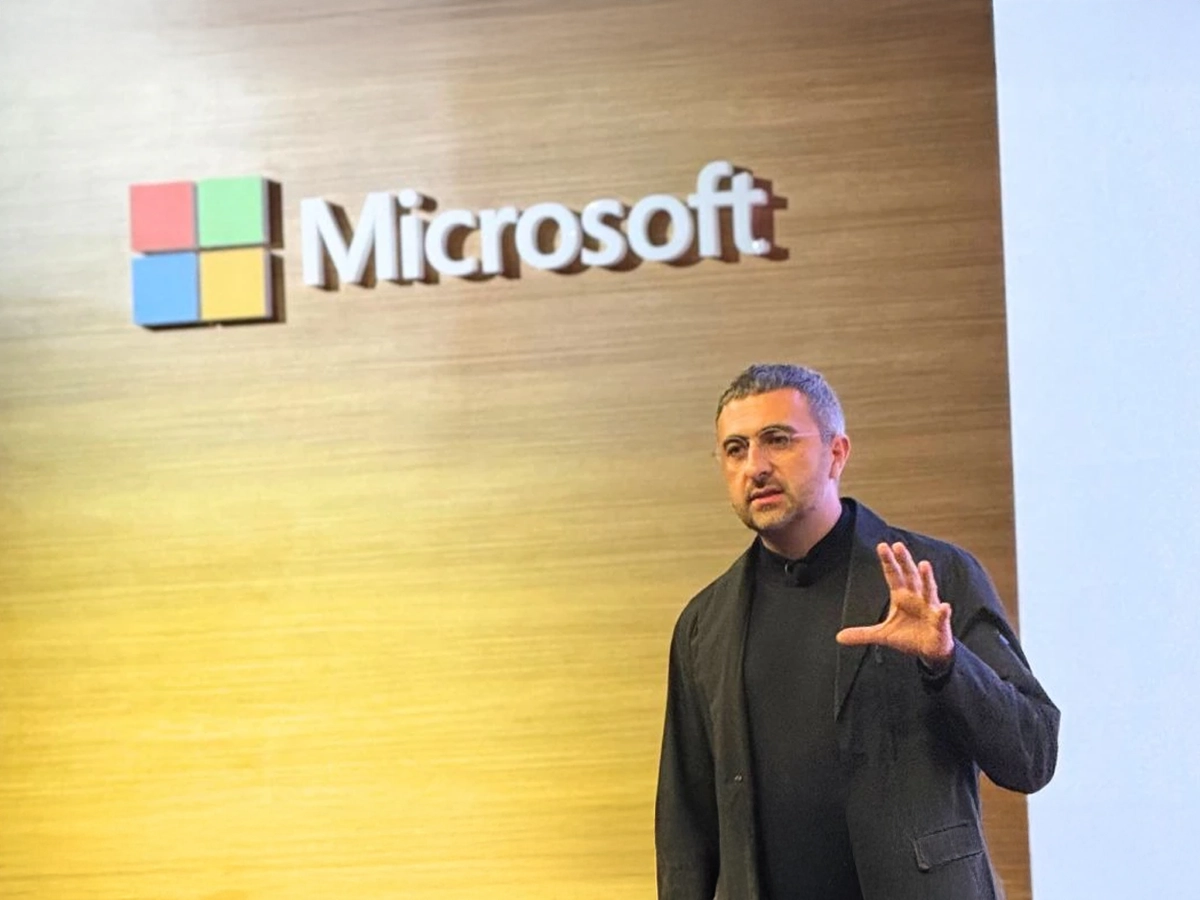
Microsoft announced it would offer voluntary buyouts to some U.S. employees, a first for the 51-year-old software company, as the tech industry grapples with changes sparked by the AI boom. The move was immediate and deliberate. About 7% of the U.S. workforce received the option to retire early, through a one-time retirement program available to employees whose age and years of service total 70 or higher. Those at the senior director level and below are eligible, with details to be communicated to qualifying employees and their managers on May 7.
The announcement arrived the same day Meta confirmed it was cutting 10% of its workforce. Together, the two moves put more than 20,000 potential job eliminations on the table in a single day, adding to a year that was already defined by workforce contraction across the industry.
The choice of mechanism matters. A voluntary buyout and a mandatory layoff both reduce headcount. The outcomes for the company are similar. The experience for the employee is not.
A buyout gives employers the ability to reduce staff without framing the exit as a performance judgment. It offers workers who may already be considering a transition the financial support to make it on their own terms. Employment lawyer Domenique Camacho Moran, quoted in recent coverage of the Microsoft program, described the logic directly: the voluntary exit option allows a company to separate from employees without the implication that their work has been inadequate.
By contrast, traditional layoffs carry legal and reputational complexity. Evaluating each employee's performance and skill set for a reduction in force creates litigation exposure and requires significant HR resources. Buyouts sidestep much of that friction by making the decision voluntary.
Microsoft's chief people officer Amy Coleman wrote in the internal memo that the program was designed to give eligible employees the choice to take their next step on their own terms, with generous company support. The size of the financial package has not been disclosed, but the framing, generous company support, signals that the offer is designed to be genuinely attractive rather than nominal.
Microsoft has also announced changes to how it distributes stock in annual rewards. Managers will no longer be required to tie stock directly to cash bonuses, giving them more flexibility to recognize high performance. The two moves together suggest a company trying to simultaneously reduce overall headcount while retaining and rewarding its highest-performing remaining staff.
What makes the current wave of tech workforce reductions unusual is the context in which it is happening. These are not companies in financial distress cutting costs to survive. They are companies reporting strong revenues, projecting record capital expenditures, and reducing headcount at the same time.
Microsoft is expected to invest $145 billion in capital expenditure this fiscal year, as part of a combined $700 billion wave of AI infrastructure spending from major tech companies in 2026. In the quarter ending December 2025, Microsoft spent $37.5 billion on data center and infrastructure costs alone. The company is building out the computing capacity to support AI workloads at scale, signing long-term cloud contracts, and simultaneously telling a portion of its workforce that their role in the organisation no longer requires them.
Alphabet, Microsoft, Meta, and Amazon are expected to collectively spend close to $700 billion in capital expenditures in 2026 to fuel AI infrastructure. The same companies driving that investment are also driving the year's job cuts. That combination is generating a specific kind of anxiety in the workforce, one that is qualitatively different from previous periods of tech sector contraction.
The voluntary buyouts at Microsoft follow the company laying off around 9,000 workers last summer, its largest round of cuts since 2023. The pattern across 2025 and into 2026 is one of ongoing, incremental reduction rather than a single dramatic event. Companies are not making one large restructuring announcement. They are adjusting continuously, through layoffs, through buyouts, through leaving open roles unfilled, and through not backfilling departures.
Meta, for instance, announced in a company-wide memo that it would cut roughly 8,000 jobs, equivalent to about 10% of its workforce, and that the 6,000 open positions it had been hiring for would no longer be filled.
The buyout approach is not unique to Microsoft, though the company's decision to offer one for the first time in its history gives it particular significance.
Last year, Google offered buyouts to U.S. employees on specific teams, including the unit running its search, ads, and commerce divisions. Unlike Microsoft's framing, Google was explicit that the buyout was an opportunity for underperforming employees to exit. Senior vice president Nick Fox wrote in the internal memo that employees who were energised by their work and performing well should not take the offer. The subtext was unambiguous.
The harder-edged approaches are also present in the 2026 picture. Amazon has eliminated 30,000 jobs since October, representing roughly 10% of its corporate and tech workforce. Block, the fintech company behind Square and Cash App, cut nearly half its workforce, citing the reduced need for large teams when AI tools are available. CEO Jack Dorsey stated that cutting immediately was preferable to gradual reductions, which he described as destructive to morale.
Nike also announced layoffs this week, with approximately 1,400 employees affected, mostly in its technology department. The spread of AI-linked job cuts into non-tech industries is a feature of 2026 that distinguishes it from prior years. Technology roles no longer exist only inside technology companies, and the restructuring pressure is following accordingly.
Economists and industry analysts are increasingly reluctant to describe what is happening as a cyclical correction. The previous wave of tech layoffs in 2023 and 2024 carried a clear explanation: companies had over-hired during the pandemic and were normalising their headcount. That explanation is no longer sufficient.
The 2026 wave is structurally different from prior corrections. It is being driven by companies actively replacing human roles with AI systems. Out of confirmed tech layoffs through early March, approximately one in five were explicitly attributed to AI and automation by the companies themselves, a dramatic increase from 2025 when AI was cited as a factor in fewer than 8% of layoff announcements.
Anthony Tuggle, an executive coach and leadership expert who previously worked in AI, described the current moment as a fundamental structural shift rather than a temporary market correction, arguing that the beginning of a permanent transformation in how work is organised and executed across industries is already underway.
The data on where that transformation is landing carries a specific pattern. Since the public launch of ChatGPT in late 2022, job postings for roles involving structured and repetitive tasks, the type most susceptible to AI automation, decreased by 13%, while demand for roles requiring more analytical, technical, or creative work grew by 20%, according to research from Harvard Business School Professor Suraj Srinivasan.
Federal Reserve Bank of Dallas research suggests AI may substitute for entry-level workers while augmenting the work of experienced ones, with wages rising in AI-exposed occupations that place high value on tacit knowledge and accumulated experience. The implication is that the workforce restructuring underway is not distributed evenly across seniority levels. Senior employees with deep institutional knowledge and judgment are relatively insulated. Entry-level workers in structured, codifiable roles are not.
Goldman Sachs data suggests AI is eliminating roughly 16,000 U.S. jobs per month, with younger workers taking a disproportionate share of the displacement. Gen Z workers are concentrated in the administrative, customer service, and white-collar support roles that AI automates most efficiently, and without accumulated experience to insulate them, their exposure is higher than that of senior colleagues.
The cumulative effect of these changes is visible in how tech workers themselves describe their situation. Glassdoor's Employee Confidence Index shows the tech sector has recorded the largest year-over-year drop in confidence of any industry, falling 6.8 percentage points in March from a year earlier to 47.2%. Daniel Zhao, Glassdoor's chief economist, noted that many workers feel stuck, characterising it as an unusual technological boom in which the people participating in it are feeling anxious.
That framing captures something specific about 2026. Previous technology booms produced anxiety in industries being disrupted from outside. The current one is producing anxiety inside the technology industry itself, among the engineers, product managers, and knowledge workers who built the tools now being used to reduce the need for their roles.
The buyout approach Microsoft has chosen reflects a calculation that is partly financial, partly reputational, and partly strategic. Financially, it removes headcount cost without the legal exposure of performance-based layoffs. Reputationally, it treats a specific cohort of employees, those with long tenures and retirement-adjacent age, with visible respect. Strategically, it preserves goodwill in a labour market where the company still needs to attract AI engineers and specialised technical talent.
A 2026 Motion Recruitment study found that AI adoption is slowing hiring for entry-level and generalised IT roles while AI-specific positions remain in high demand. Tech salaries are largely flat year over year, with the exception of AI engineering roles.
The pattern forming across the industry is one where two labour markets are operating in parallel. One is contracting, specifically for generalised technical roles, administrative functions, and positions that can be handled by AI systems with sufficient reliability. The other is expanding, for workers who understand how to build, deploy, and manage those systems at scale.
The agentic AI market has grown to approximately $9 billion in 2026. The companies investing in that market are the same ones reducing their broader headcount. The math they are running is that smaller, more specialised teams operating with AI tools generate better returns than larger, more generalised workforces operating without them. Whether that calculation proves correct over the medium term remains to be seen. What is already visible is that the transition is underway, it is accelerating, and the workforce is bearing the cost of it in real time.













Stay informed wherever you are — join our growing community of readers and followers across social platforms.
Choosing a Search Firm
Compensation Intelligence
Board & Governance
Succession Strategy
AI Leadership Trends
Talent & Workforce Trends
AI Leadership Appointments
Compensation Changes
Big Tech Succession
CHRO & CPO Appointments
CEO Transitions
Board Members and Governance Committees
Operating Partners at private equity and venture capital firms
CHROs and Chief People Officers
HR leaders responsible for executive hiring
CEOs and Founders

.svg)
.svg)