









.png)











.png)

























Join 1M+ Readers Who Never Miss a Headline.
Stay informed wherever you are — join our growing community of readers and followers across social platforms.
Choosing a Search Firm
Compensation Intelligence
Board & Governance
Succession Strategy
AI Leadership Trends
Talent & Workforce Trends
AI Leadership Appointments
Compensation Changes
Big Tech Succession
CHRO & CPO Appointments
CEO Transitions
Board Members and Governance Committees
Operating Partners at private equity and venture capital firms
CHROs and Chief People Officers
HR leaders responsible for executive hiring
CEOs and Founders
May 17, 2026
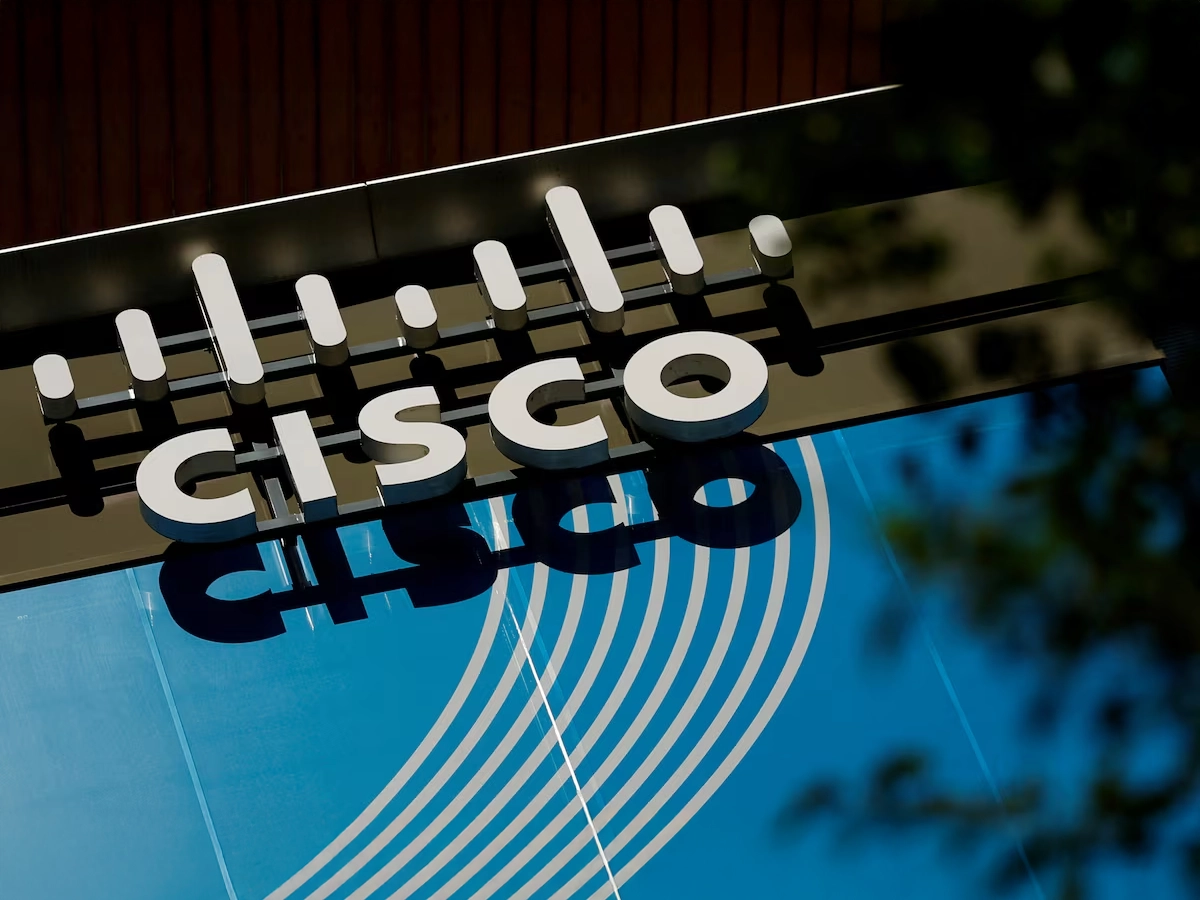
Cisco delivered its strongest quarter on record last week and announced the elimination of nearly 4,000 jobs in the same earnings release. Revenue for the fiscal third quarter reached $15.8 billion, up 12% year over year, with product revenue growing 17% and total product orders surging 35%. GAAP earnings per share rose 37% year over year to $0.85. The stock responded by surging roughly 20% in after-hours trading, its sharpest single-session gain since 2002.
The combination of record results and significant headcount reduction, arriving simultaneously, is the defining leadership move of Chuck Robbins' tenure and one of the clearest examples of how executive strategy in the AI era has separated itself from the frameworks that governed technology companies a decade ago.
The financial logic behind Robbins' decision rests on a specific demand signal that arrived faster than the company's own projections anticipated.
Cisco took $1.9 billion in AI infrastructure orders from hyperscalers in Q3 2026 alone, bringing the year-to-date total to $5.3 billion. That figure exceeded Cisco's initial full-year target of $5 billion with one quarter still remaining, prompting the company to raise its full-year AI order guidance to approximately $9 billion, representing 4.5 times the fiscal 2025 total. AI infrastructure revenue for fiscal 2026 is now projected at $4 billion, revised upward from an earlier $3 billion estimate, with CFO Mark Patterson indicating that $6 billion in AI revenue in fiscal 2027 is a reasonable expectation.
Networking revenue, Cisco's largest segment, rose 25% to $8.82 billion. The company secured five fresh hyperscaler design wins in Q3 alone. The demand is not theoretical. It is contracted, and it is arriving from the same hyperscalers, Amazon, Microsoft, Google, and Meta, that are collectively committing hundreds of billions to AI infrastructure in 2026. Cisco's Silicon One chips and Acacia coherent pluggable optics have become central to how those companies are building out data center capacity, positioning Cisco as infrastructure rather than peripheral equipment in the AI buildout.
Layoff notifications for the nearly 4,000 affected employees began on May 14, 2026. The restructuring is expected to cost Cisco up to $1 billion, with $450 million recognised in the fourth quarter.
In his public statement, Robbins framed the cuts as a direct consequence of competitive positioning rather than financial necessity. Being one of the winners in AI networking, he wrote, means making hard decisions about where to invest, how to organise, and how cost structure reflects the opportunity in front of the company. He was explicit that reductions in some areas were being made alongside clear strategic investments in silicon, optics, security, and employee AI capability.
The decision follows a pattern that has become consistent across technology companies in 2026. Cloudflare cut 1,100 jobs the same week while reporting record revenue. General Motors laid off hundreds of IT workers to hire workers with stronger AI skills. PayPal announced a 20% workforce reduction over two to three years while simultaneously projecting $1.5 billion in AI-driven cost savings. In each case, strong financial performance and workforce reduction are presented not as contradictory signals but as components of the same strategic logic.
What makes the Cisco case particularly instructive is the scale and clarity of the AI demand data sitting behind the decision. This is not a company speculating that AI will eventually reduce its need for certain roles. It is a company with $9 billion in AI infrastructure orders on its forward book, deciding which parts of its organisation are positioned to serve that demand and which are not.
This is not Cisco's first significant restructuring under Robbins, and the frequency of the moves raises a governance question that boards and senior leadership teams at comparable companies are navigating in parallel.
Cisco conducted two separate rounds of layoffs in 2024 affecting thousands of employees and cut over 150 jobs in 2025. The Q3 2026 reduction is the largest since those 2024 rounds. Across those events, Cisco's workforce has contracted while its revenue trajectory has improved substantially. The correlation between workforce reduction and financial performance has been consistent enough that investors have learned to read layoff announcements as strategic reallocation signals rather than distress indicators.
That investor response carries its own leadership implication. When markets reward headcount reduction during strong quarters, the incentive structure for executive decision-making shifts. A CEO announcing 4,000 cuts alongside record earnings and watching the stock gain 20% receives a clear signal about how capital markets are evaluating the trade. Whether that signal accurately reflects long-term organisational health, or simply reflects the current AI infrastructure demand cycle, is a question boards should be pressing.
The compensation dimension also deserves scrutiny. Robbins was slated to earn more than $52 million in executive compensation during 2025, according to public filings. Cisco declined to comment when asked whether Robbins plans to reduce his compensation in connection with the workforce reduction. That silence, alongside a $1 billion restructuring charge passed to the company while executive pay remains at record levels, is the kind of governance gap that CHROs and board compensation committees at peer companies are watching carefully.
Alongside the AI infrastructure investment, Robbins has identified cybersecurity as the second pillar of Cisco's repositioning, and the rationale there extends beyond growth opportunity.
Security revenue held steady at approximately $2 billion during Q3. Cisco recently introduced a leaderboard to rank generative AI models based on their resistance to cyberattacks, a product positioning move that ties the company's security portfolio directly to the AI infrastructure it is selling.
The security investment is also a response to reputational exposure that accumulated over the past two years. Hackers have been exploiting critical vulnerabilities in Cisco routers and firewalls to break into customer networks since at least 2023, including U.S. government systems flagged by CISA. Chinese state-sponsored actors exploited a zero-day in Cisco equipment in late 2025, and a voice phishing attack in mid-2025 exposed customer personal information in a data breach. A company positioning itself as the critical infrastructure backbone of the AI era cannot sustain that positioning with a recurring security vulnerability narrative. The investment in cybersecurity capability is as much about protecting the AI infrastructure thesis as it is about growing a separate revenue line.
The Cisco Q3 announcement distils a leadership calculus that is playing out at scale across the technology industry in 2026. Revenue and headcount are being decoupled. A company can grow its top line at 12% year over year, generate record profit, and simultaneously determine that a meaningful share of its current workforce is not positioned for the work the next phase of growth requires.
What markets are rewarding is not headcount but margin expansion and capital efficiency. When a company posts record revenue and announces layoffs in the same breath, investors read it as a signal that management has clear visibility into where the next dollar of growth originates and is unwilling to let legacy organisational structure stand between the company and that opportunity.
For the CEOs, CHROs, and board members watching Robbins' decision, the operational question it poses is specific: does your current cost structure reflect the opportunity in front of you, or the organisation you built for the opportunity that existed three years ago. Cisco's answer, delivered alongside its best quarterly result, is that the two are no longer the same question.

















Stay informed wherever you are — join our growing community of readers and followers across social platforms.
Choosing a Search Firm
Compensation Intelligence
Board & Governance
Succession Strategy
AI Leadership Trends
Talent & Workforce Trends
AI Leadership Appointments
Compensation Changes
Big Tech Succession
CHRO & CPO Appointments
CEO Transitions
Board Members and Governance Committees
Operating Partners at private equity and venture capital firms
CHROs and Chief People Officers
HR leaders responsible for executive hiring
CEOs and Founders

.svg)
.svg)