


.png)

.png)








Join 1M+ Readers Who Never Miss a Headline.
Stay informed wherever you are — join our growing community of readers and followers across social platforms.
Choosing a Search Firm
Compensation Intelligence
Board & Governance
Succession Strategy
AI Leadership Trends
Talent & Workforce Trends
AI Leadership Appointments
Compensation Changes
Big Tech Succession
CHRO & CPO Appointments
CEO Transitions
Board Members and Governance Committees
Operating Partners at private equity and venture capital firms
CHROs and Chief People Officers
HR leaders responsible for executive hiring
CEOs and Founders
May 18, 2026
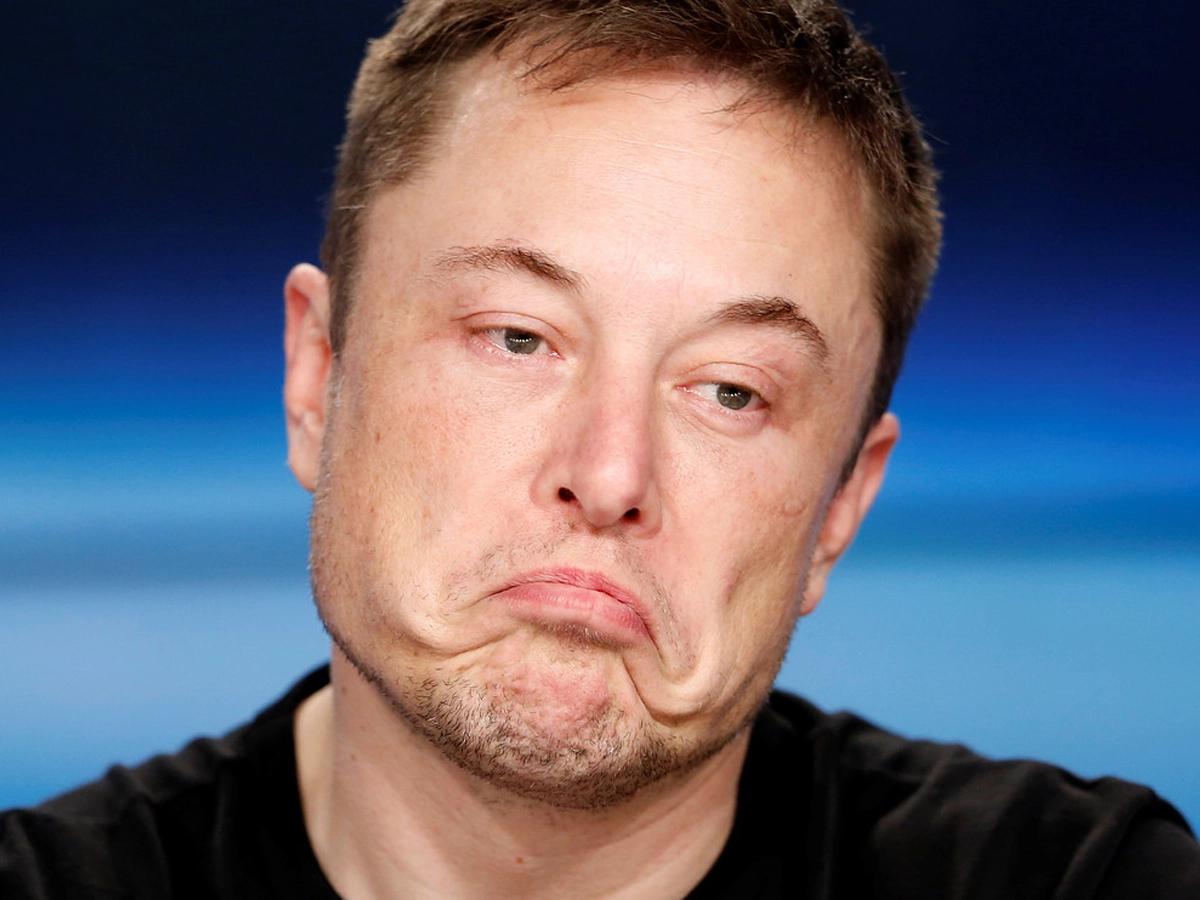
A nine-member jury in Oakland, California delivered a unanimous verdict this morning rejecting all of Elon Musk's claims against OpenAI, Sam Altman, Greg Brockman, and Microsoft. The jury began deliberating at 8:30 a.m. and reached its decision in under two hours, following 11 days of testimony and three weeks of proceedings in federal court. U.S. District Judge Yvonne Gonzalez Rogers accepted and adopted the jury's findings on the spot.
The decision ends a case that reshaped public understanding of how OpenAI was built, who paid for it, and what promises were or were not made between its founders. It also removes a significant legal overhang from one of the most valuable private companies in the world at a moment when it is preparing for a public offering.
The verdict did not settle whether OpenAI violated its founding charitable mission. That question, central to Musk's public narrative about the case, was never reached. In determining that the suit was filed too late, the jury sidestepped the core allegations that Altman and Brockman committed a breach of charitable trust by converting OpenAI into a for-profit enterprise and profiting from that decision.
The statute of limitations defence that OpenAI advanced held that Musk had sufficient knowledge of the actions he was complaining about well before the legal deadlines for filing. The specific cutoffs varied by charge: before August 5, 2021 for the first count, August 5, 2022 for the second, and November 14, 2021 for the third. The jury found all of Musk's claims against OpenAI and Altman to have exceeded the statute of limitations, and on the same grounds rejected his claim that Microsoft aided and abetted Altman and Brockman in allegedly breaching their duty to the organisation.
Judge Gonzalez Rogers had signalled during the remedies hearing, running in parallel, that she was unpersuaded by Musk's damages framework. His expert witness had calculated wrongful gains to OpenAI and Microsoft at between $78.8 billion and $135 billion. The judge told the expert that the analysis appeared devoid of connection to the underlying facts. That characterisation made her acceptance of the jury's findings unsurprising. She told the courtroom there was a substantial amount of evidence to support the jury's findings, and said she had been prepared to dismiss on the spot.
Musk's lead attorney Steven Molo reserved the right to appeal, describing the verdict to reporters outside the courthouse as a narrow decision on technical legal issues, and contending that Musk's side had proved the core of its case even if the timing argument prevailed.
Before reaching its procedural conclusion, the case produced three weeks of testimony that put the internal history of one of the most consequential technology companies in the world onto the public record. Witnesses included Sam Altman, Greg Brockman, Microsoft CEO Satya Nadella, and Musk himself, with the proceedings serving as a public excavation of relationships and decisions that shaped the trajectory of AI development over the past decade.
Musk testified that he contributed roughly $38 million to OpenAI on the understanding it would develop AI for the benefit of humanity rather than to enrich any individual. He said he waited to file suit because he believed reassurances from Altman over the years, and that he finally concluded the organisation had crossed a line when Microsoft committed $10 billion to OpenAI's for-profit arm in 2023 in exchange for intellectual property rights and a share of future profits.
OpenAI's lawyers presented a different account: that Musk himself was involved in discussions about creating a for-profit entity before his departure from the board in 2018, that his donations were not restricted in any way, and that the restructuring was the only viable path to competing against Google DeepMind in a capital-intensive race for frontier AI development. They also argued that Musk's motivation was competitive rather than principled, noting that he filed the lawsuit a year and a half after founding xAI.
The contrast between those two accounts was never resolved by the jury because it did not need to be. The statute of limitations finding made the deeper question legally moot, at least for now.
The timing of the decision is significant for reasons that extend well beyond the litigation itself. OpenAI raised $122 billion at a valuation of over $850 billion in March 2026 and is preparing for a public offering. The verdict removes what had been one of the last remaining legal threats that could have forced a restructuring of the company ahead of that process.
Among the remedies Musk had sought was the unwinding of OpenAI's 2025 recapitalisation, which confirmed large ownership stakes for outside investors including Microsoft while leaving a nonprofit foundation in nominal oversight of business operations. A ruling in his favour on that point would have introduced substantial uncertainty into the company's corporate structure at precisely the moment its bankers are preparing to bring it to market.
OpenAI completed a restructuring in 2025 that maintained a nonprofit in control of its business operations while allowing the growth of its for-profit arm, a structure Musk had argued was a betrayal of the founding mission. That structure now stands, unchanged and unchallenged by the verdict.
The case also clarifies the competitive landscape between the two founders. Musk's xAI, formed in 2023, merged with SpaceX in February 2026 and is expected to pursue its own public offering imminently. SpaceX confidentially filed for an IPO in April and is expected to make its prospectus public shortly, with the company valued at $1.25 trillion following the xAI merger. The verdict means both Altman and Musk enter the public markets phase of their respective companies without the litigation between them as an active legal variable. The competitive one remains.
For the boards and leadership teams watching the case, the verdict carries a specific lesson about what the transition from nonprofit to commercial AI development actually produced and how it survived legal scrutiny.
OpenAI's ability to raise $122 billion at an $850 billion valuation, build the world's most widely used AI assistant, and defend its corporate structure in federal court rests on a set of governance decisions made between 2017 and 2019. Those decisions, to create a capped-profit subsidiary, to accept Microsoft's investment, and to prioritise competitive capability over strict nonprofit constraints, were made without a clear founding-document mandate and in the face of disagreement from at least one co-founder. The verdict does not validate those decisions on their merits. It establishes that the window to challenge them through this particular legal mechanism has closed.
The broader governance question the case surfaced, about what obligations technology organisations founded on explicitly humanitarian missions carry when commercial imperatives require structural compromise, was not answered in Oakland this week. It was deferred by a statute of limitations finding. That question will continue to be asked of OpenAI, Anthropic, and the other frontier AI labs as they move toward public markets and the accountability structures that come with them.



Stay informed wherever you are — join our growing community of readers and followers across social platforms.
Choosing a Search Firm
Compensation Intelligence
Board & Governance
Succession Strategy
AI Leadership Trends
Talent & Workforce Trends
AI Leadership Appointments
Compensation Changes
Big Tech Succession
CHRO & CPO Appointments
CEO Transitions
Board Members and Governance Committees
Operating Partners at private equity and venture capital firms
CHROs and Chief People Officers
HR leaders responsible for executive hiring
CEOs and Founders
.svg)
.svg)