







.png)










.png)
















Join 1M+ Readers Who Never Miss a Headline.
Stay informed wherever you are — join our growing community of readers and followers across social platforms.
Choosing a Search Firm
Compensation Intelligence
Board & Governance
Succession Strategy
AI Leadership Trends
Talent & Workforce Trends
AI Leadership Appointments
Compensation Changes
Big Tech Succession
CHRO & CPO Appointments
CEO Transitions
Board Members and Governance Committees
Operating Partners at private equity and venture capital firms
CHROs and Chief People Officers
HR leaders responsible for executive hiring
CEOs and Founders
May 25, 2026
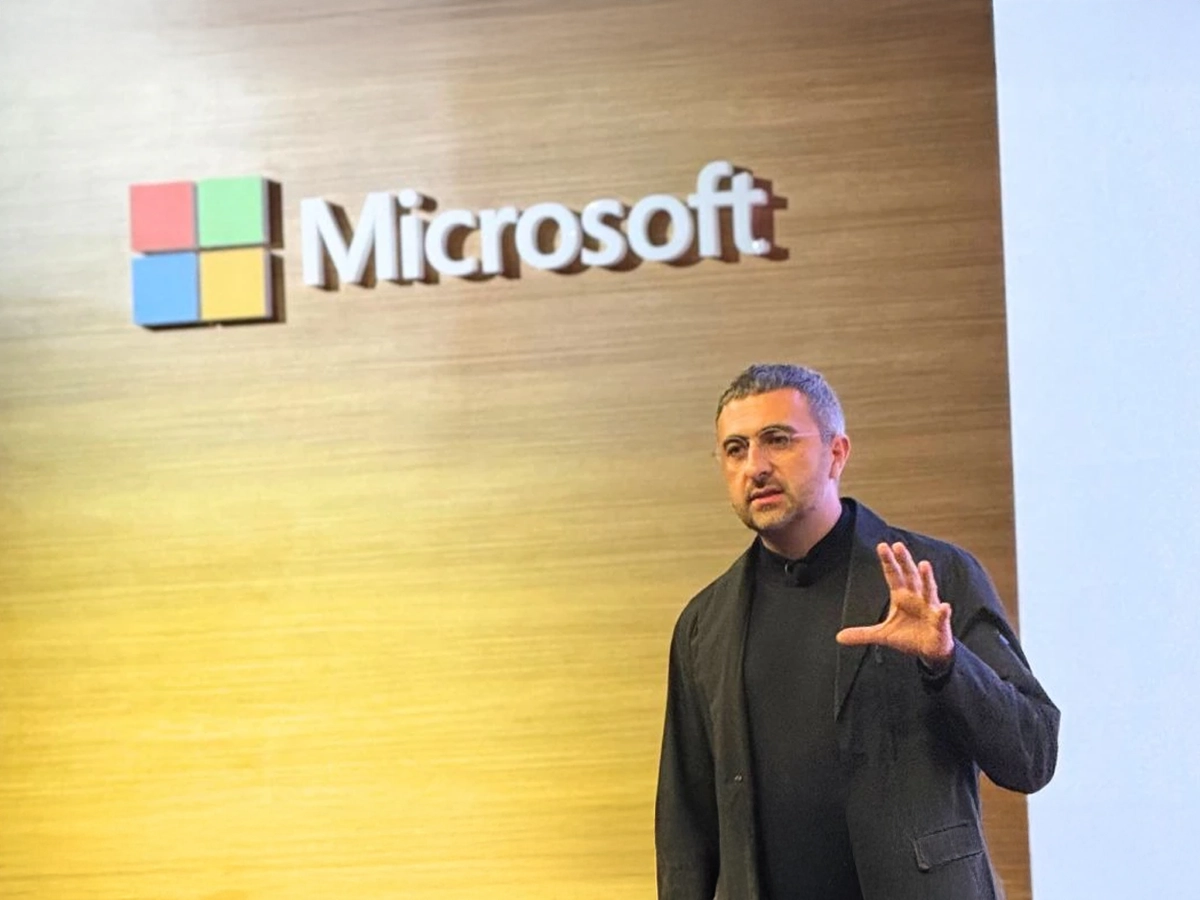
Speed has defined enterprise AI adoption in 2025 and 2026. Responsible deployment has been discussed in every boardroom and actioned in far fewer. Microsoft, which sits at the intersection of both pressures as one of the largest AI infrastructure and product companies in the world, made a structural decision in early 2025 that says something specific about how it intends to manage that tension: it created the Trusted Technology Group and handed its leadership to an accessibility executive with 21 years at the company.
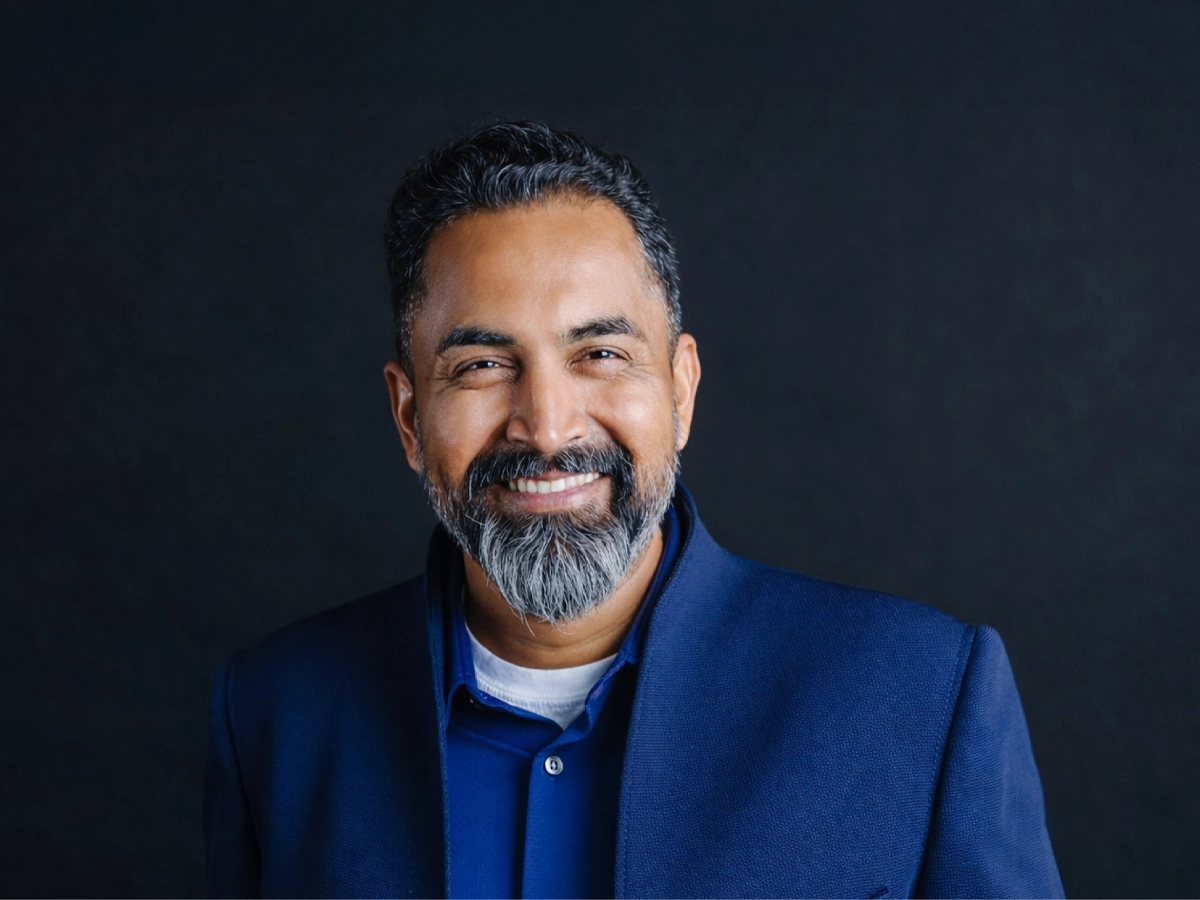
Jenny Lay-Flurrie moved into the role of VP, Trusted Technology Group on February 3, 2026. Microsoft created the group in early 2025 and has since consolidated all responsible tech initiatives under its umbrella, including accessibility, digital safety, human rights, responsible AI, privacy, supply chain integrity, and technology for the benefit of society. The consolidation under a single leadership structure is itself a governance decision, centralising what had been distributed across separate teams into a function with clear ownership and a clear mandate.
The choice to place an accessibility leader at the top of that function is not incidental. It reflects a specific view about where AI failure starts and what rigorous oversight requires.
The Trusted Technology Group has to influence which AI features launch, which get revised, and which stay on hold to matter. Its structure puts Lay-Flurrie's team closer to the product decisions that determine release scope and timing, rather than operating as a policy layer that reviews decisions after they are made.
That distinction is the critical one. Responsible AI functions at most large technology companies have historically operated as advisory bodies, producing principles, guidelines, and red lines that engineering teams may or may not treat as binding. Microsoft's TTG model, at least in its stated design, places oversight earlier in the product cycle and gives it structural authority over launch decisions.
Lay-Flurrie frames the mandate in two questions: how do we build it right, and how can we make sure it stays right. The second question is the harder one. A product that passes responsible tech review at launch operates in a real-world environment that changes continuously, generating new failure modes that no pre-release evaluation could fully anticipate.
The approach mirrors a principle Lay-Flurrie has applied to accessibility for years. Research shows that 50% of accessibility bugs in production originate during the design phase, before development even begins. Her solution, shifting left, means building accessibility into products from the first design decision rather than auditing and fixing after launch. The same logic now applies to the full scope of responsible technology under the TTG.
The most concrete example of what the TTG exists to address involves a failure that Microsoft discovered in its own AI image generation systems.
When the company's models generated imagery depicting blind people, the output consistently showed individuals wearing full blindfolds rather than representing how blind and low-vision people actually live and move through the world. The models had been trained on internet-scale data. The internet, as Lay-Flurrie described it, is not the most inclusive place. The training data encoded a visual stereotype, and the model faithfully reproduced it at scale.
To address this, Microsoft purchased more than 20 million minutes of multimodal data from Be My Eyes, a nonprofit accessibility platform that blind and low-vision people use to connect with volunteers and AI for visual assistance. The data consisted of video material captured by blind individuals in their daily lives, covering navigation with canes, working with guide dogs, and performing routine household tasks. Faces were anonymised through blurring before the data entered training pipelines.
The fix required a specific kind of intervention that many AI teams are not structured to identify or execute. It required someone with domain expertise in how blind people actually live to recognise the error, relationships with the right data source to address it, and authority inside the engineering pipeline to change what the model was being trained on. That combination describes exactly what an accessibility-led responsible tech function is positioned to provide.
Annie Brown, CEO of Reliabl, a machine learning training software company working to minimise bias in AI models, noted that diverse data is only part of the solution. If the metadata layer, how images uploaded to a dataset are labelled, is not examined with equal care, the labels themselves will reproduce the same biases the data was meant to correct. The training data intervention is necessary but not sufficient on its own.
Microsoft's approach is one specific answer to a governance problem that every large AI company is solving differently.
Google maintains a more engineering-led architecture guided by its core AI principles and specialised safety councils rather than a centralised oversight function. Microsoft's approach has roots going back to 2002, when Bill Gates released the Trustworthy Computing memo that prioritised reliability over new feature development, a document that reset engineering priorities across the company at a moment when security vulnerabilities had become a public liability.
The TTG represents an update to that 2002 precedent, applied to a technology that is more pervasive, faster-moving, and more deeply integrated into sensitive professional and personal contexts than the software security challenges Gates was responding to. Whether the centralised model produces better outcomes than Google's distributed engineering-led approach is a question the industry will answer empirically over the next several years as AI systems continue to scale and their failure modes become better understood.
What the Microsoft model signals is a leadership preference for explicit accountability over distributed responsibility. When something goes wrong with a Copilot output or an AI-generated image, the TTG structure creates a named function and a named executive responsible for identifying and fixing it. That accountability architecture is harder to build into an engineering-led model where responsibility for responsible AI is shared across teams with other primary mandates.
The dimension of Lay-Flurrie's mandate that receives the least attention in discussions of responsible AI is also the one with the most direct operational implication for large enterprises: AI that works well for people with disabilities works better for everyone.
Microsoft gave its disability employee resource group first access to Copilot, before broader enterprise rollout. For Deaf employees, the AI-enabled captioning, transcripts, meeting notes, and sign language recognition created functional independence that had not previously existed. For neurodiverse employees, the cognitive load reduction was substantial enough that when Lay-Flurrie's team tried to reclaim the licences, the users refused to give them back.
Diego Mariscal, CEO of 2Gether-International, a startup accelerator run by and for entrepreneurs with disabilities, noted that including disabled people at the decision-making table matters from both the top down and bottom up. The question he poses is not whether to include disabled people in AI development out of obligation, but whether excluding them means missing the design insights that would make the technology more capable and more broadly useful.
The Microsoft data supports that argument. The AI tools designed to address the specific needs of Deaf and neurodiverse employees generated adoption and retention rates that no other rollout of Copilot had produced. The product improvements driven by inclusion requirements created functionality that the broader workforce found valuable. The responsible tech mandate and the product quality mandate are, in this evidence, pointing in the same direction.
The structural decision Microsoft made in creating the TTG, consolidating responsible tech under a single senior leader with product access and launch authority rather than advisory influence, addresses a governance gap that exists in most large technology organisations.
The test of whether the TTG matters is whether it has the authority to delay or reshape product launches, not just to publish principles. Lay-Flurrie's background as an accessibility executive, rather than a policy or legal professional, is the strongest signal that Microsoft intends the function to operate with product fluency rather than compliance orientation.
For boards and senior leaders assessing their own responsible AI governance, the questions the TTG model raises are direct. Where does accountability for AI outcomes currently sit in your organisation? Is it distributed across engineering teams with other primary mandates, or does it live in a function with explicit authority over product decisions? When an AI system produces a biased or harmful output at scale, who is responsible for identifying it, how long does it take, and what authority do they have to fix it?
Lay-Flurrie's position on iteration is consistent with the scale of the problem: the goal is progress rather than perfection, listening to feedback, and resolving issues as quickly as the system allows. That posture is honest about what responsible AI governance can actually achieve at enterprise scale in a fast-moving technology environment. It is also a more defensible leadership position than claiming the system is already right, which the evidence on AI bias and accessibility consistently refutes.












Stay informed wherever you are — join our growing community of readers and followers across social platforms.
Choosing a Search Firm
Compensation Intelligence
Board & Governance
Succession Strategy
AI Leadership Trends
Talent & Workforce Trends
AI Leadership Appointments
Compensation Changes
Big Tech Succession
CHRO & CPO Appointments
CEO Transitions
Board Members and Governance Committees
Operating Partners at private equity and venture capital firms
CHROs and Chief People Officers
HR leaders responsible for executive hiring
CEOs and Founders

.svg)
.svg)