






.png)







.png)















Join 1M+ Readers Who Never Miss a Headline.
Stay informed wherever you are — join our growing community of readers and followers across social platforms.
Choosing a Search Firm
Compensation Intelligence
Board & Governance
Succession Strategy
AI Leadership Trends
Talent & Workforce Trends
AI Leadership Appointments
Compensation Changes
Big Tech Succession
CHRO & CPO Appointments
CEO Transitions
Board Members and Governance Committees
Operating Partners at private equity and venture capital firms
CHROs and Chief People Officers
HR leaders responsible for executive hiring
CEOs and Founders
May 20, 2026
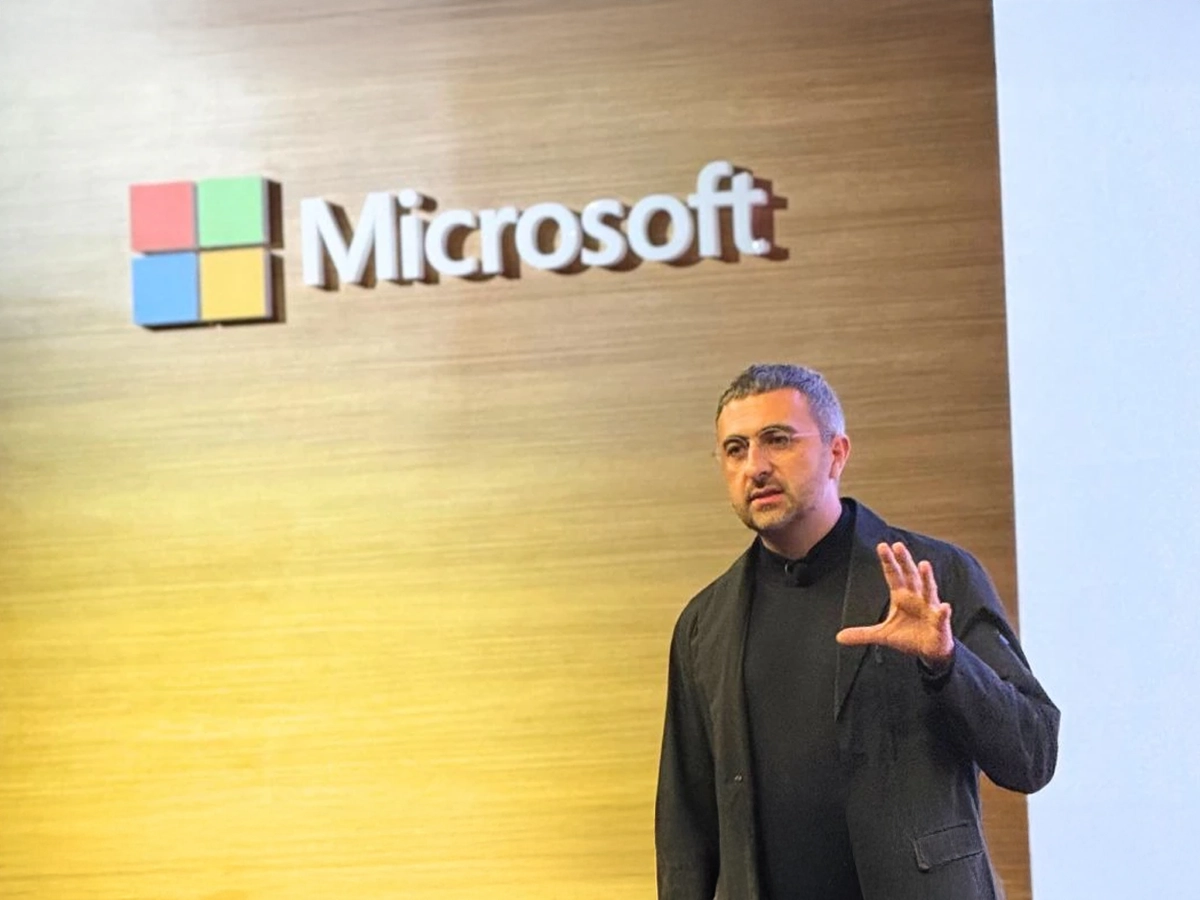
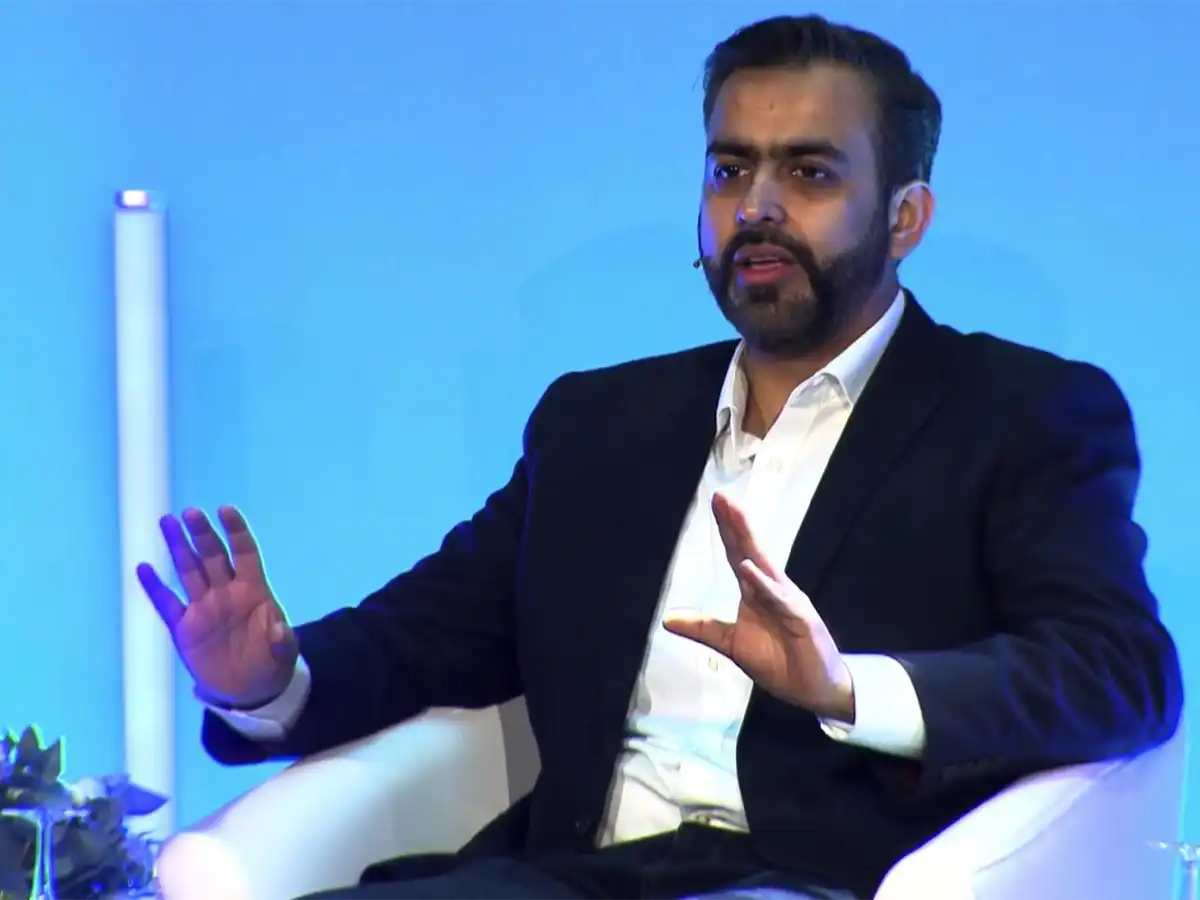
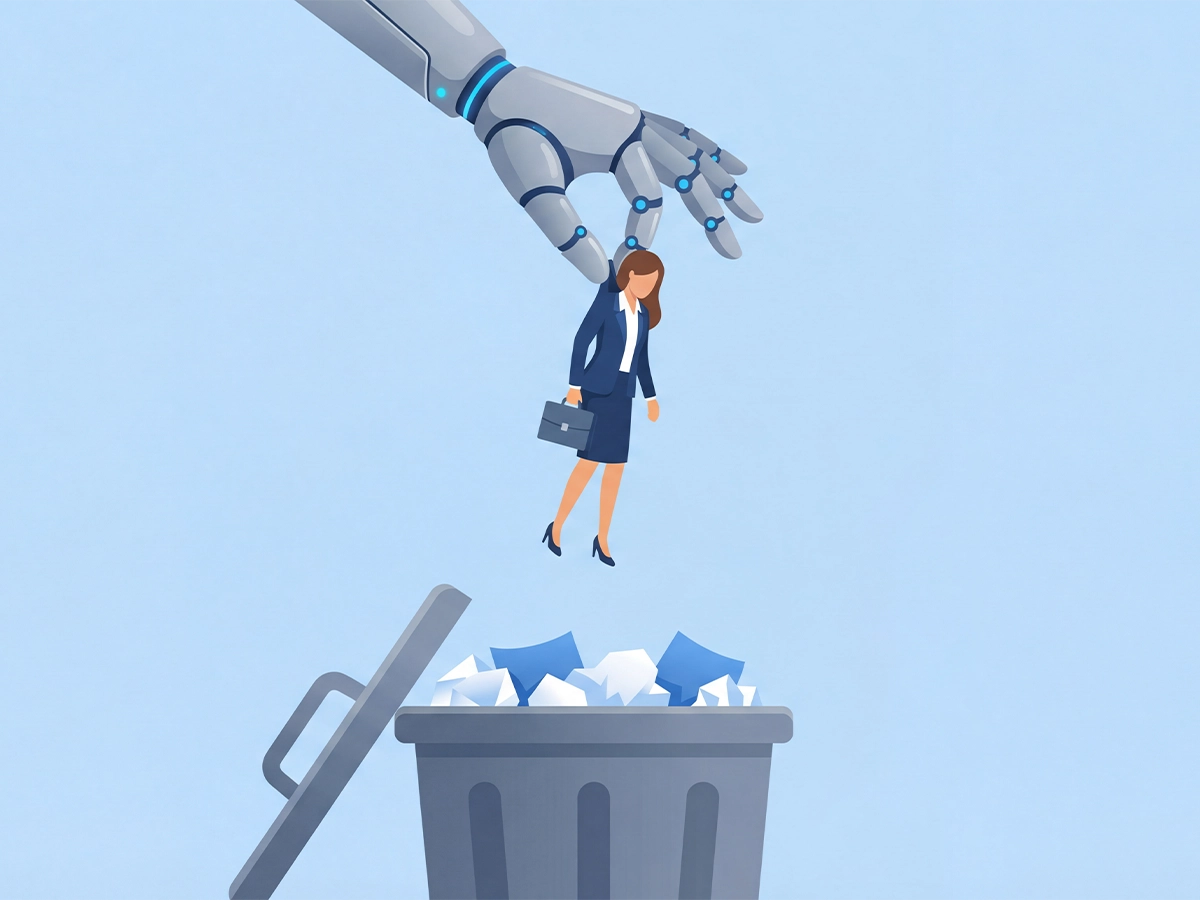
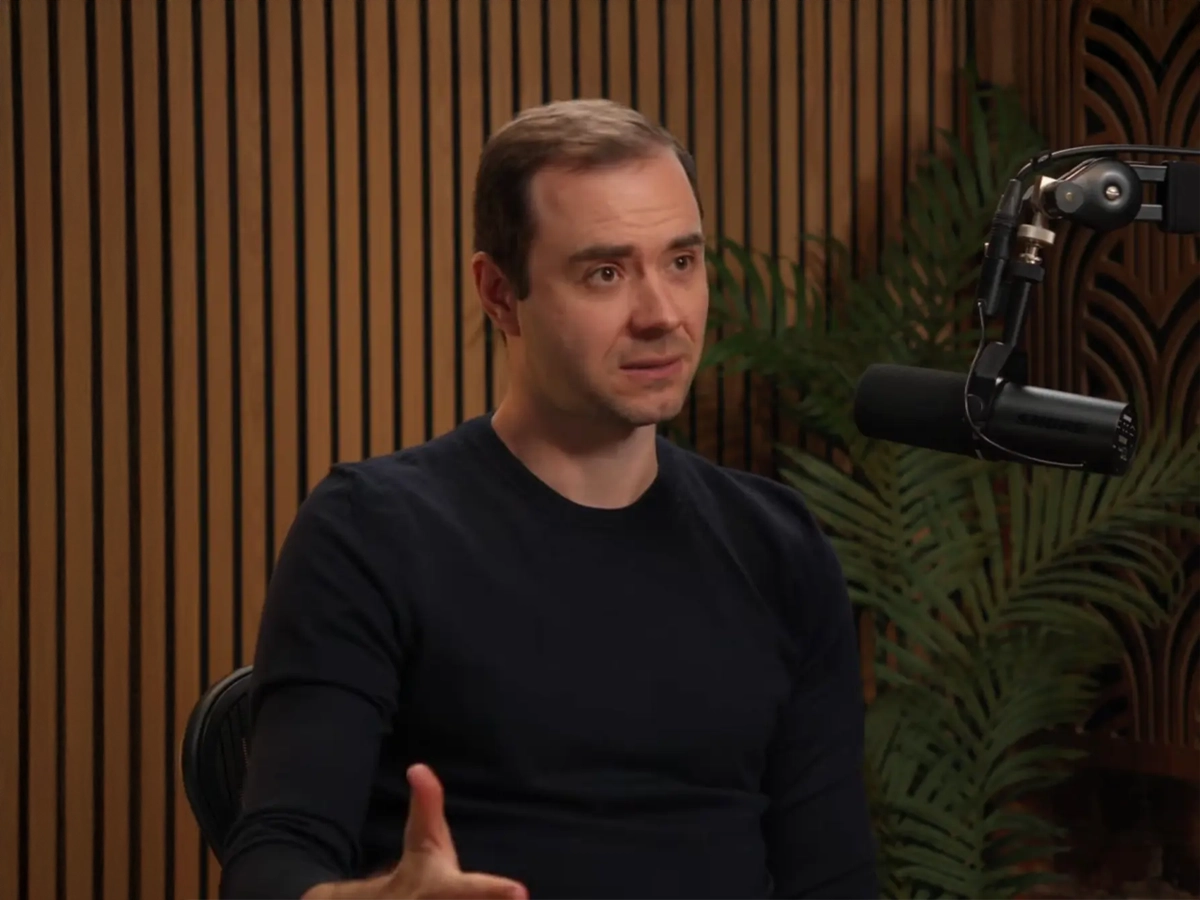
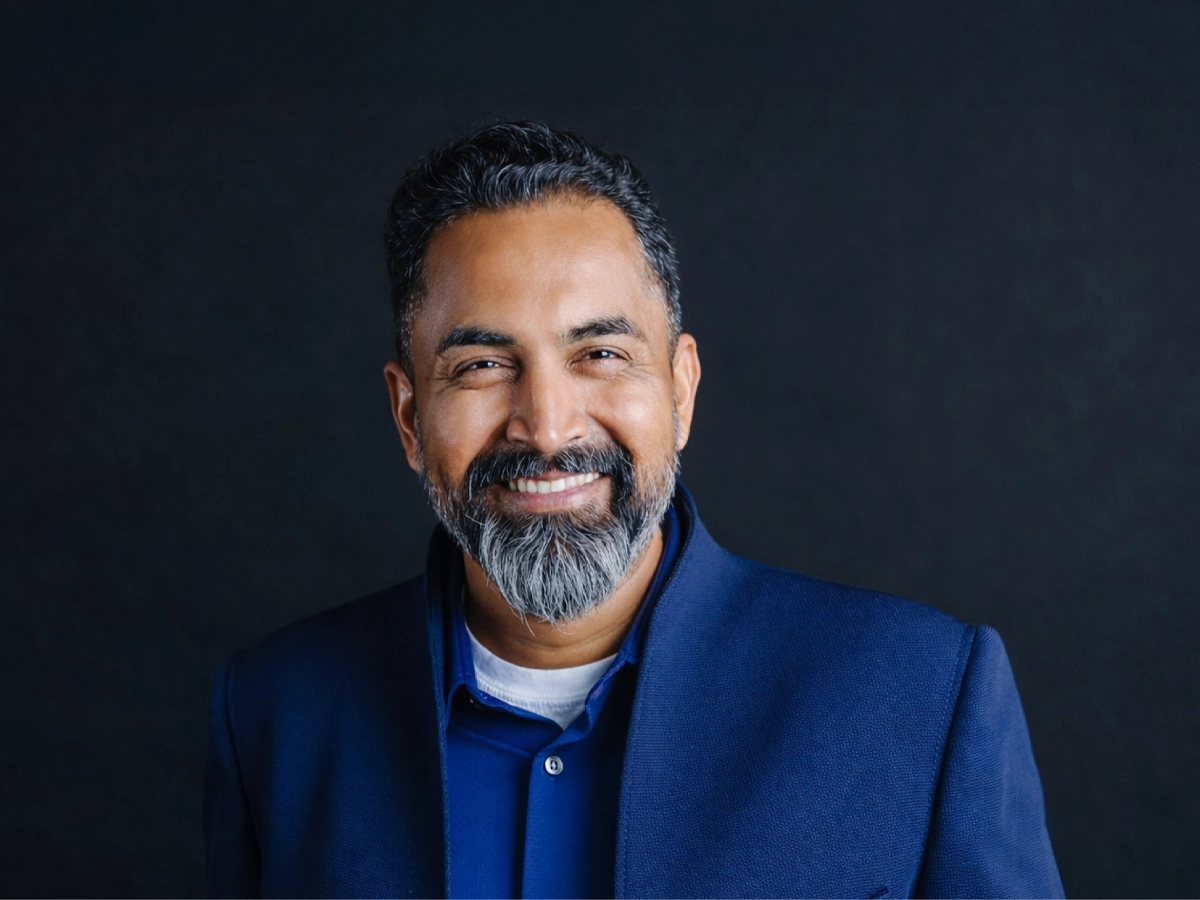
Mustafa Suleyman, CEO of Microsoft AI, told the Financial Times in February that most white-collar computer-based work will be fully automated by AI within 12 to 18 months. The roles he named specifically: lawyers, accountants, project managers, and marketing professionals. His framing was direct, predicting human-level performance on most, if not all, professional tasks. The prediction landed in boardrooms, law firms, and finance departments with enough force that it is still generating debate three months later.
The statement deserves examination on two levels. The first is whether Suleyman is right. The second, and more immediately relevant for CEOs, CHROs, and boards, is what the prediction signals about how AI's most senior advocates are framing the transition, and what leadership decisions that framing is designed to accelerate.
Suleyman is not a commentator. He co-founded DeepMind, launched Inflection AI, and now runs Microsoft's consumer AI division, which encompasses Copilot and Microsoft's broad AI product portfolio. He has been closer to the development of frontier AI systems than almost any other executive currently in a senior corporate role. When he speaks about capability trajectories, he is drawing on direct operational knowledge of where the technology is heading, not extrapolating from press releases.
His prediction connects to both advances in AI capabilities and the speed at which organisations can adapt the technology to specific job functions. He is not simply making a claim about what models will be able to do. He is making a claim about the integration of those models into enterprise workflows at a pace that produces measurable job displacement.
The statement sits within a broader pattern of executive-level predictions that have been escalating in specificity and urgency. Anthropic CEO Dario Amodei warned in May 2025 that AI could eliminate up to half of entry-level white-collar jobs. Ford CEO Jim Farley predicted AI would cut white-collar headcount in half across the U.S. economy. Elon Musk told the World Economic Forum in January that artificial general intelligence could arrive in 2026. Suleyman's prediction follows that line of escalation with a specific date attached.
The gap between the prediction and the measured reality is the most important thing for leadership teams to understand.
A 2025 Thomson Reuters report found lawyers, accountants, and auditors are experimenting with AI for targeted tasks including document review and routine analysis. The results have shown marginal productivity improvements, but fall well short of signalling mass job displacement. In some instances, AI has produced the reverse effect. A study from nonprofit Model Evaluation and Threat Research, examining AI's impact on software developers, found the technology made workers' tasks take 20% longer, a poor result for teams that assumed automation would accelerate output.
Anthropic's own January 2026 Economic Index found that 49% of jobs can now use AI in at least a quarter of their tasks, up from 36% a year earlier. That is a meaningful acceleration. The same report found that only 9% of firms report full role replacement. Forty-five percent have reduced entry-level hiring, which is a significant structural shift, but reduced hiring is not the same as tasks being fully automated. The gap between those two realities is where most white-collar workers currently live.
The economic data shows AI productivity gains are currently concentrated in large technology companies. Big Tech profit margins increased by more than 20% in the fourth quarter of 2025, while the broader S&P 500 saw almost no comparable change. The productivity gains are real but are not yet distributing across the professional services economy at the pace Suleyman's timeline implies.
The most important analytical distinction Suleyman's statement collapses is the one between automating tasks and replacing roles.
Automation historically eliminates tasks first and entire roles second. When 30 to 50% of a workflow becomes automated, the role typically shifts before it disappears. If output can be produced faster, managers may simply raise expectations and demand more output rather than reducing headcount. That dynamic has already been observed in engineering teams using AI coding tools, where workflow compression has not translated into proportional headcount reduction.
Consider the professions Suleyman named. AI systems today generate contract drafts, marketing copy, project reports, and financial analysis at a level of quality that was implausible three years ago. The remaining question is not whether those tools exist. It is whether practicing law, running a finance function, or managing a complex project can be reduced to the computer-based tasks Suleyman describes, without the client relationships, regulatory judgment, accountability structures, and professional liability that give those roles their institutional weight.
The technical threshold for human-level performance on specific tasks may be reached by 2027. The social and legal frameworks required to absorb that shift are not yet in place. The risk is a period of economic decoupling where AI capability accelerates while the professional world remains structured around legacy assumptions, producing friction rather than smooth transition.
The context in which Suleyman made his prediction matters. Microsoft has committed $190 billion in capital expenditure for fiscal 2026, the majority directed at AI infrastructure. Its core product strategy across Office, Copilot, and enterprise software depends on accelerating AI adoption inside organisations. A CEO of Microsoft AI predicting that white-collar automation is 18 months away is not a neutral forecast. It is a strategic communication aimed at enterprise buyers who need to justify AI investment to their boards, and at employees who need to be prepared to adapt.
The prediction lands in a context where AI adoption inside enterprises is still uneven, and where many organisations are running pilots and proofs of concept rather than scaled deployments. An 18-month timeline from a credible executive creates urgency that internal AI champions can use to accelerate procurement and deployment decisions.
That observation does not make Suleyman wrong. It simply means his statement should be read as a leadership communication with strategic intent, not as a neutral research finding. The companies that respond by asking what proportion of their current workflows are genuinely automatable in 18 months will make better decisions than those who either dismiss the prediction entirely or accept it at face value.
For boards, CHROs, and senior executives, the Suleyman prediction is most useful as a forcing function rather than a forecast to be believed or rejected.
McKinsey's 2026 workforce research shows that the organisations managing AI workforce transition most effectively are those that identify specific tasks susceptible to automation within their own operations, invest in retraining the people currently performing those tasks, and redesign workflows before deploying AI on top of them. The organisations struggling most are those treating AI adoption as a binary question: automate everything or automate nothing.
The roles Suleyman named, lawyers, accountants, project managers, and marketers, are not monolithic. Each contains a spectrum of tasks ranging from highly structured and automatable at one end to highly contextual and relationship-dependent at the other. The structured end of that spectrum is under genuine and growing pressure. The contextual end is not going away in 18 months. Leadership teams that make that distinction, and build workforce strategies around it, are better positioned than those reacting to the headline.
Suleyman's timeline is aggressive and is being met with significant skepticism from economists and researchers who point to the gap between AI task capability and the institutional change required to deploy it at scale. Whether his 18 months proves accurate matters less than the decision it forces. Organisations that wait for the prediction to be confirmed or refuted before acting are already behind the ones that are asking the question now.









Stay informed wherever you are — join our growing community of readers and followers across social platforms.
Choosing a Search Firm
Compensation Intelligence
Board & Governance
Succession Strategy
AI Leadership Trends
Talent & Workforce Trends
AI Leadership Appointments
Compensation Changes
Big Tech Succession
CHRO & CPO Appointments
CEO Transitions
Board Members and Governance Committees
Operating Partners at private equity and venture capital firms
CHROs and Chief People Officers
HR leaders responsible for executive hiring
CEOs and Founders

.svg)
.svg)