







.png)







.png)

















Join 1M+ Readers Who Never Miss a Headline.
Stay informed wherever you are — join our growing community of readers and followers across social platforms.
Choosing a Search Firm
Compensation Intelligence
Board & Governance
Succession Strategy
AI Leadership Trends
Talent & Workforce Trends
AI Leadership Appointments
Compensation Changes
Big Tech Succession
CHRO & CPO Appointments
CEO Transitions
Board Members and Governance Committees
Operating Partners at private equity and venture capital firms
CHROs and Chief People Officers
HR leaders responsible for executive hiring
CEOs and Founders
May 13, 2026

Something is shifting in how boards choose their executives. The question used to be whether a CEO candidate understood technology. In 2026, it has become whether they can operationalise AI into revenue growth, margin expansion, and organisational redesign at speed. That is a different evaluation, and it is producing a different kind of leader at the top of some of the most watched companies in the world.
The C-suite transitions of the past several months tell a coherent story about what boards now value, what they are worried about, and where the authority to make consequential AI decisions is being placed inside large organisations.
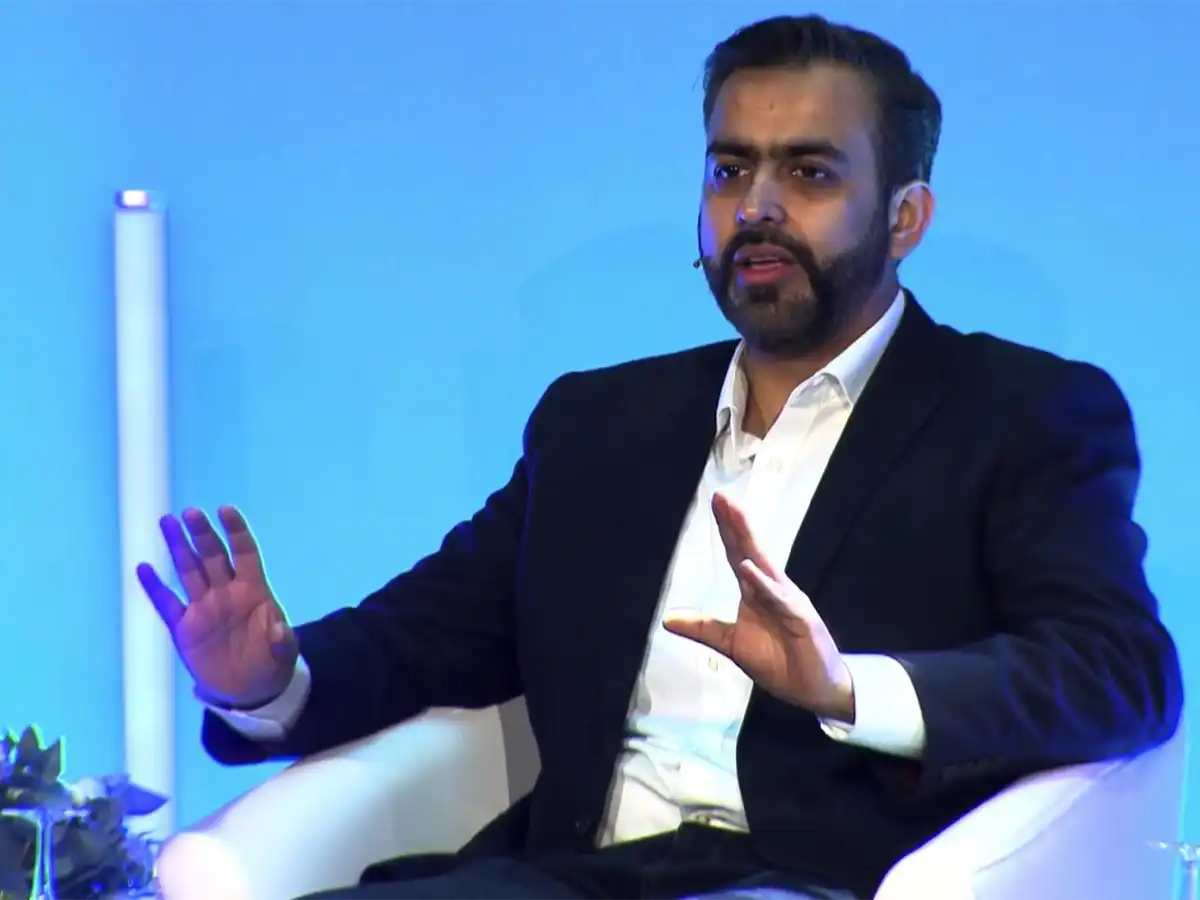
Anthropic's CFO Krishna Rao has become one of the most closely watched executives in AI, not because of a formal succession announcement but because of the nature of what the role now requires. Since joining from Fanatics Commerce in 2024, Rao has managed a $30 billion Series G funding round that pushed Anthropic's valuation to $380 billion, negotiated multi-cloud and multi-chip compute agreements with Google, Amazon, and Broadcom, and simultaneously navigated an IPO preparation process complicated by an active lawsuit against the Pentagon over a designation the company believes threatens multiple billions in 2026 revenue.
Anthropic's run-rate revenue surpassed $30 billion in 2026, up from $9 billion at the end of 2025. Over 1,000 business customers are each spending more than $1 million on an annualised basis, double the figure from two months prior. At those growth rates, the CFO's primary function is no longer traditional financial management. It is capital allocation at a pace and scale where the decisions made about which compute partnerships to sign, and at what contractual commitments, directly determine whether the company's models can stay competitive with OpenAI and Google DeepMind over the next two years.
That dynamic, where compute allocation sits at the centre of competitive positioning and the CFO owns it, is specific to frontier AI companies. But it foreshadows a broader shift in what financial leadership means in any company where AI infrastructure spending is becoming a strategic variable rather than a cost line.
Kroger created the role of Chief Data and AI Officer in early 2026, appointing Milen Mahadevan, president and CEO of its analytics subsidiary 84.51°, to the position. The appointment consolidates all of Kroger's data and AI teams under a single leader, with a mandate to embed AI capabilities into core business processes and develop what Kroger described as next-generation agentic capabilities.
The structural significance of the appointment is worth examining carefully. Mahadevan reports to Kroger's EVP and Chief Digital and Technology Officer, not to the CIO. The role was created separately from the existing technology hierarchy, with its own operational accountability. CFO David Kennerley described the creation of the role during the company's earnings call as making a big statement about how seriously Kroger is taking AI, and confirmed significant investment dollars in 2026 and beyond targeted specifically at crystallising the opportunity.
Kroger is the largest supermarket operator in the United States by revenue. Its customer data asset, built through decades of loyalty programme operation, is one of the richest behavioural datasets in retail. The new agentic AI shopping system Kroger is introducing in 2026 allows customers to use AI to build baskets, plan meals, and stay within budgets in a personalised way, a capability that requires the kind of cross-functional AI leadership the Mahadevan appointment is designed to provide.
The Kroger move reflects a pattern visible across Fortune 500 organisations: AI ownership is migrating out of CIO structures and into dedicated executive roles with direct operational accountability and a board-level mandate. The question companies are working through is not whether to create these roles, but how much authority to attach to them.
Whitney Wolfe Herd returned to Bumble as CEO in 2025 after stepping back for more than a year, and has spent the months since executing a product repositioning that goes further than any update in the company's history. She announced this week that Bumble will eliminate its swipe feature entirely, replacing it with an AI-driven matchmaking system she described as revolutionary for the category. The changes begin rolling out in select markets in Q4 2026.
At the centre of the new product architecture is an AI assistant called Bee, built separately from Bumble's legacy system, which conducts onboarding interviews, recommends matches, suggests and plans dates, and gathers feedback to improve future recommendations. Wolfe Herd has described the AI layer as a supercharger to love and relationships, positioning it as an enhancement to human connection rather than a substitute for it.
The product context matters. Q1 2026 revenue came in at $212 million, down from $247 million a year earlier. Wolfe Herd described extraordinary tech debt in the legacy platform, noting that meaningful changes to the recommendation engine could take months. The new cloud-native, AI-enabled tech stack is designed to compress that cycle to days or weeks.
The investor rationale for founder returns in 2026 is partly about AI credibility. Product-native founders who built the original user experience are seen as better positioned to reimagine it around AI than professional managers hired to operate within an established model. Wolfe Herd's bet is that the swipe-era logic of dating apps, built on volume and low-commitment signals, is incompatible with what AI can now offer, and that a complete architectural break is more defensible than incremental improvement.
Thomson Reuters named Gary E. Bischoping Jr., a former Dell executive, as CFO as part of a planned succession in 2026. The company made explicit in its announcement that the appointment was connected to scaling AI-era opportunities and enterprise transformation, a framing that placed AI monetisation at the centre of the CFO mandate from the first day.
Thomson Reuters has been investing in AI-driven legal and professional tools for several years, with its Practical Law and Westlaw platforms increasingly incorporating AI-assisted research and document analysis. The CFO succession framing, connecting the role to AI monetisation rather than traditional financial stewardship, reflects the same logic visible at Anthropic and Kroger: the executive most responsible for translating AI investment into financial return is now a strategic position, not an administrative one.
The transitions above share a structural characteristic that goes beyond their individual circumstances. In each case, the board or senior leadership making the appointment prioritised a specific type of capability: the ability to connect AI deployment to measurable business outcomes, and to do so at a pace the organisation had not previously achieved.
Gartner research shows that the number of large enterprises with a dedicated Chief AI Officer has grown from 11% two years ago to 26% today, with the debate in boardrooms having shifted from whether the role is needed to what authority it should carry relative to the CTO and CIO. The CAIO appointments arriving at HSBC, Kroger, and across Fortune 500 organisations in 2026 are not experimental. They are structural responses to a competitive environment in which the speed of AI deployment inside an organisation is becoming a primary differentiator.
PwC's AI Jobs Barometer shows that AI-exposed roles command an average 56% wage premium over comparable positions, a figure that doubled from 25% the prior year. The premium is not primarily for technical AI skills. It is for the ability to deploy AI into business processes and demonstrate returns. That is a leadership and operational capability, not an engineering one, and it is reshaping compensation structures at the executive level in ways that will take several years to fully settle.
The pattern forming across 2026 C-suite transitions is not that AI expertise has become a checkbox requirement for senior leadership. It is that the ability to operationalise AI into the core of a business, restructuring workflows, reallocating capital, and redesigning products around it, has become the primary criterion by which boards are assessing whether a leadership team is equipped for the next several years. The executives who understand that distinction, and can demonstrate it in specific, measurable terms, are the ones getting the mandates.











Stay informed wherever you are — join our growing community of readers and followers across social platforms.
Choosing a Search Firm
Compensation Intelligence
Board & Governance
Succession Strategy
AI Leadership Trends
Talent & Workforce Trends
AI Leadership Appointments
Compensation Changes
Big Tech Succession
CHRO & CPO Appointments
CEO Transitions
Board Members and Governance Committees
Operating Partners at private equity and venture capital firms
CHROs and Chief People Officers
HR leaders responsible for executive hiring
CEOs and Founders

.svg)
.svg)