









.png)













.png)
























Join 1M+ Readers Who Never Miss a Headline.
Stay informed wherever you are — join our growing community of readers and followers across social platforms.
Choosing a Search Firm
Compensation Intelligence
Board & Governance
Succession Strategy
AI Leadership Trends
Talent & Workforce Trends
AI Leadership Appointments
Compensation Changes
Big Tech Succession
CHRO & CPO Appointments
CEO Transitions
Board Members and Governance Committees
Operating Partners at private equity and venture capital firms
CHROs and Chief People Officers
HR leaders responsible for executive hiring
CEOs and Founders
June 10, 2026

The pitch was straightforward. Deploy AI agents, reduce headcount, cut costs, show margin expansion. For two years it worked as a narrative. In the spring of 2026 it started colliding with a different set of numbers: the token bill.
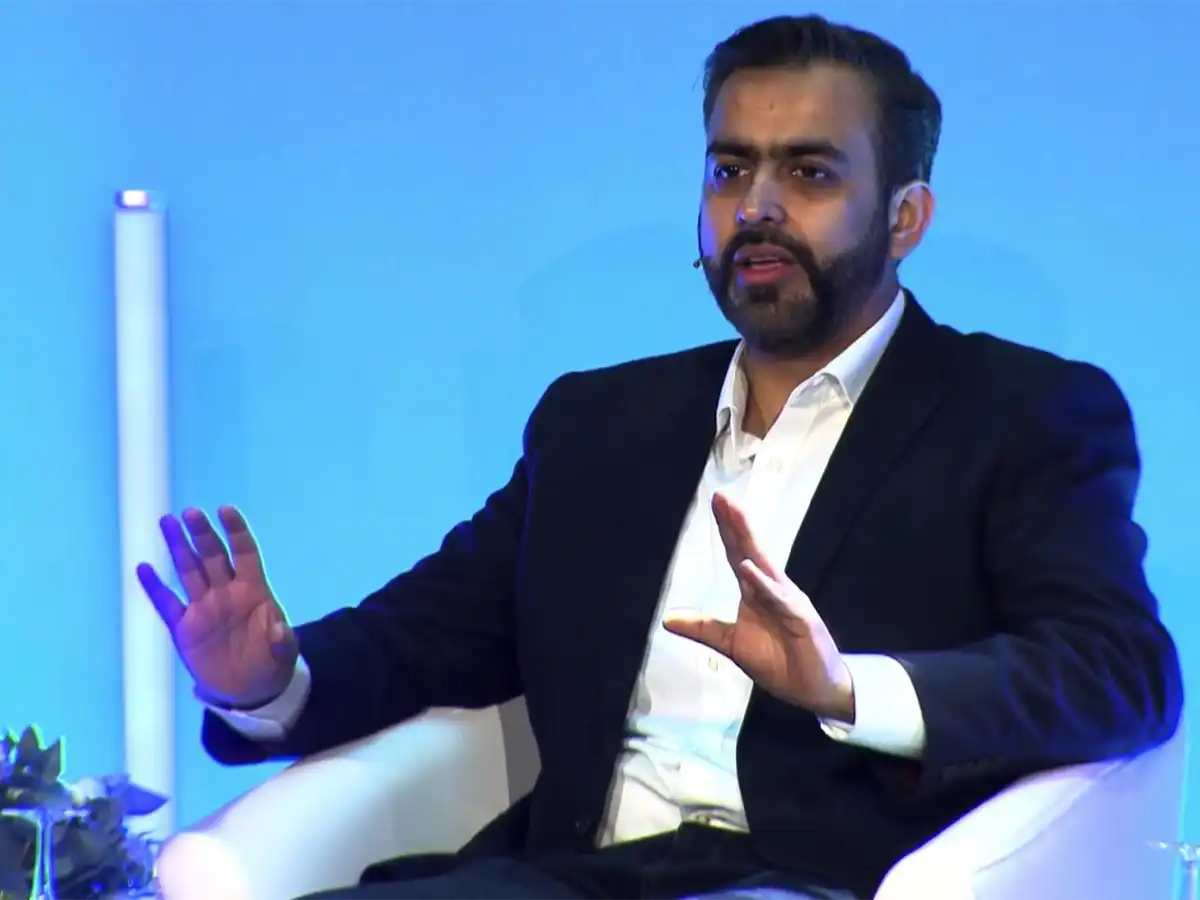
Uber's CTO Praveen Neppalli Naga admitted that the company's reliance on AI coding tools had maxed out its full 2026 AI budget in just four months. Nvidia Vice President Bryan Catanzaro stated that for his team, the cost of compute is now beyond the cost of the employees using it. These are not small companies running experimental pilots. They are among the most technically sophisticated enterprises in the world, and they are discovering that the arithmetic of AI-for-headcount substitution is more complicated than the boardroom presentations suggested.
Fresh data from the Ramp AI Index, which measures AI adoption among American businesses using payment data from thousands of companies, puts the current state of enterprise AI spending in concrete terms. The top 1% of firms, those Ramp describes as AI-pilled, are spending $7,500 per employee per month on AI. The average software engineer costs roughly $16,000 per month in total compensation. AI has not yet crossed the payroll threshold at the most aggressive adopters. But among some specific teams at some specific companies, it already has, and the trajectory of that spending is accelerating.
The Ramp data reveals a spending landscape that is far more uneven than aggregate figures suggest.
The top 10% of firms spend approximately $611 per employee per month on AI. The median company spends $11.38, roughly the cost of a single seat on an enterprise plan. Among the AI-pilled top 1%, spending grew 14.1% per employee in a single month.
Ramp's own benchmark analysis shows the median monthly AI spend per company sits at $2,246, while the average is $140,842, a gap that reflects how AI spending actually distributes: most organisations are in early or moderate adoption, but a single automated workflow running unchecked can move a company from the median into the average range overnight. Month-over-month AI spend swings of 40% or more are common even when headcount is stable, and the single biggest driver of unexpected cost increases is model tier migration, when teams quietly upgrade from lightweight to frontier models without changing budgets to match.
The distribution problem is the one that most enterprise AI budgeting processes were not designed to handle. Traditional software licensing is predictable. You buy seats, you know the cost. Token-based pricing introduces a consumption variable that scales with usage in ways that are difficult to forecast and nearly impossible to cap without restricting the behaviour of the systems generating the value.
The immediate token cost problem is being compounded by a structural shift that makes it worse over time rather than better.
Goldman Sachs forecasts that agentic AI could drive a 24-fold increase in token consumption by 2030, reaching 120 quadrillion tokens per month, as enterprises adopt AI agents that execute multi-step workflows rather than responding to single prompts. An AI assistant answering a question consumes a bounded number of tokens. An agentic system executing a research task, drafting a document, checking it against policy, revising, and filing a report consumes orders of magnitude more.
Gartner found that by 2030, inference on a one-trillion-parameter model will cost AI providers nearly 90% less than it did in 2025. The same research concluded that cheaper tokens will not translate to cheaper enterprise AI bills, because agentic models require far more tokens per task than standard models, consumption increases outpace falling unit costs, and AI providers are unlikely to pass the full cost reduction through to enterprise customers. The Gartner analyst framing is direct: chief product officers should not confuse the deflation of commodity tokens with the democratisation of frontier reasoning.
A 2018 MIT study, whose findings remain relevant in the current context, found that AI automation is economically viable in approximately 23% of jobs, suggesting humans remain more cost-efficient in the remaining 77%. The gap between that figure and the confidence with which companies have been citing AI as a headcount replacement rationale is the gap that the token bill is now exposing.
The Mercor case is the clearest data point at the extreme end of this trend. The AI recruiting startup's CEO disclosed that the company is now spending more on tokens for internal AI agents than on its entire employee payroll. Mercor has turned its own workforce into a proof of concept, using autonomous agents to handle the work that would otherwise require additional human hires, and paying for that substitution in compute costs rather than salaries.
The comparison is arithmetically possible in a company structured specifically to maximise agent usage, with a small headcount and a product that runs on AI inference at scale. It is not yet a representative picture of enterprise AI economics at large. But it is where the most aggressive adopters are heading, and it is the economics that every leadership team will eventually need to model.
The broader pattern is visible in how companies at the frontier are structuring their operations. Coinbase CEO Brian Armstrong described a model of AI-native pods with limited human talent managing fleets of AI agents, alongside experiments with one-person teams combining engineer, designer, and product manager functions. Cloudflare stated that agentic AI has fundamentally changed its internal operations, with internal AI usage up more than 600% in three months. In these organisations, token spend is not a cost centre to be controlled. It is a capital investment in operating capacity.
For CEOs and CFOs, the token bill is surfacing three governance questions that most organisations have not yet answered clearly.
The first is budget architecture. Token-based AI spending does not fit neatly into existing IT budget frameworks, which are built around predictable licensing costs and headcount ratios. Ramp's data shows that model count is the strongest proxy for AI maturity, and that companies running multiple models simultaneously, the pattern among the top 1% of spenders, face cost structures that require continuous monitoring rather than annual planning cycles. The finance function needs a new category for AI compute, distinct from software licensing, infrastructure, and headcount, with its own forecasting methodology.
The second is the substitution calculation. The narrative that drove AI investment in 2024 and 2025 rested on a cost comparison between AI tokens and human salaries, with the implicit assumption that tokens would remain cheap relative to the headcount they displaced. Worldwide IT spending is projected to reach $6.31 trillion in 2026, up 13.5% from 2025, according to Gartner. If a meaningful share of that increase is token consumption growing faster than the productivity gains it generates, the substitution arithmetic reverses. Leadership teams that made headcount decisions based on one version of that calculation need to revisit it with the actual usage data they now have.
The third is governance of agent deployment. Metaintro's analysis of the current cost environment notes that uncontrolled agent deployments cost ten times what a disciplined rollout costs, and that the replace-the-worker story is colliding with reality in organisations where agent deployments were approved without cost controls. Uber burning its full-year AI budget in four months is the consequence of a system where internal incentives pushed teams to compete on AI usage without a corresponding framework for managing what that usage cost.
The executives managing this well are the ones who have treated AI deployment as an operational discipline from the start, setting token budgets alongside capability goals, monitoring consumption at the team level, and building cost-per-outcome metrics before scaling. The ones managing it poorly are those who approved AI investment as a cost reduction strategy and are discovering, four months into the fiscal year, that the costs they were planning to reduce have been replaced by a different cost they did not model.
The token bill does not invalidate the case for enterprise AI. It clarifies it. The organisations generating real returns from AI investment are those deploying it against specific, bounded workflows where the cost per automated outcome is measurable and lower than the human alternative. The ones generating token costs without commensurate returns are those that deployed broadly without that specificity.
Goldman Sachs' 24-fold token consumption projection for 2030 implies that the current cost pressures are an early signal, not a ceiling. As agentic AI becomes more capable and more deeply embedded in enterprise operations, the organisations that have built the cost governance infrastructure to manage consumption at scale will have a structural advantage over those still treating token spend as a line item to be reviewed quarterly.
The leadership lesson of the spring 2026 token bill is specific: the efficiency gains from AI are real, but they are not automatic. They require the same operational discipline as any other large capital deployment, and the companies that learned that lesson from the first round of overruns are better positioned for the next phase of adoption than those still discovering it.




















Stay informed wherever you are — join our growing community of readers and followers across social platforms.
Choosing a Search Firm
Compensation Intelligence
Board & Governance
Succession Strategy
AI Leadership Trends
Talent & Workforce Trends
AI Leadership Appointments
Compensation Changes
Big Tech Succession
CHRO & CPO Appointments
CEO Transitions
Board Members and Governance Committees
Operating Partners at private equity and venture capital firms
CHROs and Chief People Officers
HR leaders responsible for executive hiring
CEOs and Founders

.svg)
.svg)