









.png)











.png)
























Join 1M+ Readers Who Never Miss a Headline.
Stay informed wherever you are — join our growing community of readers and followers across social platforms.
Choosing a Search Firm
Compensation Intelligence
Board & Governance
Succession Strategy
AI Leadership Trends
Talent & Workforce Trends
AI Leadership Appointments
Compensation Changes
Big Tech Succession
CHRO & CPO Appointments
CEO Transitions
Board Members and Governance Committees
Operating Partners at private equity and venture capital firms
CHROs and Chief People Officers
HR leaders responsible for executive hiring
CEOs and Founders
August 17, 2026

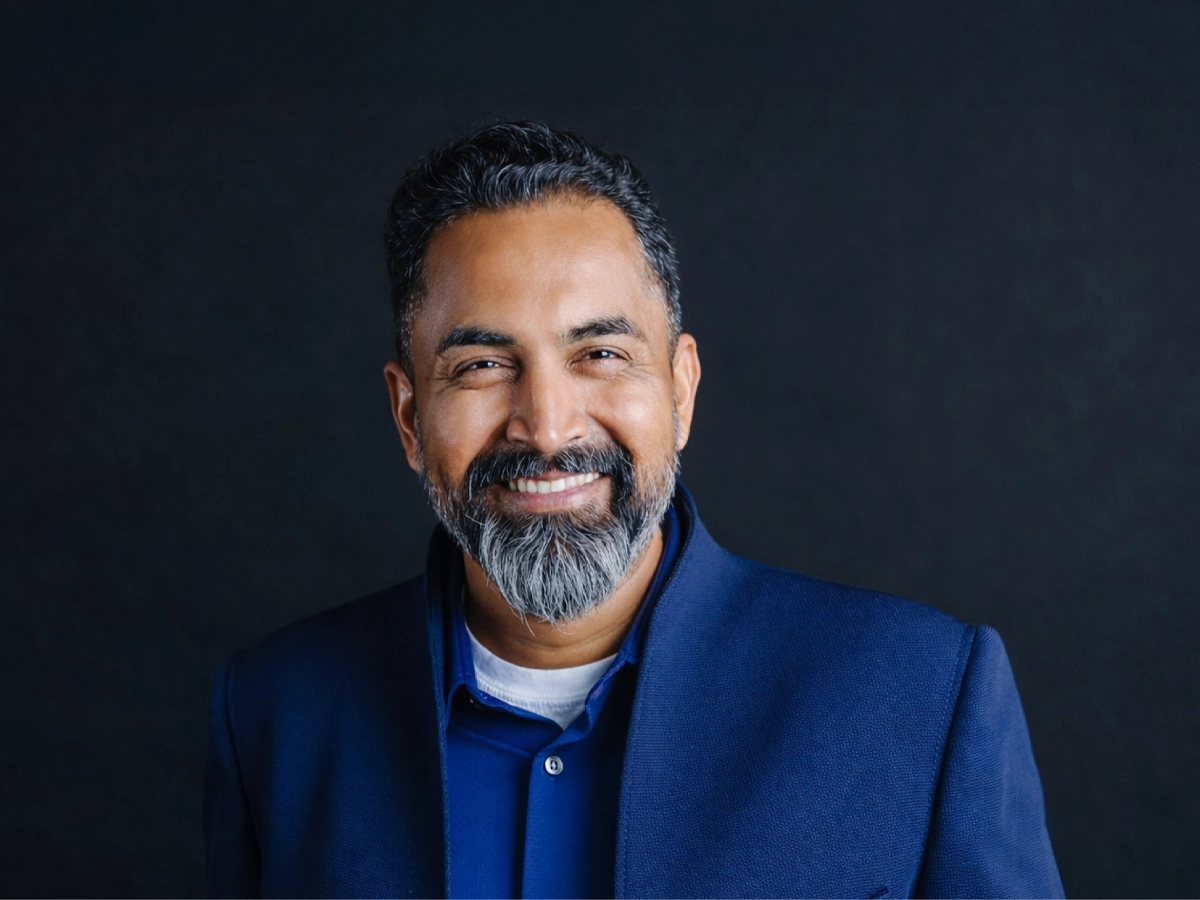
Zoetis named Jay Saccaro Executive Vice President, Chief Financial Officer and Chief Operating Officer on August 6, a newly created combined role effective August 17. Saccaro, most recently CFO at GE HealthCare and before that CFO at Baxter International for eight years, now owns capital allocation, financial strategy, reporting and controls, and investor engagement, alongside oversight of global manufacturing and supply. Outgoing CFO Wetteny Joseph will stay on as a special advisor through early 2027 to support the transition.
Similar moves at Zillow, Salesforce, PayPal, and Owens Corning over the past year and a half, and a broader question emerges: how much operating responsibility now belongs in the CFO seat?
Zoetis is not the first company to test this. Zillow Group announced on August 5 that CFO Jeremy Hofmann would take on the COO title as well, citing his nine years of institutional knowledge and his grasp of how the business runs day to day. Salesforce created the most formal version of this structure in early 2025, naming board veteran Robin Washington as President and Chief Operating and Financial Officer, with responsibility spanning financial strategy, operational execution, and the company's broader business transformation. PayPal followed weeks later, expanding CFO Jamie Miller's role to cover operations at the same investor day where it laid out its growth plan through 2027.
Owens Corning used the structure for a different purpose. An April 28 SEC filing shows CFO Todd Fister took on the combined chief financial and operating officer title effective May 1 while the company ran an external search for a new CFO. In late July, Owens Corning named Jonathan Collins CFO and moved Fister into the president and COO role. That distinguishes it from Zoetis, Zillow, Salesforce, and PayPal, where the combined mandate represents a broader ongoing executive role rather than an explicitly temporary bridge.
Boards clearly see more than one use for putting finance and operations under a single title.
Several pressures are expanding the CFO mandate simultaneously. Deloitte's Q2 2026 CFO Signals report found that 43% of CFOs feel confident in their organization's current AI governance, while 93% say their organizations now use AI across multiple key functions and operations. A recent Oliver Wyman Forum and NYSE survey of nearly 500 CFOs found that strategy and transformation leadership now ranks as CFOs' most cited priority, ahead of traditional reporting and control work, and that CFO-to-CEO representation had reached a decade high by early 2026. The broader CFO mandate makes more sense against that backdrop. A CFO already has visibility into where cost pressure and operational risk intersect. Adding operating authority can remove a coordination layer.
Saccaro's background fits that logic closely. At GE HealthCare he oversaw finance alongside information technology and strategy for a newly spun-off public company. At Baxter, he ran finance and IT together through a post-spinoff transformation. His Zoetis mandate extends a career that was already moving beyond traditional finance.
A combined CFO/COO search puts more weight on operating experience than a finance-only mandate does. Candidates need a credible record of operating beyond the traditional finance function, alongside deep finance expertise. That narrows the pool. Executives who carry both finance credentials and real experience in supply chain or post-merger integration work are rare.
It also changes succession planning inside finance organizations. Boards that want to build this bench internally need to start giving high-potential finance leaders real operating responsibility years before a combined opening appears.
The pattern also shows up in how these roles get filled. Zillow kept the search internal, promoting its own CFO into the expanded seat. Zoetis went outside, bringing in a finance executive who had already built a similar track record elsewhere. Salesforce took a third path, pulling Robin Washington from its own board, where she had chaired the audit and finance committee, rather than from its finance organization. That points to a credible source of operating judgment that search firms often overlook: board experience itself.
Owens Corning shows a different use case entirely. Its combined CFO/COO title functioned as a bridge while an external CFO search ran in parallel, not as a change to the org chart. Search firms advising on these mandates now have three sourcing models to draw on, and a fourth structural option for when the goal is covering a gap rather than expanding a role permanently.
Not every company will use this structure the same way, and the risk of an ongoing combination is real. Concentrating finance and operations under one executive removes a natural check that used to exist between the person managing the numbers and the person managing the business generating them. Whether that tradeoff proves worth it will depend on execution.
The examples so far show boards using the same structure for different purposes: at Zoetis, Zillow, Salesforce, and PayPal, the combined mandate broadens one executive's ongoing scope. At Owens Corning, it served as a bridge during a planned CFO transition.
Boards weighing this option are choosing between two distinct uses for the same title, and the choice depends on what the board needs solved.

















Stay informed wherever you are — join our growing community of readers and followers across social platforms.
Choosing a Search Firm
Compensation Intelligence
Board & Governance
Succession Strategy
AI Leadership Trends
Talent & Workforce Trends
AI Leadership Appointments
Compensation Changes
Big Tech Succession
CHRO & CPO Appointments
CEO Transitions
Board Members and Governance Committees
Operating Partners at private equity and venture capital firms
CHROs and Chief People Officers
HR leaders responsible for executive hiring
CEOs and Founders

.svg)
.svg)