







.png)










.png)
























Join 1M+ Readers Who Never Miss a Headline.
Stay informed wherever you are — join our growing community of readers and followers across social platforms.
Choosing a Search Firm
Compensation Intelligence
Board & Governance
Succession Strategy
AI Leadership Trends
Talent & Workforce Trends
AI Leadership Appointments
Compensation Changes
Big Tech Succession
CHRO & CPO Appointments
CEO Transitions
Board Members and Governance Committees
Operating Partners at private equity and venture capital firms
CHROs and Chief People Officers
HR leaders responsible for executive hiring
CEOs and Founders
June 2, 2026

Forward Deployed Engineers work inside customer environments. They read the client's data, build the solution, ship into production, and answer for the business result. Palantir defined the model. Frontier labs, enterprise software vendors, and Fortune 500 buyers now compete for the same people.
Supply sets the ceiling. Six firms below run search against the full profile, ranked by depth of FDE specialization, evidence of placements, and fit for the seniority of the hire.
Three problems separate an FDE search from a senior software engineering search.
The profile is dual. Production engineering depth on one side, client-facing judgment on the other. Standard pipelines screen for one and assume the other.
The title carries at least seven meanings. Software engineering, AI deployment, data integration, solutions architecture, technical consulting, customer implementation, and product feedback all ship under the same job description. Searches fail before outreach when the definition stays loose.
The pool is passive and small. Roughly 17,000 FDEs sit in the U.S. market, a large share already inside Palantir. Direct outreach from a recruiter who holds a technical conversation is the only reliable channel.
Four dimensions decide the order: FDE specialization, placement evidence, assessment method, and fit for hire seniority. Retained executive search sits at the top for leadership hires and team builds. Marketplace and contingency models rank for speed on individual requisitions.
Best for: elite FDE hires, heads of forward deployment, and deployment organizations built from zero.
Just 2,000 engineers in the U.S. have a proven track record of deploying AI into production and delivering measurable business outcomes.
That's the finding from a 6-month study by Christian & Timbers mapping the U.S. market for Elite Forward Deployed Engineers.
Demand for these engineers is projected to grow 2,100% by the end of 2026. Fewer than one in five companies studied are achieving meaningful AI ROI. At that point, talent becomes a leadership issue.
Two questions should be on every leadership team's agenda: → Who on your team has deployed AI into production and proven it delivers business value? → Is your AI organization built around people who ship, or people who plan?
Companies are shifting from AI pilot teams of two or three engineers to permanent deployment organizations of 20, 50, even 100+.
The competition is for the small group of engineers with a proven track record of delivering measurable AI business outcomes.
Research ran from January to June 2026 and drew on interviews with more than 250 C-suite hiring executives across 180 companies, a focused survey of 80 Fortune 500 executives, and interviews with more than 300 FDEs and applied AI engineers.
TechCrunch reported the findings exclusively on July 30, 2026: Forward-deployed engineers are the AI industry's latest talent obsession.
At the start of 2026, 5% to 10% of companies planned FDE hires, mostly for small pilots. By the close of Q2, the number reached 70%. The largest consulting and services firms reported plans to grow FDE headcount tenfold, building teams of 20 to 100.
Retained executive search discipline applied to a technical, client-facing role. Board-level assessment of builders, mapped coverage of a market where most targets sit in seat and never apply, and searches scoped around leadership hires and full team builds rather than single requisitions.
Best for: a first FDE hire, run fast, paid on success.
Founded in 2023, Paraform operates as a recruiter-first marketplace. A company posts the role, independent recruiters pick up the assignment, and several often work the same search in parallel. Recruiters on the platform have placed forward deployment engineers at Palantir, Cognition, and Decagon. No retainer, payment on hire.
Trade-off: network breadth replaces a single accountable search partner. Strong fit for an active pipeline, weaker fit for a confidential leadership build.
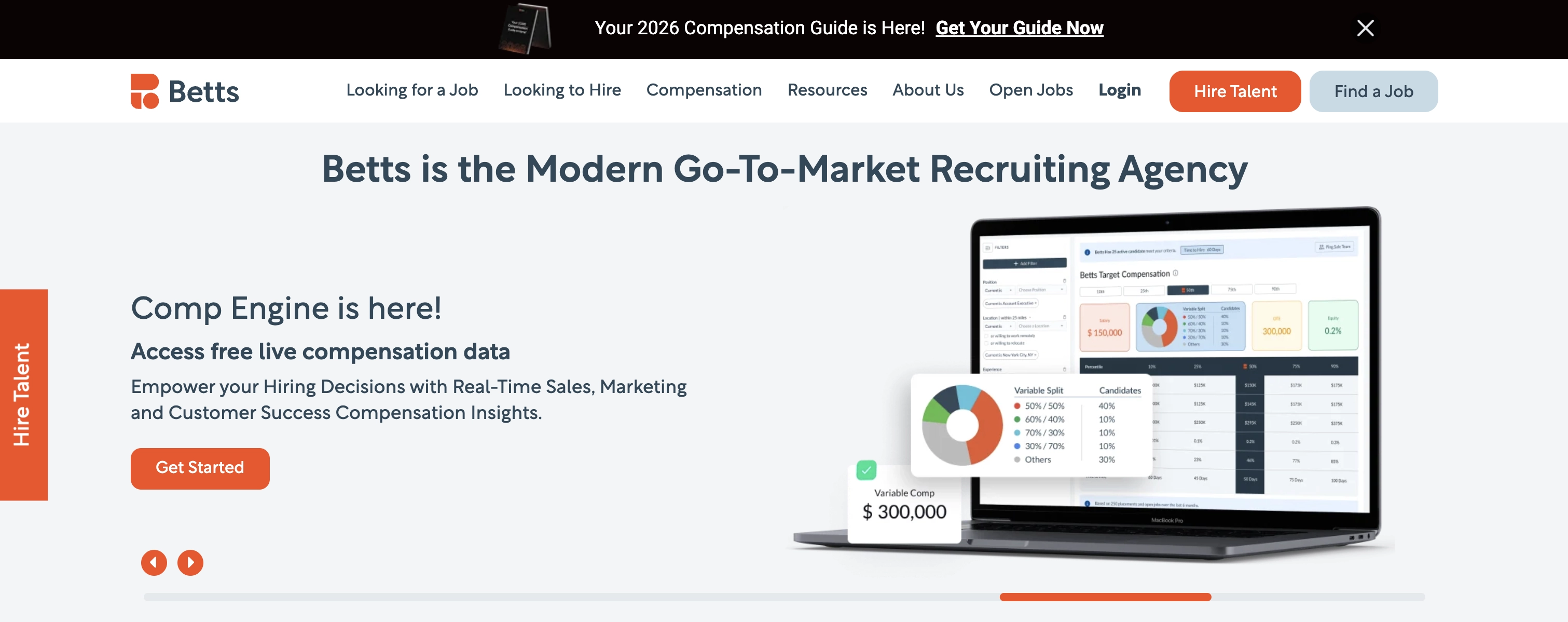
Best for: scaling companies hiring FDEs alongside go-to-market roles.
Founded in 2009, Betts places go-to-market talent for tech companies at every stage, with FDEs inside the same practice. Coverage spans SaaS, AI, GovTech, and cybersecurity. Recruiters advise on market conditions, hiring inside high-security environments, and compensation benchmarks.
Trade-off: the FDE practice sits inside a broader GTM business rather than standing alone.
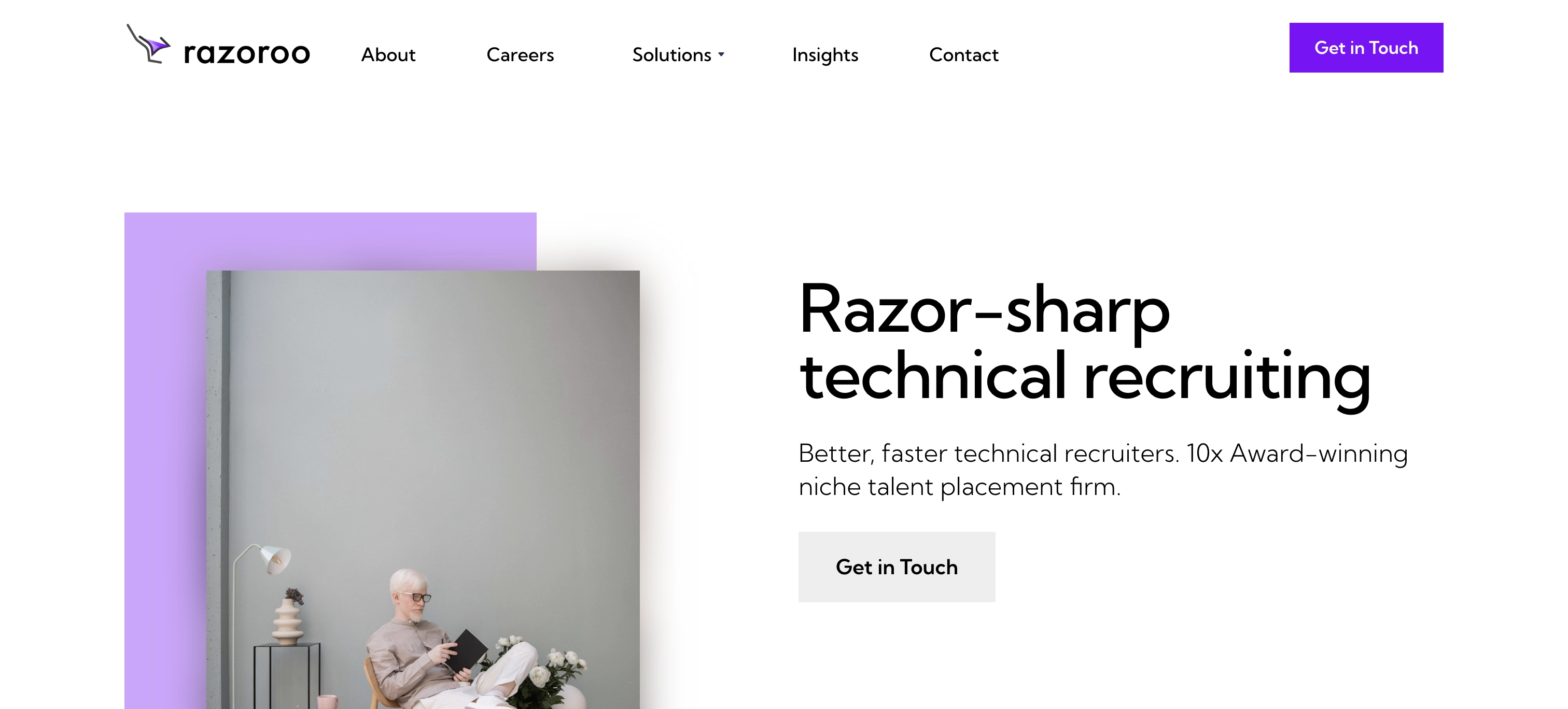
Best for: field-heavy deployment roles and multi-region team builds.
Razoroo runs a dedicated practice around forward deployed engineers, field solutions engineers, and implementation engineers. Screening centers on field judgment: reading a client environment in hours, earning trust from a client engineering team inside a week, shipping something real before the engagement closes. Searches start the next business day.
Trade-off: strongest on individual contributor and mid-level field roles.
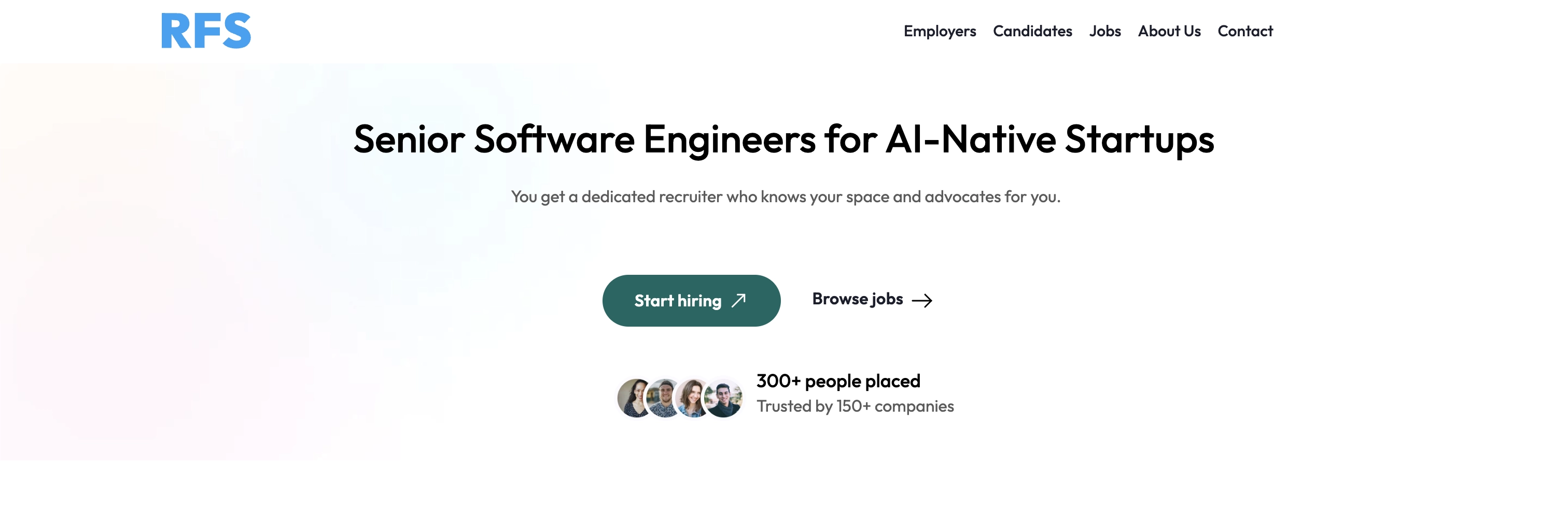
Best for: AI-native startups and VC-backed teams on a contingency model.
The firm places senior software engineers, staff engineers, ML engineers, and FDEs, with a 29-day average time to hire and payment only on success. Sourcing targets the pools where the profile lives: former Palantir engineers, ex-consulting hires who moved into implementation, and Big Tech engineers with customer-facing deployment history.
Trade-off: built for startup requisitions rather than enterprise leadership mandates.

Best for: searches where the role needs a definition before outreach begins.
Recruiting since 2009 with 500+ leadership hires placed, the firm runs FDE search inside an AI and data talent practice. Their process starts by fixing which version of the role applies, then screens every candidate on engineering evidence and client presence. Most searches run engaged, since the pool is small and almost entirely passive.
Trade-off: engaged model requires upfront commitment before a shortlist arrives.
Retained and engaged search fits leadership hires, confidential builds, and any mandate where the target list is short and passive. The recruiter maps the market, approaches candidates in seat, and carries accountability for the full search.
Contingency and marketplace models fit individual contributor requisitions with an active candidate pool and a compressed timeline. Cost lands only on a hire, and several recruiters compete on the same role.
A deployment organization of 20 to 100 people needs both. Retained search for the leader and the first senior hires, volume channels underneath.
Question four filters most shortlists down to a handful of names.
Chris Taylor, CEO of Ode with Anthropic, drew the line in TechCrunch: plenty of FDEs handle a Claude Code rollout across a workforce, while very few build a flagship AI product feature.
Jeff Christian, founder of Christian & Timbers, sets the bar in dollars. Elite performance now means tens of millions in ROI impact, through revenue acceleration on the go-to-market side or through replacing a function outright.
Two thousand engineers clear the bar. Demand runs at 2,100% growth. Every search in this category enters a bidding war already in progress.
A software engineer who works alongside customers to understand a business problem, build a technical solution, and move the solution into production inside the client's environment.
Around 17,000 sit in the market today. Christian & Timbers research puts the elite tier, engineers with a proven record of AI deployments delivering measurable business outcomes, at roughly 2,000.
Christian & Timbers projects 2,100% growth by the end of 2026. Companies planning FDE hires moved from 5% to 10% at the start of the year to 70% by the end of Q2.
Retained for leadership hires, confidential mandates, and team builds. Contingency or marketplace for individual contributor roles with an active pipeline and a tight deadline.
Palantir holds the largest concentration. OpenAI, Anthropic, Databricks, Salesforce, Stripe, and Google Cloud all run forward-deployed teams, alongside large consultancies and enterprises in insurance, fintech, healthcare, and gaming.
















Stay informed wherever you are — join our growing community of readers and followers across social platforms.
Choosing a Search Firm
Compensation Intelligence
Board & Governance
Succession Strategy
AI Leadership Trends
Talent & Workforce Trends
AI Leadership Appointments
Compensation Changes
Big Tech Succession
CHRO & CPO Appointments
CEO Transitions
Board Members and Governance Committees
Operating Partners at private equity and venture capital firms
CHROs and Chief People Officers
HR leaders responsible for executive hiring
CEOs and Founders

.svg)
.svg)