







.png)












.png)























Join 1M+ Readers Who Never Miss a Headline.
Stay informed wherever you are — join our growing community of readers and followers across social platforms.
Choosing a Search Firm
Compensation Intelligence
Board & Governance
Succession Strategy
AI Leadership Trends
Talent & Workforce Trends
AI Leadership Appointments
Compensation Changes
Big Tech Succession
CHRO & CPO Appointments
CEO Transitions
Board Members and Governance Committees
Operating Partners at private equity and venture capital firms
CHROs and Chief People Officers
HR leaders responsible for executive hiring
CEOs and Founders
August 26, 2026

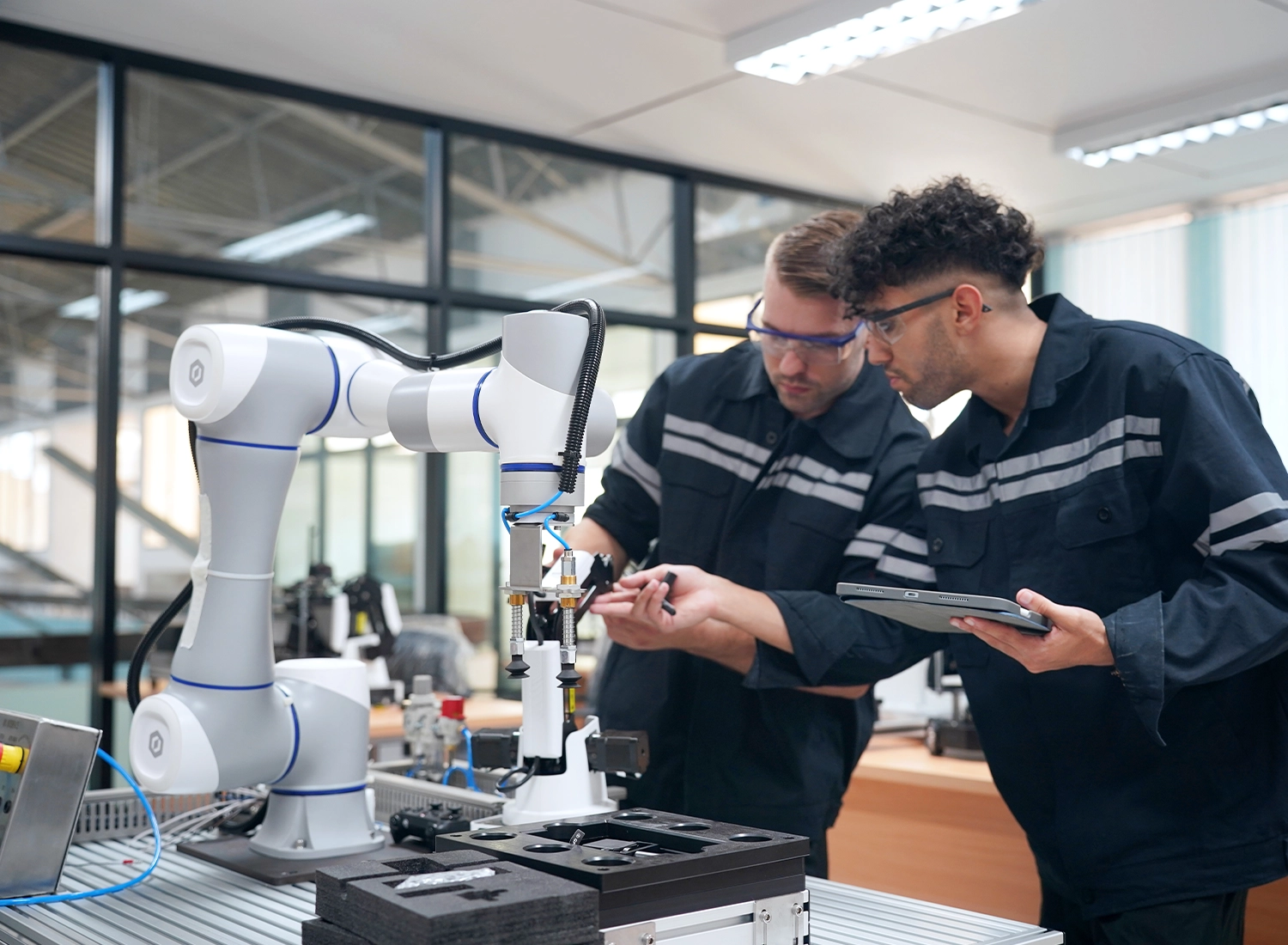
A Forward Deployed Engineer pod is a small team assigned to a specific business problem, customer environment, or deployment, with responsibility for taking the AI system into production and delivering a measurable outcome.
At the beginning of 2026, only 5% to 10% of companies studied by Christian & Timbers planned to hire Forward Deployed Engineers (FDEs). By the end of the second quarter, approximately 70% were planning to hire them, and the scope of that hiring had changed along with the number. Hiring plans moved from pilot groups of two or three engineers toward permanent deployment organizations of 20 to more than 100 FDEs.
TechCrunch reported the same shift in July, citing Christian & Timbers' research as companies moved from experimenting with individual FDEs toward building internal FDE teams.
Once an organization reaches that size, the challenge shifts from hiring individual engineers to deciding who owns each deployment and how its results will be measured. One way companies can organize that work is the FDE pod.
The pod starts with a business problem. An FDE works directly with the people who own the process to learn how the workflow actually operates, then figures out where AI can produce enough value to justify deployment. The team builds the system into the live environment and stays involved through production.
Christian & Timbers describes the FDE role in similar terms. Its 2026 FDE Scarcity Study defines an FDE as an engineer who works inside an enterprise to identify high-value workflows, architect AI systems, and deploy them into live operating environments while remaining accountable for measurable business outcomes.
The pod extends that ownership across a team. Rather than spreading engineers across unrelated AI requests, a company assigns a pod to a particular workflow, business unit, or customer deployment, with a boundary clear enough that the team knows exactly which outcome it owns.
There's no universal pod size. A narrow internal workflow might need only a handful of engineers, while a deployment touching several enterprise systems could require considerably more capacity. The structure follows the deployment.
What matters more is who owns the result. That falls to an experienced FDE leader, someone who sets the deployment scope and keeps technical decisions tied to the business case. The engineers in the pod build and iterate in production. Domain experts from the business need to stay close to that work because they understand the process and what a successful deployment needs to change.
C&T treats that relationship as part of the qualification itself. Its definition of elite FDE talent is industry-specific: an engineer with a strong healthcare deployment record doesn't carry the same advantage into legal or another sector. The business context an engineer has worked in matters as much as the technical skill.
Twenty FDEs working across a company can quickly become a centralized engineering pool fielding requests from every direction, with no one accountable for any single outcome. Pods solve that by giving engineers narrower ownership.
A deployment team that stays with one problem long enough understands the workflow, builds against real operating constraints, and sees what happens after the system reaches production. When several pods operate across a larger FDE organization, each carries its own deployment responsibility rather than competing for attention inside a shared backlog.
This becomes more important as hiring expands. Christian & Timbers found companies moving from planned additions of two or three FDEs toward organizations containing 20 to more than 100, with research projecting overall FDE demand will increase approximately 2,100% by the end of 2026. That kind of scale forces decisions about organization design much earlier than a pilot program ever would.
The strongest pod leaders have a production deployment record. Technical range on its own doesn't cut it. C&T estimates that roughly 17,000 FDEs exist in the United States, while about 2,000 meet its elite standard, a distinction based on demonstrated experience taking AI into production and producing documented business value.
Supply gets tighter at the experienced end of the market. Nearly 80% of the elite FDE pool identified by C&T traces its professional lineage to Palantir, showing how concentrated experienced deployment talent remains. For companies building an FDE function, the early leadership hires carry unusual weight. They establish how deployments get selected and how success gets measured, shaping how the engineers who follow them will work.
Getting something into production is the first threshold, and it's the easier one. What follows is harder: a technically successful deployment can still fail to produce enough value to justify the work that went into it. That's why the pod needs a measurable outcome attached before engineering even begins.
C&T found fewer than one in five companies in its study were achieving meaningful ROI through agentic AI. Only about 1% could point to an AI deployment that generated or protected more than $100 million in value. Its elite FDE operating model ends with the financial result documented and presented to senior leadership. That accountability gives companies a useful standard for evaluating pods as well.
The question is straightforward: what did this team ship, and was it worth shipping?
Companies started by hiring individual FDEs to get AI into production. Now some are building teams of 20 to more than 100, which creates a different organizational problem.
The pod gives each group a defined deployment and a business result it can own. A larger FDE organization can then grow around multiple teams while keeping engineers close to the workflows they were hired to change.

















Stay informed wherever you are — join our growing community of readers and followers across social platforms.
Choosing a Search Firm
Compensation Intelligence
Board & Governance
Succession Strategy
AI Leadership Trends
Talent & Workforce Trends
AI Leadership Appointments
Compensation Changes
Big Tech Succession
CHRO & CPO Appointments
CEO Transitions
Board Members and Governance Committees
Operating Partners at private equity and venture capital firms
CHROs and Chief People Officers
HR leaders responsible for executive hiring
CEOs and Founders

.svg)
.svg)