





.png)





.png)
















Join 1M+ Readers Who Never Miss a Headline.
Stay informed wherever you are — join our growing community of readers and followers across social platforms.
Choosing a Search Firm
Compensation Intelligence
Board & Governance
Succession Strategy
AI Leadership Trends
Talent & Workforce Trends
AI Leadership Appointments
Compensation Changes
Big Tech Succession
CHRO & CPO Appointments
CEO Transitions
Board Members and Governance Committees
Operating Partners at private equity and venture capital firms
CHROs and Chief People Officers
HR leaders responsible for executive hiring
CEOs and Founders
July 29, 2026
OpenAI has lost another senior leader. Fidji Simo, the company's head of applications and one of Sam Altman's top deputies, is stepping back after a medical leave stretched longer than expected. Simo shared the news in a post on X, announcing she would transition to a part-time advisory role after dealing with a chronic illness for seven years.
The departure is about more than one executive's health. It points to a shift in what frontier AI companies now need from their leadership bench. Two years ago, these companies mostly needed brilliant researchers and capable operators, kept in separate lanes. Today they need executives who can move fluidly between the two.
The commercial executive at a frontier AI company no longer looks like the commercial executive at a typical software company. Understanding enterprise deployment and go-to-market strategy is only part of the job now. The role also requires enough fluency in how foundation models work to make credible calls about product roadmaps, pricing, and where a model's real capabilities end and the marketing begins.
That combination did not matter much when AI companies were smaller research operations selling access to an API. It matters a great deal once a company like OpenAI is running a consumer product used by hundreds of millions of people alongside an enterprise business selling into large corporations, both stacked on top of a model development effort competing for the best researchers in the world. Leadership teams at these companies are becoming more integrated as specialization narrows, and that shift is reshaping what boards look for when they fill a senior seat.
It also makes succession harder. Few executives carry real operating experience across model development and enterprise deployment at the same time, let alone consumer product on top of it. Most have deep experience in one or two of those domains. Very few have all three. That scarcity helps explain why replacing executives in roles like Simo's is rarely straightforward, and why OpenAI has not yet named a permanent successor.
Simo was brought in to scale OpenAI's commercial organization, a role that made her one of the company's most significant leadership hires since it began evolving from a research lab into a global software business. She sat between OpenAI's research organization and its commercial side, translating model progress into product and go-to-market decisions, which freed Altman to spend more of his time on research and compute.
Greg Brockman, OpenAI's president, is stepping in on an interim basis while the company continues preparing for a possible IPO. That choice is itself a signal. Having the president absorb Simo's responsibilities, instead of promoting from within the applications organization, suggests the role is not easily filled through an obvious internal successor. For companies building out AI leadership teams, that reflects a broader challenge: executives who combine technical credibility with commercial operating experience remain scarce, even inside a company as well resourced as OpenAI.
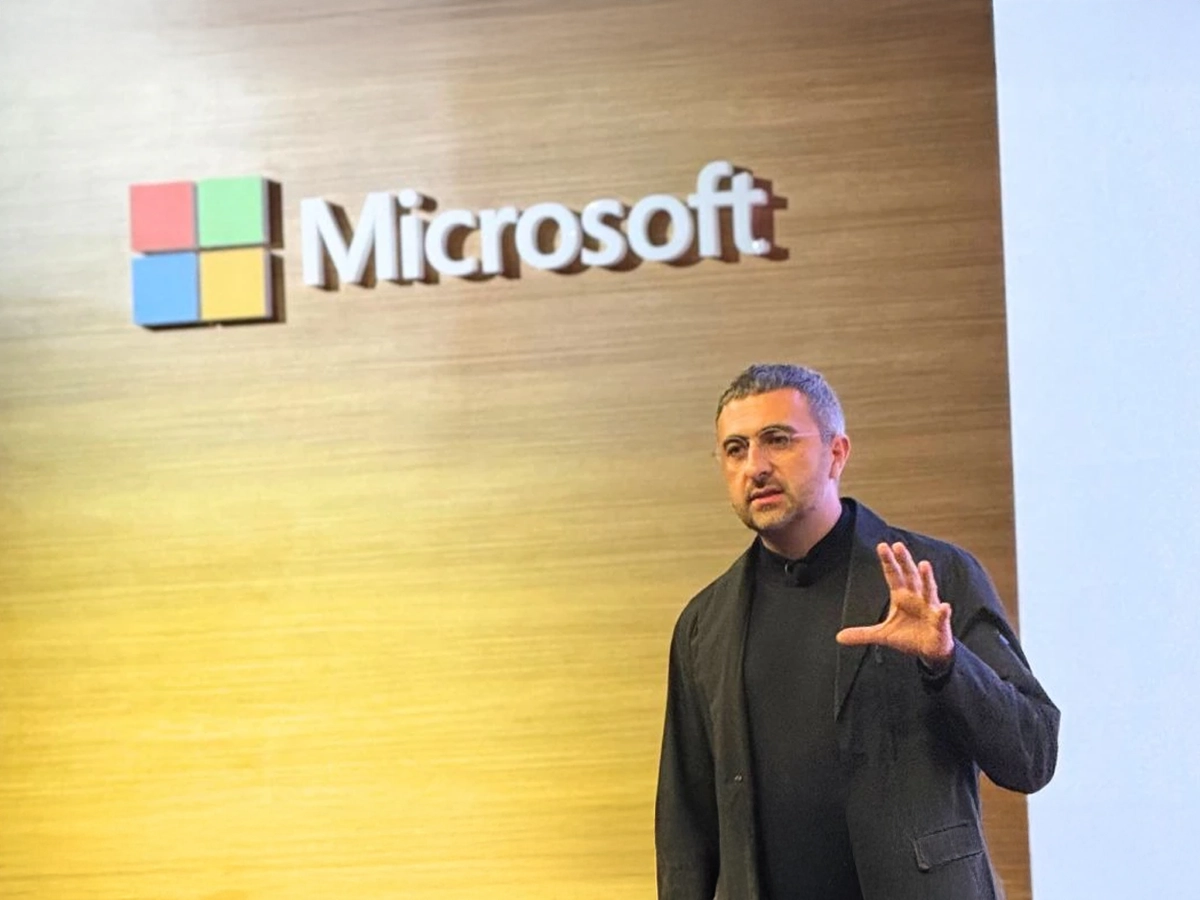
Call it the hybrid AI executive: a leader fluent enough in model development to sit credibly with research teams, and commercial enough to run a business unit against a revenue target. This profile has become one of the scarcest in the industry, and OpenAI is not alone in chasing it. Frontier AI companies recruit leaders whose experience spans advanced AI development and product strategy, not a single discipline. Anthropic's own 2026 hiring run reflects the same pattern, pulling in leaders like OpenAI co-founder Andrej Karpathy and former Microsoft Azure AI president Eric Boyd.
That has implications beyond any single search. Boards evaluating AI leadership are asking more often whether a candidate can bridge research and commercialization, rather than excel at only one. It also changes succession planning itself. A board that waits for a departure announcement before mapping its hybrid AI executive bench will find there are very few candidates to call.
In practice, that means widening the search beyond the usual pool of enterprise software executives and traditional product leaders. The strongest candidates now tend to come from adjacent paths: applied research leaders who have shipped commercial products, or operators who ran business units inside a research-driven company. Neither background maps cleanly onto a standard executive job description, which is exactly why boards that rely on conventional search criteria keep coming up short. Firms that specialize in AI leadership recruiting have adjusted their evaluation criteria accordingly, weighing technical fluency and revenue accountability as one measure instead of two separate hiring tracks.
As frontier AI companies mature past their research-lab origins, the leadership question stops being who can build the best model or run the tightest commercial operation. It becomes who can do enough of both to hold the two together, and that is the search every AI company will eventually have to run.






Stay informed wherever you are — join our growing community of readers and followers across social platforms.
Choosing a Search Firm
Compensation Intelligence
Board & Governance
Succession Strategy
AI Leadership Trends
Talent & Workforce Trends
AI Leadership Appointments
Compensation Changes
Big Tech Succession
CHRO & CPO Appointments
CEO Transitions
Board Members and Governance Committees
Operating Partners at private equity and venture capital firms
CHROs and Chief People Officers
HR leaders responsible for executive hiring
CEOs and Founders

.svg)
.svg)